
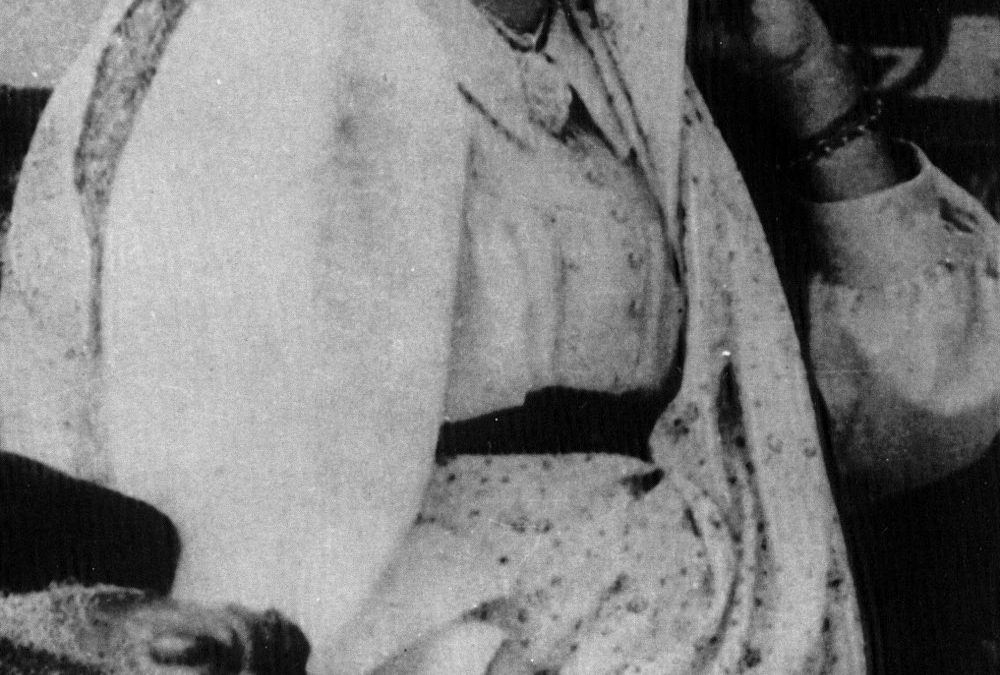
Bhikaiji Rustom Cama (24 September 1861 – 13 August 1936), known as Madam Cama, was an Indian nationalist who spent more than thirty years in exile in Europe working for India’s freedom. On 22 August 1907, at the International Socialist Congress in Stuttgart, she unfurled a tricolour that is regarded as one of the earliest versions of an Indian national flag. She is often called the mother of the Indian revolution abroad.
Quick Facts
| Full name | Bhikaiji Rustom Cama (née Patel) |
| Born | 24 September 1861, Bombay (now Mumbai), India |
| Died | 13 August 1936 (aged 74), Bombay |
| Known for | Raising the flag of Indian independence at Stuttgart (1907) |
| Organisations | Paris Indian Society; Indian Home Rule Society |
| Education | Alexandra Girls’ English Institution, Bombay |
| Spouse | Rustom Cama (m. 1885) |
Early Life
She was born into a wealthy Parsi family in Bombay, the daughter of Sorabji Framji Patel, a merchant. She was educated at the Alexandra Girls’ English Institution and had a talent for languages. In 1885 she married Rustom Cama, a lawyer who admired British rule and hoped for a career in politics. The marriage was unhappy, and she gave most of her time to social work.
When bubonic plague struck Bombay in 1896 she joined a team nursing the sick at a public hospital and caught the disease herself. She survived, but her health was broken, and in 1902 she went to Britain for treatment.
Exile
In London she met Dadabhai Naoroji and worked for a time as his secretary, and then Shyamji Krishna Varma, whose Indian Home Rule Society she supported. She spoke in Hyde Park and at public meetings. When she was told that she could return to India only if she signed an undertaking to give up nationalist activity, she refused.
In August 1907 she attended the congress of the Second International at Stuttgart in Germany. Addressing delegates from across the world, she described the effects of famine and British rule and appealed for support for India’s right to self-government. She then unfurled a flag of green, saffron and red bands bearing the words “Vande Mataram”, and asked the gathering to stand and salute “the flag of Indian independence”. The flag had been designed by her with other exiles in London and Paris; the one she raised is preserved in Pune.
She settled in Paris in 1909, where her home became a refuge for Indian revolutionaries. With others she founded the Paris Indian Society. After The Indian Sociologist was suppressed she helped start the journal Bande Mataram, printed on the continent and smuggled into India, and later Madan’s Talwar, named after Madan Lal Dhingra. She sent money, literature and, it was alleged, revolvers to India, and she campaigned for the equality of women, telling a meeting in Cairo in 1910 that a nation could not be built by half its people.
During the First World War, when Britain and France were allies, the French government interned her at Vichy and then required her to report to the police. She resumed her work in Paris after the war.
Return and Death
In 1935, paralysed by a stroke and seriously ill, she was allowed to return to Bombay on condition that she take no part in politics. She died in the Parsi General Hospital on 13 August 1936. She left most of her property to a trust for an orphanage for girls.
Legacy
Roads in several Indian cities and a coast guard vessel are named after her, and India issued a postage stamp in her memory on Republic Day 1962.
Frequently Asked Questions
When and where was Bhikaiji Cama born?
Bhikaiji Cama was born on 24 September 1861 in Bombay (now Mumbai), India.
When did Bhikaiji Cama die?
Died: 13 August 1936 (aged 74), Bombay.
What is Bhikaiji Cama known for?
Known for: Raising the flag of Indian independence at Stuttgart (1907).
Featured image: Madam Bhikaiji Cama, undated photograph. Photo by an unknown photographer, in the public domain, via Wikimedia Commons.



