
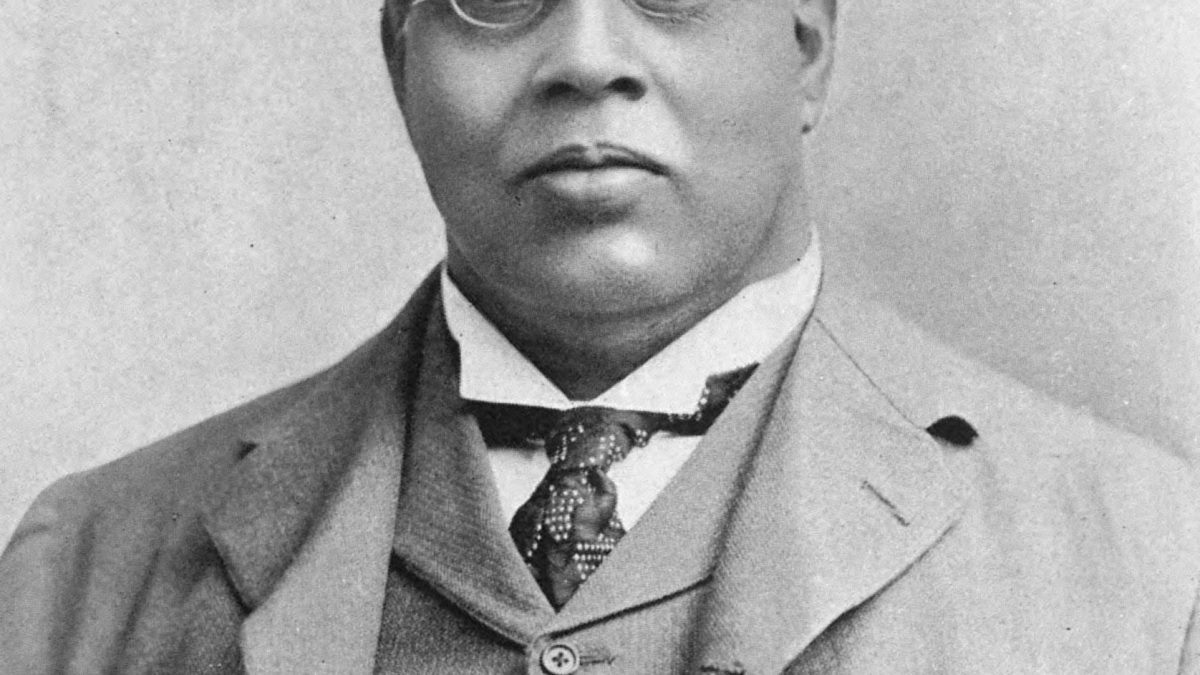
Romesh Chunder Dutt (13 August 1848 – 30 November 1909) was an Indian civil servant, economic historian, novelist and translator. One of the first Indians to enter the Indian Civil Service, he rose higher in it than any Indian before him, then retired early to write. His Economic History of India documented how British policy had impoverished the country and became a foundation of the economic case for nationalism. He was president of the Indian National Congress in 1899 and ended his career as Diwan of Baroda.
Quick Facts
| Full name | Romesh Chunder Dutt |
| Born | 13 August 1848, Calcutta, Bengal |
| Died | 30 November 1909 (aged 61), Baroda |
| Occupation | Civil servant, economic historian, novelist |
| Offices | Divisional Commissioner (1894–1897); President, Indian National Congress (1899); Diwan of Baroda (1909) |
| Education | Presidency College, Calcutta; University College London; Middle Temple |
| Notable works | The Economic History of India; The Peasantry of Bengal; Maharashtra Jiban Prabhat; Rajput Jiban Sandhya |
| Honours | Companion of the Order of the Indian Empire (1892) |
Early Life
Dutt was born into the Dutt family of Rambagan in Calcutta, one of the first Bengali families to take to English education; the poet Toru Dutt was his cousin. His father, a deputy collector, was drowned in an accident when Romesh was thirteen, and his mother had died earlier. He studied at Hare School and Presidency College.
In 1868, without his family’s consent, he sailed for England with two friends, Surendranath Banerjee and Behari Lal Gupta. All three passed the open examination for the Indian Civil Service the next year, Dutt standing third. He also studied at University College London and was called to the bar.
Civil Servant
He joined the service in Bengal in 1871 and spent twenty-six years in the districts. He distinguished himself in relief work after the cyclone of 1876 and in famine administration, and in 1883 became the first Indian to be put in full charge of a district. In 1894 he was appointed a divisional commissioner, first of Burdwan and then of Orissa, the highest executive rank an Indian had then reached. His early book The Peasantry of Bengal (1874) argued for protecting cultivators against landlords. He retired in 1897, at forty-nine.
Economic Historian
In London he lectured on Indian history at University College and wrote. A series of famines at the end of the century prompted his Open Letters to Lord Curzon (1900), which blamed the frequency of famine on the heavy and uncertain land tax. The two volumes of The Economic History of India (1902 and 1904) traced, from parliamentary papers and official records, the destruction of Indian handicrafts by unequal tariffs, the burden of land revenue and the annual transfer of wealth to Britain. With Dadabhai Naoroji’s writings they gave the national movement its economic argument, and Mahatma Gandhi wrote that he had wept on reading them. Later historians have qualified the details without displacing the outline.
He presided over the Lucknow session of the Indian National Congress in 1899.
Man of Letters
Encouraged by Bankim Chandra Chatterjee to write in his mother tongue, he produced four historical novels in Bengali in the 1870s, set in Mughal Bengal, Maharashtra and Rajasthan, and later two novels of contemporary life, one of which defends the remarriage of widows. He translated the Rig Veda into Bengali, in the face of orthodox protest, wrote a history of civilisation in ancient India, and made condensed English verse translations of the Mahabharata and the Ramayana that remained in print through the next century. He was the first president of the Bengal Academy of Literature in 1894.
Baroda and Death
In 1904 the progressive ruler of Baroda made him revenue minister, and he reformed the state’s land settlement and separated executive from judicial functions. He served on a royal commission on decentralisation and returned to Baroda as Diwan in 1909. He died there on 30 November that year.
Legacy
Dutt showed that loyalty to evidence could be a form of patriotism. His economic history shaped the thinking of a generation of nationalists, and his novels and translations enriched both Bengali and Indian writing in English.
Frequently Asked Questions
When and where was Romesh Chunder Dutt born?
Romesh Chunder Dutt was born on 13 August 1848 in Calcutta, Bengal.
When did Romesh Chunder Dutt die?
Died: 30 November 1909 (aged 61), Baroda.
What is Romesh Chunder Dutt’s occupation?
Occupation: Civil servant, economic historian, novelist.
What honours has Romesh Chunder Dutt received?
Companion of the Order of the Indian Empire (1892).
Featured image: Romesh Chunder Dutt, from a biography published in 1911. Photo by an unknown photographer, in the public domain, via Wikimedia Commons.



