
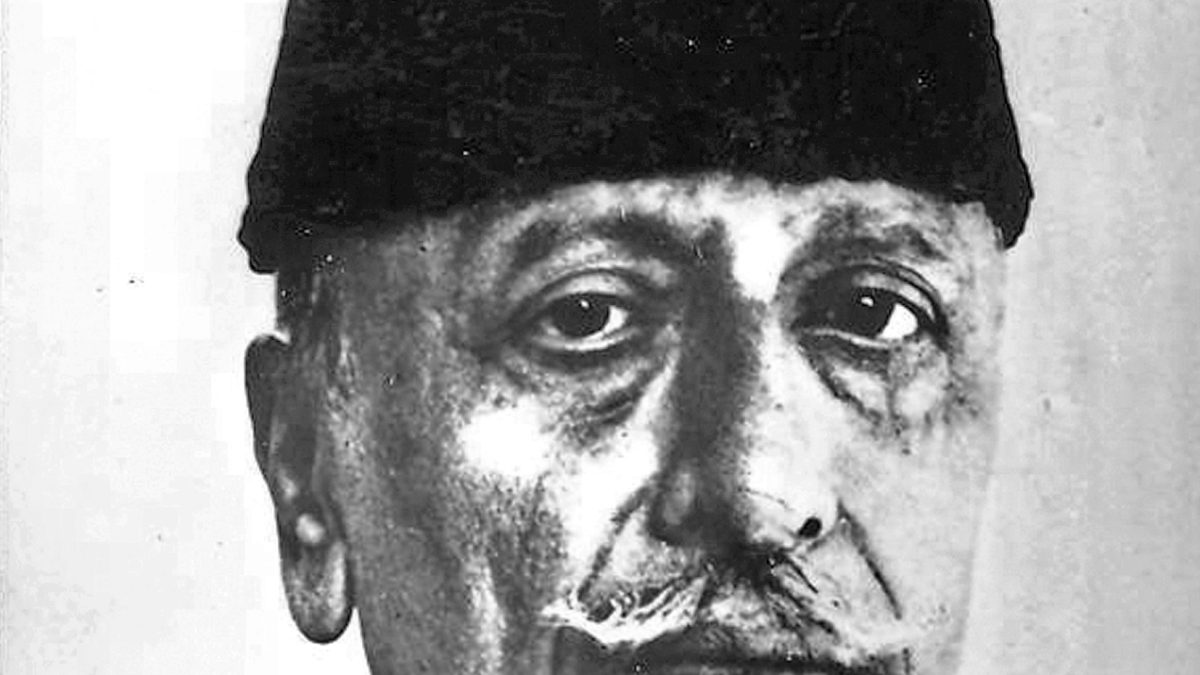
Maulana Abul Kalam Azad (11 November 1888 – 22 February 1958) was an Indian scholar, journalist and freedom fighter, president of the Indian National Congress during the decisive years of the freedom struggle and the first Education Minister of independent India. The foremost Muslim voice against the partition of the country, he spent his last eleven years building the institutions of Indian education, science and culture. His birthday is observed as National Education Day.
Quick Facts
| Full name | Abul Kalam Ghulam Muhiyuddin Ahmed |
| Pen name | Azad |
| Born | 11 November 1888, Mecca |
| Died | 22 February 1958, Delhi (aged 69) |
| Occupation | Scholar, journalist, politician |
| Party | Indian National Congress |
| Offices | President of the Congress (1923; 1940–1946); Minister of Education (1947–1958) |
| Notable works | Tarjuman al-Quran, Ghubar-e-Khatir, India Wins Freedom |
| Awards | Bharat Ratna (1992, posthumous) |
| Spouse | Zulaikha Begum |
Early Life
He was born in Mecca, where his father, Maulana Khairuddin, a scholar of a family from Delhi, had settled after 1857; his mother was the daughter of an Arab scholar of Medina. The family came to Calcutta when he was a small child. He was taught at home, by his father and by tutors, and completed the traditional course of Islamic learning in his early teens, years ahead of the usual age. He taught himself English, read widely in modern thought, and began editing magazines while still a boy. He took the pen name Azad, “free”.
Journalist
Travel in Egypt, Syria and Turkey brought him into contact with reformers and nationalists. In 1912 he started an Urdu weekly, Al-Hilal, in Calcutta. It attacked British rule and urged Muslims to join the national movement, in a prose of a power Urdu journalism had not known. The government shut it down in 1914; its successor, Al-Balagh, was closed in turn, and from 1916 to the beginning of 1920 he was interned at Ranchi.
The Freedom Movement
On his release he met Mahatma Gandhi and became a leader of the Khilafat and Non-Cooperation movements. In 1923, at thirty-five, he presided over a special session of the Congress, the youngest man to do so.
He was president of the Congress again from 1940 to 1946, through the Quit India movement, the years of imprisonment and the negotiations with the British that followed. He was held in Ahmednagar Fort from 1942 to 1945; his wife died while he was there. In the fort he wrote the letters published as Ghubar-e-Khatir, a classic of Urdu prose.
He opposed the demand for Pakistan to the last. He argued that the Muslims of India, heirs to a thousand years of shared history, had no need of a separate state and would be weakened by one. In October 1947, from the steps of the Jama Masjid in Delhi, he appealed to the Muslims who were leaving to stay.
Education Minister
He held the education portfolio from 15 August 1947 until his death.
- **Universities:** the University Grants Commission, set up in 1953 and given statutory form in 1956
- **Technical education:** the first Indian Institute of Technology, at Kharagpur, in 1951, and the expansion of the council for technical education
- **Schooling:** he pressed for free and compulsory education to the age of fourteen, for the education of girls and for adult literacy
- **Culture:** the Indian Council for Cultural Relations (1950), the Sangeet Natak Akademi, the Sahitya Akademi and the Lalit Kala Akademi
- **Science:** support for the national laboratories and for the Indian Institute of Science
Scholar
His commentary on the Quran, Tarjuman al-Quran, stresses the unity of all religions in their essentials. His account of the transfer of power, India Wins Freedom, was published in 1959; thirty pages that he had ordered withheld for thirty years appeared in 1988.
Death and Legacy
He died in Delhi on 22 February 1958 after a stroke and is buried near the Jama Masjid. He was awarded the Bharat Ratna in 1992. Since 2008 his birthday, 11 November, has been National Education Day. Jawaharlal Nehru called him a man of the calibre of the great figures of the Renaissance.
Featured image: Maulana Abul Kalam Azad. Photo by National Repository of Open Educational Resources, licensed under CC BY-SA 3.0, via Wikimedia Commons.



