
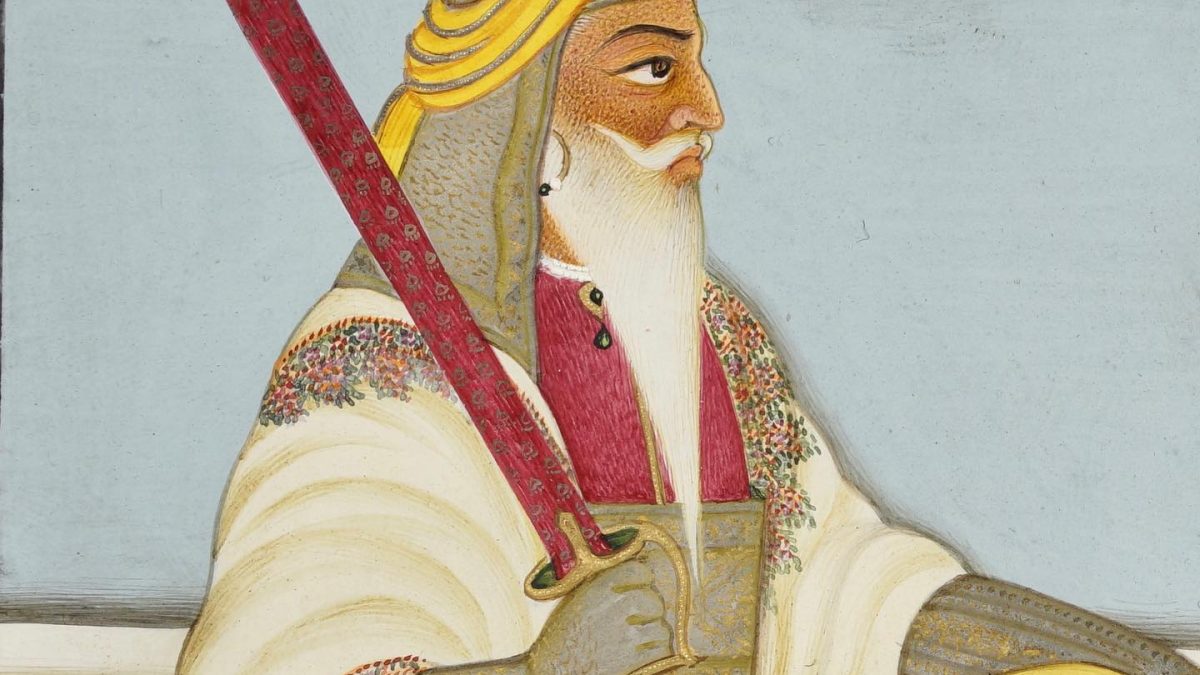
Hari Singh Nalwa (1791 – 30 April 1837) was the most celebrated general of the Sikh Empire of Maharaja Ranjit Singh. Over three decades he took part in almost every major campaign of the kingdom, helped conquer Multan, Kashmir, Hazara and Peshawar, and governed the last three. He pushed the frontier of the Punjab to the mouth of the Khyber Pass, the first time in centuries that an Indian power had advanced against the invasion route from the north-west, and he died holding it.
Quick Facts
| Full name | Hari Singh Nalwa |
| Born | 1791, Gujranwala, Punjab (now in Pakistan) |
| Died | 30 April 1837 (aged about 46), Jamrud |
| Allegiance | Sikh Empire |
| Rank | Commander-in-chief on the north-west frontier |
| Governor of | Kashmir (1820–21), Hazara (1822–37), Peshawar (1834–37) |
| Known for | Conquest of Peshawar; Battle of Jamrud |
Early Life
He was born at Gujranwala, also the birthplace of Ranjit Singh, into a family that had served the local Sikh chiefs. His father died when he was seven, and he was brought up by his mother’s family. He was trained in riding, swordsmanship and Persian, the language of administration. About 1804 he came to the Maharaja’s court over a property dispute; Ranjit Singh, impressed by the boy, took him into his personal service.
The name Nalwa is said to come from an incident on a royal hunt, when he was attacked by a tiger and killed it with his sword.
Military Career
He was given a command of several hundred horsemen while still in his teens and distinguished himself at the capture of Kasur in 1807 and of Sialkot soon after. He fought in the battle of Attock in 1813, the first major Sikh victory over the Afghans, and in the siege of Multan in 1818.
In 1819 he was among the commanders of the army that took Kashmir from Afghan rule, and he was appointed its governor the following year. He ended some oppressive taxes and is credited with relief measures after famine. In 1822 he was given charge of Hazara, a turbulent hill region. He subdued it in a series of hard campaigns and founded the fortified town of Haripur, which bears his name, with a planned water supply.
He fought in the battle of Naushera in 1823, which broke Afghan power east of the Khyber. In 1834 he occupied Peshawar and became its governor. To seal the pass against invasion he built a chain of forts, the most important of them Jamrud, completed in 1836 at the very entrance to the Khyber.
Jamrud
The Afghan ruler, Dost Mohammad Khan, saw the fort as a threat to Kabul itself. In April 1837, when much of the Sikh army had been called to Lahore for a royal wedding, an Afghan force attacked Jamrud. Nalwa, who had been ill, rode out from Peshawar with reinforcements and drove the attackers back, but he was struck by two bullets. Carried into the fort, he ordered that his death be concealed until help arrived from Lahore. The garrison held, and the Afghans withdrew.
Legacy
The line he established became the boundary of the Sikh kingdom, then of British India and later of Pakistan. He was also a capable administrator and builder, raising forts, gardens, tanks and gurdwaras across the north-west. In Punjabi tradition he is the model of a soldier, and legend holds that Afghan mothers quietened their children with his name. India issued a postage stamp in his honour in 2013.
Frequently Asked Questions
When was Hari Singh Nalwa born?
Hari Singh Nalwa was born in 1791, Gujranwala, Punjab (now in Pakistan).
When did Hari Singh Nalwa die?
Died: 30 April 1837 (aged about 46), Jamrud.
What is Hari Singh Nalwa known for?
Known for: Conquest of Peshawar; Battle of Jamrud.
Featured image: Hari Singh Nalwa, painting by Hasan al-Din, Lahore, about 1845–50. Photo by Hasan al-Din, in the public domain, via Wikimedia Commons.



