
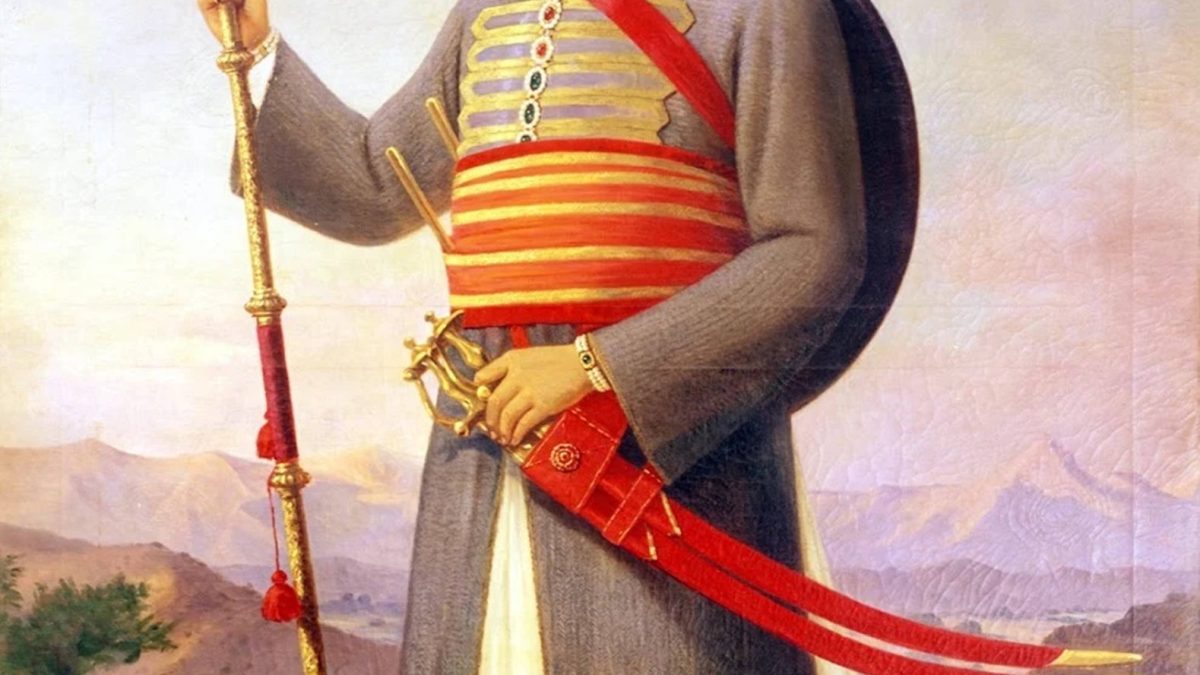
Maharana Pratap Singh (9 May 1540 – 19 January 1597) was the ruler of Mewar, the kingdom in southern Rajasthan with its old capital at Chittor. Almost alone among the Rajput princes of his day, he refused to accept the supremacy of the Mughal emperor Akbar. He fought the imperial army at Haldighati in 1576, carried on the struggle from the hills for twenty years, and recovered most of his territory. He is one of the most honoured figures in Indian history.
Quick Facts
| Full name | Pratap Singh I |
| Born | 9 May 1540, Kumbhalgarh, Mewar |
| Died | 19 January 1597, Chavand, Mewar (aged 56) |
| Dynasty | Sisodia |
| Title | Maharana of Mewar |
| Reign | 1572–1597 |
| Father | Maharana Udai Singh II |
| Known for | Resistance to the Mughal empire; the Battle of Haldighati |
| Successor | Amar Singh I |
Early Life
He was born in the hill fort of Kumbhalgarh, the eldest of the many sons of Maharana Udai Singh II and his chief queen, Jaiwanta Bai. He grew up among the Bhil people of the Aravalli hills, who called him Kika, “son”, and whose loyalty later saved him.
He was a grown man when Akbar besieged and took Chittor in 1568, after which Udai Singh built a new capital at Udaipur. The loss of the ancestral fort was the fact that governed Pratap’s life.
Accession
Udai Singh, dying in 1572, named a younger son, Jagmal, as his heir. The nobles of Mewar set the choice aside and installed Pratap at Gogunda. Jagmal went over to the Mughals.
Refusal
By then most of the Rajput states had made terms with Akbar, giving daughters in marriage and receiving high rank in return. Akbar sent four missions to persuade Pratap to do the same. He received them courteously and would not go to court himself or acknowledge a superior. War followed.
Haldighati
On 18 June 1576 his army of about three thousand horsemen and Bhil archers met a larger Mughal force under Man Singh of Amber in the pass of Haldighati. He broke one wing of the enemy and nearly reached Man Singh himself, but was wounded and outnumbered. His horse, Chetak, though badly hurt, carried him from the field and died. The Mughals held the ground but could not catch him. The full story is told in the Battle of Haldighati.
The Long Struggle
For years afterwards he lived as a fugitive in the hills, moving his family from one hiding place to another while Mughal columns occupied the plains. Tradition says he swore to sleep on straw and eat from leaf plates until Chittor was free. His minister Bhama Shah put his own fortune at his disposal to pay the troops.
He fought a war of raids and ambushes, cutting the Mughal supply lines and forcing them to abandon posts. In 1582 he won a clear victory at Dewair. As Akbar’s attention turned to rebellions in Bengal and the north-west, Pratap recovered one district after another. By the time of his death he held nearly all of Mewar except Chittor and Mandalgarh, and ruled from a new capital at Chavand.
Death
He died at Chavand on 19 January 1597 of an injury received while hunting. His son Amar Singh fought on and in 1615 made an honourable peace with the emperor Jahangir, under which the rulers of Mewar were never required to attend the Mughal court in person.
Legacy
His wars were not a conflict of religions: an Afghan, Hakim Khan Sur, led his vanguard at Haldighati, and Rajputs commanded the army against him. They were a ruler’s refusal to give up his independence. That refusal made him a symbol for later generations, in the ballads of Rajasthan, the writings of the historian James Tod and the nationalist movement. His birth anniversary is celebrated across north India, and his statue, mounted on Chetak, stands at Udaipur and in the grounds of Parliament.
Featured image: Maharana Pratap, in a modern painting by Surendra Singh Shaktawat. Photo by Surendra Singh Shaktawat, licensed under CC BY-SA 4.0, via Wikimedia Commons.



