
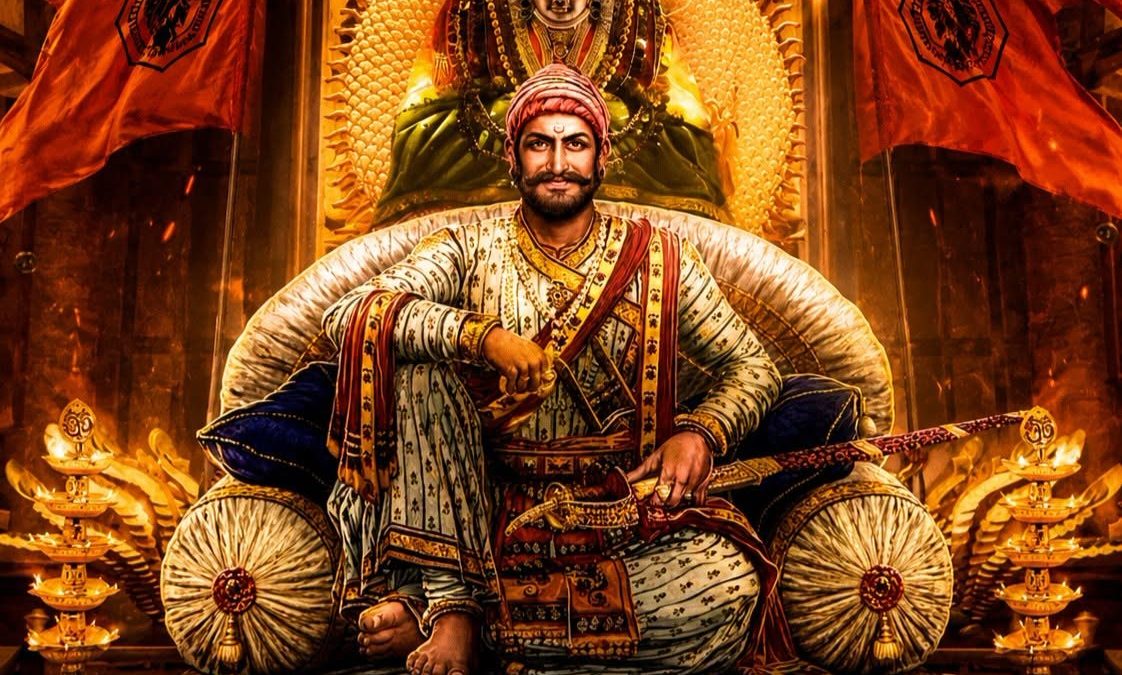
Chhatrapati Shivaji Maharaj (19 February 1630 – 3 April 1680) was the founder of the Maratha kingdom in western India. Starting as a teenager with a handful of hill forts, he carved out an independent state from the Bijapur Sultanate and defied the Mughal emperor Aurangzeb. He was crowned Chhatrapati (sovereign) at Raigad in 1674. He is remembered for his daring military tactics, his well-organised administration, his navy and his respect for all religions, and he is one of the most admired figures in Indian history.
Quick Facts
| Full name | Shivaji Bhonsle |
| Born | 19 February 1630, Shivneri Fort, near Junnar (now in Pune district, Maharashtra) |
| Died | 3 April 1680, Raigad Fort (aged 50) |
| Title | Chhatrapati of the Maratha kingdom |
| Reign | 1674–1680 |
| Parents | Shahaji Bhonsle, Jijabai |
| Capital | Raigad |
| Children | Including Sambhaji and Rajaram |
| Known for | Founding the Maratha kingdom; guerrilla warfare; building a navy |
Early Life
Shivaji was born at the hill fort of Shivneri. His father, Shahaji Bhonsle, was a Maratha general who served the Deccan sultanates, and Shivaji was brought up in Pune mainly by his mother, Jijabai, a deeply religious woman who had a strong influence on him. He grew up among the Mavalas, the hill people of the Sahyadri range, who became his first soldiers and whose terrain he came to know intimately.
Building a Kingdom
At about 16 Shivaji took the fort of Torna from Bijapur and soon added others, including Rajgad and Purandar. In 1659 the Bijapur court sent its general Afzal Khan with a large army to crush him. At a meeting below the fort of Pratapgad, Shivaji killed Afzal Khan, and his troops routed the Bijapur army, a victory that made him famous.
Aurangzeb sent his uncle Shaista Khan to subdue Shivaji. In 1663 Shivaji led a night raid on Shaista Khan’s camp in Pune, wounding him, and in 1664 he raided the rich Mughal port of Surat. A larger Mughal army under Jai Singh forced him to sign the Treaty of Purandar in 1665, giving up many forts. In 1666 he visited Aurangzeb’s court at Agra, where he was placed under house arrest; he made a famous escape, by tradition hidden in a large basket. Within a few years he had recovered most of his lost forts, including Sinhagad in 1670.
On 6 June 1674 Shivaji was crowned Chhatrapati at Raigad in a grand ceremony, formally establishing an independent Maratha state. In 1676–77 he led a long campaign into southern India, capturing Gingee and Vellore. He died at Raigad on 3 April 1680.
Administration and Navy
Shivaji governed with a council of eight ministers, the Ashta Pradhan, and promoted Marathi and Sanskrit in place of Persian at court. He paid his soldiers in cash, forbade them from harming women or places of worship, and employed people of different faiths, including Muslims, in his army and navy. He built a fleet and sea forts such as Sindhudurg to protect the Konkan coast, and he is often called the father of the Indian Navy.
Family
Shivaji’s wives included Saibai, the mother of his elder son, Sambhaji, and Soyarabai, the mother of Rajaram. Sambhaji succeeded him and continued the war against the Mughals; his story was told in the 2025 film Chhaava, starring Vicky Kaushal.
Legacy
Frequently Asked Questions
When and where was Chhatrapati Shivaji Maharaj born?
Chhatrapati Shivaji Maharaj was born on 19 February 1630 in Shivneri Fort, near Junnar (now in Pune district, Maharashtra).
When did Chhatrapati Shivaji Maharaj die?
Died: 3 April 1680, Raigad Fort (aged 50).
What is Chhatrapati Shivaji Maharaj known for?
Known for: Founding the Maratha kingdom; guerrilla warfare; building a navy.
Featured image: Chhatrapati Shivaji Maharaj, a modern artist’s depiction.



