
After the death of Shivaji in 1680, the Mughal emperor Aurangzeb moved his court and army to the Deccan to settle the question of the Marathas once and for all. He never returned to the north. The war lasted until his death in 1707, a campaign of more than a quarter-century that drained the Mughal treasury and left the Maratha state stronger than it had been at the start.
Quick Facts
| Years | 1681–1707 |
| Mughal ruler | Aurangzeb |
| Maratha rulers | Sambhaji, Rajaram, Tarabai (as regent) |
| Key events | Sambhaji’s execution (1689); Rajaram at Gingee; Aurangzeb’s death (1707) |
| Outcome | Maratha state survived; Mughal power weakened |
The Succession
Shivaji died in 1680 and was succeeded by Rajaram, his second son, but Sambhaji, the eldest, took the throne after the murder of Rajaram’s mother and supporters, and imprisoned Rajaram. Sambhaji’s reign was torn by factions, though he led several military campaigns in the south and in Goa.
Why Aurangzeb Went South
In 1681 Aurangzeb’s rebel son Muhammad Akbar came to Sambhaji for protection and proposed an alliance. This brought Aurangzeb to the Deccan with his household, court and army. Akbar stayed under Maratha protection for several years and in 1686 left for Persia. Aurangzeb also wanted to end the independent sultanates of the Deccan: Bijapur fell in 1686 and Golconda in 1687.
The Execution of Sambhaji
In 1689 the Mughals captured Sambhaji at Sangameshwar, in Konkan, and executed him at the age of 31, along with his adviser Kavi Kalash. His wife and young son, later named Shahu, were taken into the Mughal camp. Aurangzeb expected the Maratha cause to collapse. It did not.
Rajaram and Tarabai
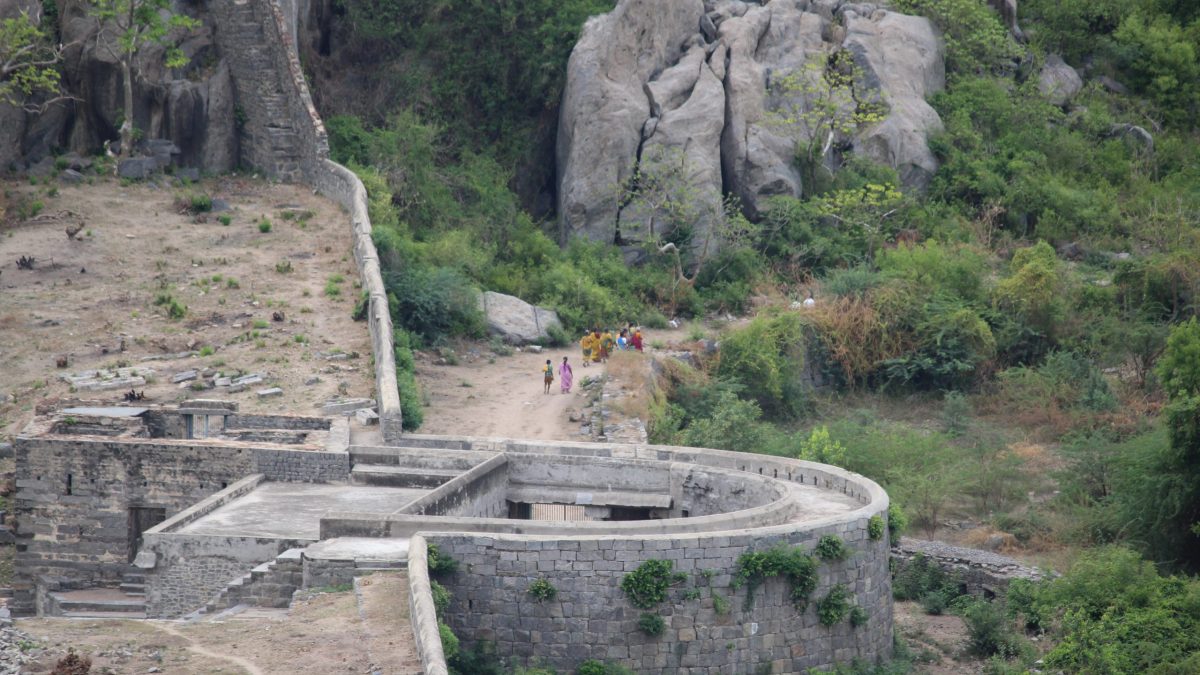
Rajaram became ruler and fled south to Gingee in Tamil country, which became the Maratha capital and was besieged by the Mughals for several years. After Rajaram died in 1700, his widow Tarabai ruled as regent for her young son and continued the resistance. Maratha commanders such as Santaji Ghorpade and Dhanaji Jadhav raided the Mughal supply lines in the Deccan and into Malwa and Gujarat, avoiding set battles. The Marathas gave up the idea of defending forts and fought a running war on a wide front, to which Mughal armies, which were slow and expensive to move, had no good answer.
The Cost
Aurangzeb took fort after fort, but the Marathas retook them or moved on. His camp was a moving city, and the war strained the revenue system and the loyalty of the nobles. In 1707 he died at Ahmednagar, aged 88, having spent about 26 years in the Deccan. His empire at its greatest extent had reached the south, but it had no strength to hold it.
Aftermath
After his death the Mughal throne passed to his son Bahadur Shah. Shahu was released by the Mughals soon after, and civil war among the Marathas followed. Under Shahu, and his Peshwas, the Maratha power grew to the heights described in the Third Battle of Panipat, and was finally broken in the Anglo-Maratha Wars. The founder of the state is covered in Shivaji’s biography, and the war of succession that brought Aurangzeb to power in the Battle of Samugarh.
Featured image: Gingee Fort in Tamil Nadu, where the Maratha ruler Rajaram made his capital during the wars. Photo by MariaSelvamSavarimuthu, licensed under CC BY-SA 4.0, via Wikimedia Commons.


Leave a Reply