
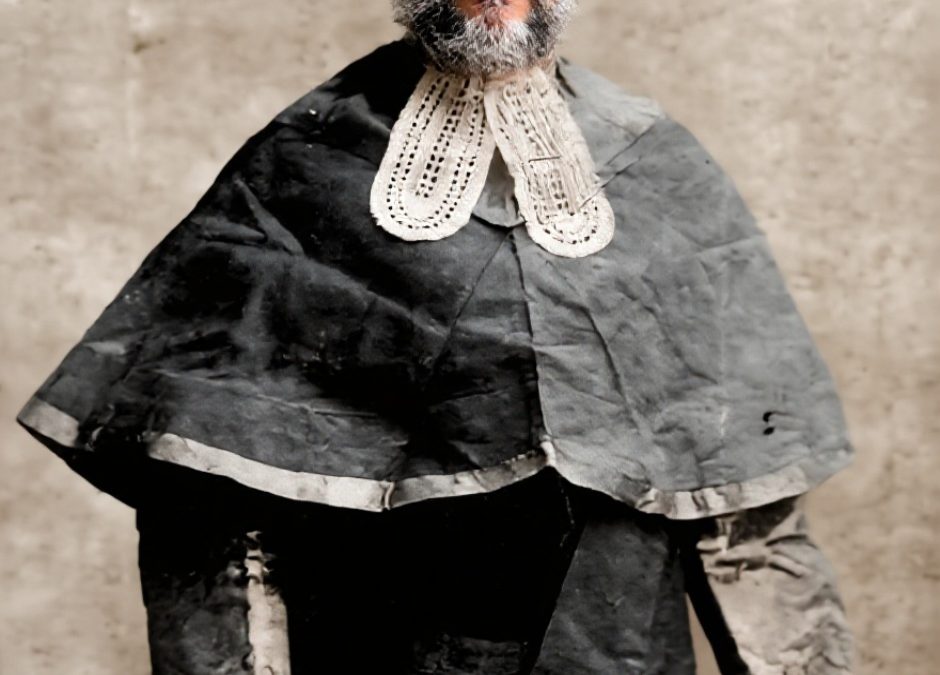
Badruddin Tyabji (10 October 1844 – 19 August 1906) was an Indian lawyer, judge and nationalist leader. He was the first Indian to practise as a barrister in the Bombay High Court, the third president of the Indian National Congress and the first Muslim to hold that office, and later the first Indian to act as Chief Justice of Bombay. He worked throughout his life for modern education among Muslims and for the education and freedom of women.
Quick Facts
| Full name | Badruddin Tyabji |
| Born | 10 October 1844, Bombay (now Mumbai), India |
| Died | 19 August 1906 (aged 61), London, England |
| Occupation | Barrister, judge |
| Offices | President, Indian National Congress (1887); Judge, Bombay High Court (1895–1906) |
| Known for | Anjuman-i-Islam; Bombay Presidency Association |
| Education | Elphinstone Institution, Bombay; Middle Temple, London |
Early Life
Tyabji was born into a Sulaimani Bohra merchant family. His father, Tyab Ali, a self-made trader, took the then remarkable step of sending all his sons to Europe for education. Badruddin learned Urdu, Persian, Arabic and Gujarati at a madrasa, studied at the Elphinstone Institution and went to England at fifteen. Eye trouble interrupted his studies, but he was called to the bar from the Middle Temple and returned to Bombay in 1867.
Lawyer and Public Life
As the first Indian barrister in the city he faced prejudice from British colleagues and distrust from Indian clients, and overcame both to build a leading practice. With Pherozeshah Mehta and K. T. Telang he formed a trio that dominated the public life of Bombay for two decades. He was elected to the municipal corporation, sat in the Bombay Legislative Council from 1882 and was a founder of the Bombay Presidency Association in 1885, which hosted the first session of the Indian National Congress that December.
He presided over the third session of the Congress at Madras in 1887. Syed Ahmad Khan and others were then urging Muslims to stay away from the new body. Tyabji answered that on questions affecting all Indians, such as taxation, the civil service and representation, Muslims had every reason to act together with their countrymen, and he secured a rule that the Congress would not take up any subject to which Hindu or Muslim delegates as a body objected.
In 1874, with his brother Camruddin and others, he founded the Anjuman-i-Islam in Bombay to provide modern schooling for Muslims; it has grown into a large network of schools and colleges. He opposed the seclusion of women, and the women of his own family were among the first Muslim women in western India to give up purdah, to study abroad and to take part in public life. He supported the Age of Consent Bill of 1891 when many leaders opposed it.
Judge
He was appointed a judge of the Bombay High Court in 1895, the first Muslim and one of the first Indians on that bench. In 1897, when other judges had refused, he granted bail to Bal Gangadhar Tilak, who was awaiting trial for sedition. He was known for independence and courtesy, and in 1902 he officiated as Chief Justice.
Death and Family
He died suddenly of a heart attack in London on 19 August 1906 while on leave. The Tyabji family remained prominent in law, public service and the arts: his nephew Abbas Tyabji became a close associate of Mahatma Gandhi, and the ornithologist Salim Ali was a relative.
Frequently Asked Questions
When and where was Badruddin Tyabji born?
Badruddin Tyabji was born on 10 October 1844 in Bombay (now Mumbai), India.
When did Badruddin Tyabji die?
Died: 19 August 1906 (aged 61), London, England.
What is Badruddin Tyabji known for?
Known for: Anjuman-i-Islam; Bombay Presidency Association.
Featured image: Badruddin Tyabji in judicial robes, colourised from a family photograph. Photo by Andywarhol1222, licensed under CC BY 4.0, via Wikimedia Commons.



