
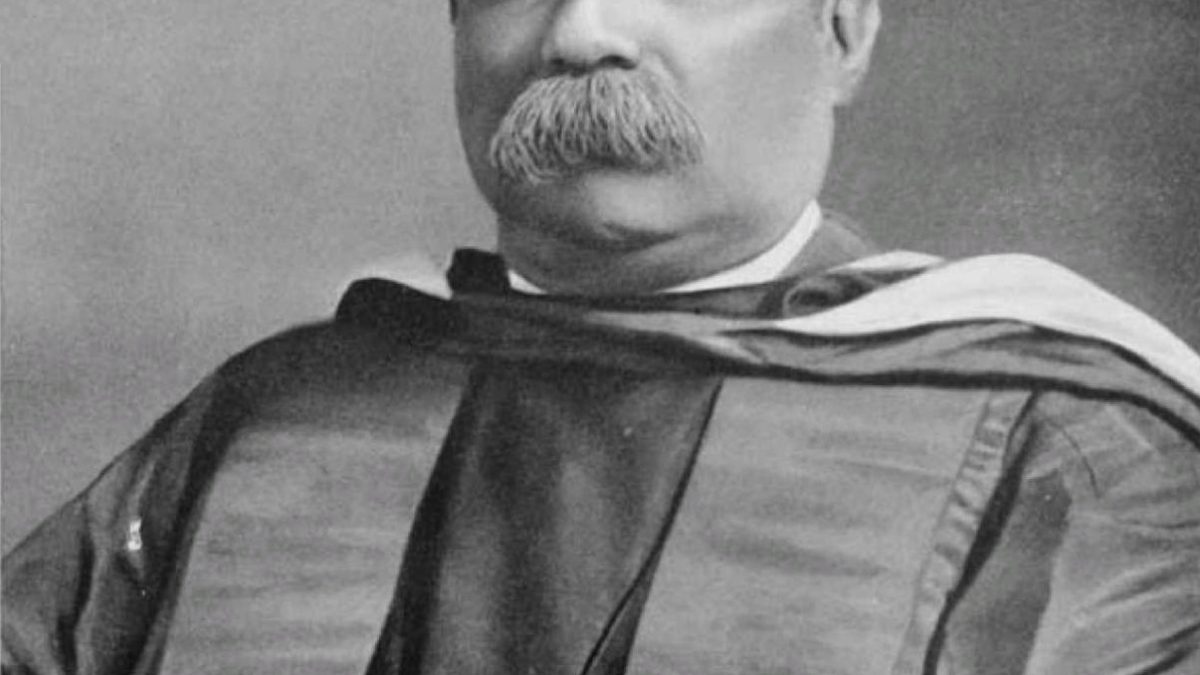
Sir Ashutosh Mukherjee (29 June 1864 – 25 May 1924) was an Indian educationist, mathematician and judge. As Vice-Chancellor of the University of Calcutta for ten years he transformed it from a body that only examined students into a centre of postgraduate teaching and research, and he recruited to it the scholars who made modern Indian science. Fearless in defending the university against official interference, he was known as Banglar Bagh, the Bengal Tiger.
Quick Facts
| Full name | Ashutosh Mukherjee (Asutosh Mookerjee) |
| Born | 29 June 1864, Calcutta, Bengal |
| Died | 25 May 1924 (aged 59), Patna |
| Occupation | Educationist, judge, mathematician |
| Known as | Bengal Tiger |
| Offices | Judge, Calcutta High Court (1904–1923); Vice-Chancellor, University of Calcutta (1906–1914, 1921–1923) |
| Education | Presidency College, Calcutta (M.A. Mathematics; M.A. Physics); Doctor of Law |
| Children | Including Syama Prasad Mukherjee |
Early Life
He was born in Calcutta, the son of a physician who encouraged his passion for books. At Presidency College he stood first in the university in his degree, took a master’s in mathematics in 1885 and another in physics the following year, and while still a student published original papers in geometry and differential equations that were noticed in Europe. No research post in mathematics was open to an Indian. He turned to law, took a doctorate, lectured as Tagore Professor of Law and was appointed a judge of the Calcutta High Court in 1904, serving until 1923.
The University
He had been a member of the university’s governing bodies since his twenties, and in 1906 he became Vice-Chancellor, holding the office for four consecutive terms until 1914 and again from 1921 to 1923. A new law had been intended to tighten government control over the universities; he used the powers it gave to opposite effect.
He created postgraduate departments in which the university itself taught and conducted research, in subjects ranging from comparative philology, ancient Indian history, Pali and Islamic culture to applied mathematics, physics and chemistry. He introduced Bengali and other Indian languages as subjects for the highest degrees. With large donations that he secured from the lawyers Taraknath Palit and Rashbehari Ghosh, on condition that the chairs be held by Indians, he founded the University College of Science in 1914. He also established the University Law College and helped found the Calcutta Mathematical Society.
He had a gift for recognising ability. He brought C. V. Raman out of a government accounts office to the Palit chair of physics, and appointed Prafulla Chandra Ray, Sarvepalli Radhakrishnan and the young physicists Meghnad Saha and Satyendra Nath Bose. Scholars came from every part of India, and Calcutta became for a generation the country’s leading university.
When the government of Bengal offered to renew his term in 1923 on conditions that would have made the university subordinate to it, he refused in a letter to the Governor that became famous for its closing words: freedom first, freedom second, freedom always. His size, his moustache and his readiness to roar at viceroys had long since earned him his nickname.
Other Work
He sat on the Sadler Commission on university education and was president of the Asiatic Society and of the Indian Science Congress at its first session. He was knighted in 1911.
Death and Legacy
He died suddenly at Patna on 25 May 1924 while arguing a case after his retirement from the bench. His son Syama Prasad Mukherjee became Vice-Chancellor of the same university. Colleges, roads and a building at the heart of the university carry his name.
Frequently Asked Questions
When and where was Ashutosh Mukherjee born?
Ashutosh Mukherjee was born on 29 June 1864 in Calcutta, Bengal.
When did Ashutosh Mukherjee die?
Died: 25 May 1924 (aged 59), Patna.
What is Ashutosh Mukherjee’s occupation?
Occupation: Educationist, judge, mathematician.
Featured image: Sir Ashutosh Mukherjee in academic robes. Photo by an unknown photographer, in the public domain, via Wikimedia Commons.



