
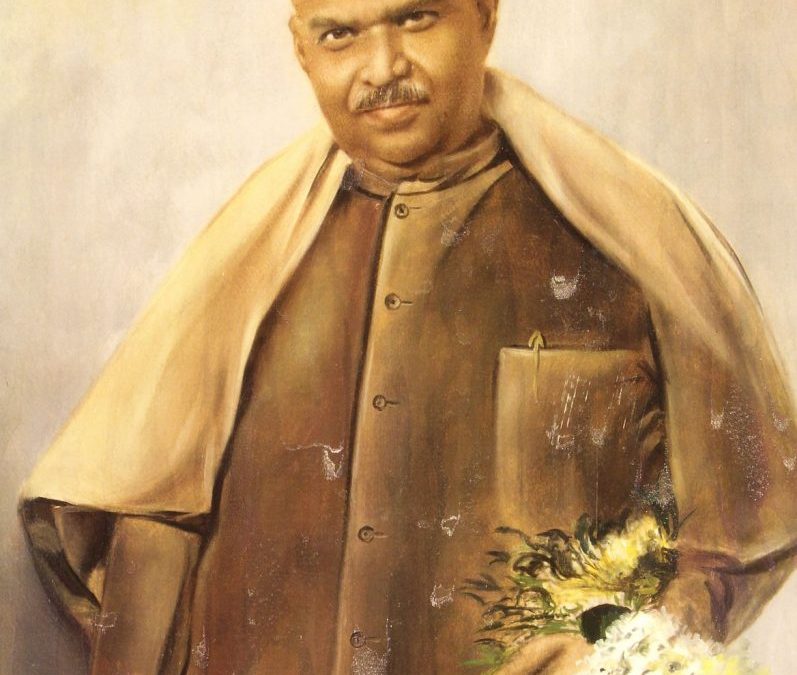
Syama Prasad Mukherjee (6 July 1901 – 23 June 1953), also written Mookerjee, was an Indian educationist, barrister and politician. The youngest Vice-Chancellor in the history of the University of Calcutta, he became a minister in Bengal, president of the Hindu Mahasabha and Minister for Industry and Supply in independent India’s first government. He resigned in 1950 and the following year founded the Bharatiya Jana Sangh, the forerunner of the Bharatiya Janata Party. He died in custody in Srinagar while protesting against the special status of Jammu and Kashmir.
Quick Facts
| Full name | Syama Prasad Mukherjee |
| Born | 6 July 1901, Calcutta, Bengal |
| Died | 23 June 1953 (aged 51), Srinagar, Jammu and Kashmir |
| Occupation | Educationist, barrister, politician |
| Offices | Vice-Chancellor, University of Calcutta (1934–1938); Finance Minister of Bengal (1941–1942); Union Minister for Industry and Supply (1947–1950) |
| Party | Bharatiya Jana Sangh (founder, 1951); earlier Hindu Mahasabha |
| Education | Presidency College, Calcutta; Lincoln’s Inn, London |
| Father | Ashutosh Mukherjee |
Early Life
He was the second son of Sir Ashutosh Mukherjee, the celebrated Vice-Chancellor and judge. He stood first in English at Presidency College, took a master’s degree in Bengali and a degree in law, and was called to the bar at Lincoln’s Inn in 1927. After his father’s death he took his place in the governing bodies of the university.
Educationist
In 1934, at thirty-three, he was appointed Vice-Chancellor of the University of Calcutta. In four years he strengthened teaching in Indian languages, started teacher training, and invited Rabindranath Tagore to deliver the convocation address in Bengali, the first time it had been given in an Indian language.
Political Career
He entered the Bengal Legislative Council in 1929. Opposed to the Muslim League ministry of the province, he joined the Hindu Mahasabha and in 1941 became Finance Minister in the coalition led by A. K. Fazlul Huq. He resigned in November 1942, protesting against the Governor’s interference and the repression in Midnapore during the Quit India Movement. He organised large-scale relief during the famine of 1943. As president of the Hindu Mahasabha he opposed the demand for Pakistan; when partition of the country became certain in 1947 he led the campaign to divide Bengal as well, so that its Hindu-majority western districts, with Calcutta, would remain in India.
Jawaharlal Nehru invited him into the first cabinet as Minister for Industry and Supply. He framed the Industrial Policy Resolution of 1948 and started the Chittaranjan locomotive works and the Sindri fertiliser plant. He resigned on 6 April 1950 in protest against the pact between Nehru and the Prime Minister of Pakistan on minorities, which he thought would fail to protect Hindus in East Bengal.
On 21 October 1951, with the support of the Rashtriya Swayamsevak Sangh, he founded the Bharatiya Jana Sangh in Delhi and became its first president. It won three seats in the first general election. In the Lok Sabha he brought together several small parties and became the most effective voice of the opposition.
He opposed the arrangement under which Jammu and Kashmir had its own constitution, flag and head of government and Indian citizens needed a permit to enter it, summed up in the slogan that one country could not have two constitutions, two heads and two flags. On 11 May 1953 he crossed into the state without a permit and was arrested. He was held in a cottage near Srinagar, fell ill and died on 23 June, officially of a heart attack. His mother’s request for an inquiry was not granted, and the circumstances are still disputed.
Legacy
The Bharatiya Janata Party regards him as its founding figure, and the ending of the state’s special status in 2019 was presented as the fulfilment of his cause. Universities, ports and public schemes bear his name.
Frequently Asked Questions
When and where was Syama Prasad Mukherjee born?
Syama Prasad Mukherjee was born on 6 July 1901 in Calcutta, Bengal.
When did Syama Prasad Mukherjee die?
Died: 23 June 1953 (aged 51), Srinagar, Jammu and Kashmir.
What is Syama Prasad Mukherjee’s occupation?
Occupation: Educationist, barrister, politician.
Featured image: Portrait of Syama Prasad Mukherjee. Photo by NFAI Digital Archives, licensed under CC BY-SA 2.5, via Wikimedia Commons.



