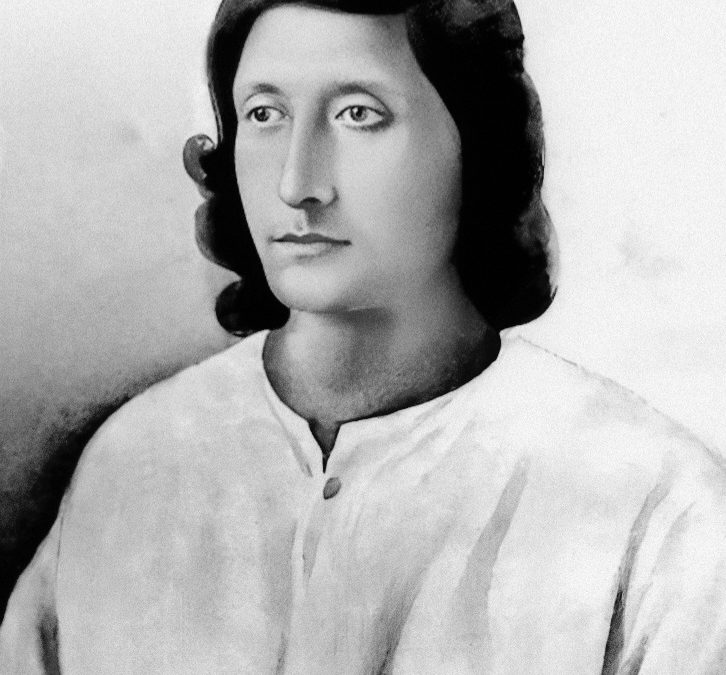
Suryakant Tripathi (21 February 1899 – 15 October 1961), known by his pen name Nirala, “the unique one”, was an Indian poet, novelist and essayist in Hindi. He was the most original of the Chhayavad poets and the great rebel of modern Hindi literature: he introduced free verse, wrote on subjects from Vedanta to a woman breaking stones by the road, and lived and died in poverty after giving away whatever he earned.
Quick Facts
| Full name | Suryakant Tripathi |
| Pen name | Nirala |
| Born | 21 February 1899, Mahishadal, Midnapore district, Bengal |
| Died | 15 October 1961 (aged 62), Allahabad, Uttar Pradesh |
| Family home | Gadhakola, Unnao district, Uttar Pradesh |
| Occupation | Poet, novelist, essayist |
| Notable works | Parimal, Anamika, Saroj Smriti, Ram Ki Shakti Puja, Tulsidas, Kukurmutta |
Early Life
Nirala’s family came from the village of Gadhakola in Unnao district. His father was employed by the princely estate of Mahishadal in Bengal, and Nirala was born and educated there, in Bengali. He grew up strong, a wrestler and singer, and steeped in the writings of Rabindranath Tagore and Swami Vivekananda. He learned standard Hindi largely at the urging of his young wife, Manohara Devi.
His life was struck early by loss. His mother died when he was a child. In the influenza epidemic of 1918 he lost his wife, a brother and other relatives within days, and was left with two small children. His daughter, Saroj, died in 1935 at eighteen.
Writing
He began working for journals in Calcutta, first for a magazine of the Ramakrishna Mission and then for the lively weekly Matwala, where the name Nirala first appeared. His poem “Juhi Ki Kali”, written in unrhymed lines of irregular length, had been returned by the leading Hindi magazine as not poetry at all. He persisted, and the form he called free metre became the basis of modern Hindi verse. He was attacked for it for years.
The collections Parimal (1930), Geetika and Anamika (1937) contain his finest lyrics and his long poems. “Saroj Smriti”, an elegy for his daughter, is among the most moving poems in the language, the grief of a father who feels he failed his child. “Ram Ki Shakti Puja” shows Rama on the eve of battle in despair, a hero who doubts. “Woh Todti Patthar” describes a labouring woman on a road in Allahabad, and “Bhikshuk” a beggar. Tulsidas (1938) is a long poem on the making of a poet. In Kukurmutta (1942) he turned to satire and colloquial speech, mocking the rose of the rich through the voice of a mushroom.
He also wrote novels, stories and sketches. Kulli Bhat and Billesur Bakriha are sharp, comic portraits of village life in Awadh, and his essays defended the new poetry with force.
Lucknow and Allahabad
He lived in Lucknow through much of the 1930s, working for publishers, and from the early 1940s in the Daraganj quarter of Allahabad. He never had a steady income. Stories of his generosity are many: prize money and royalties were handed to beggars, rickshaw pullers and needy writers. In his later years he suffered from mental illness and was cared for by friends and admirers. He died in Allahabad on 15 October 1961.
Legacy
Nirala is now seen as the most powerful voice of his generation and a forerunner of the progressive and experimental poetry that followed. His birthday, which he chose to celebrate on Vasant Panchami, the spring festival of Saraswati, is marked by Hindi writers each year.
Frequently Asked Questions
When and where was Suryakant Tripathi Nirala born?
Suryakant Tripathi Nirala was born on 21 February 1899 in Mahishadal, Midnapore district, Bengal.
When did Suryakant Tripathi Nirala die?
Died: 15 October 1961 (aged 62), Allahabad, Uttar Pradesh.
What is Suryakant Tripathi Nirala’s occupation?
Occupation: Poet, novelist, essayist.
Featured image: Suryakant Tripathi Nirala in 1923, from his collection Anamika. Photo by an unknown photographer, in the public domain, via Wikimedia Commons.