
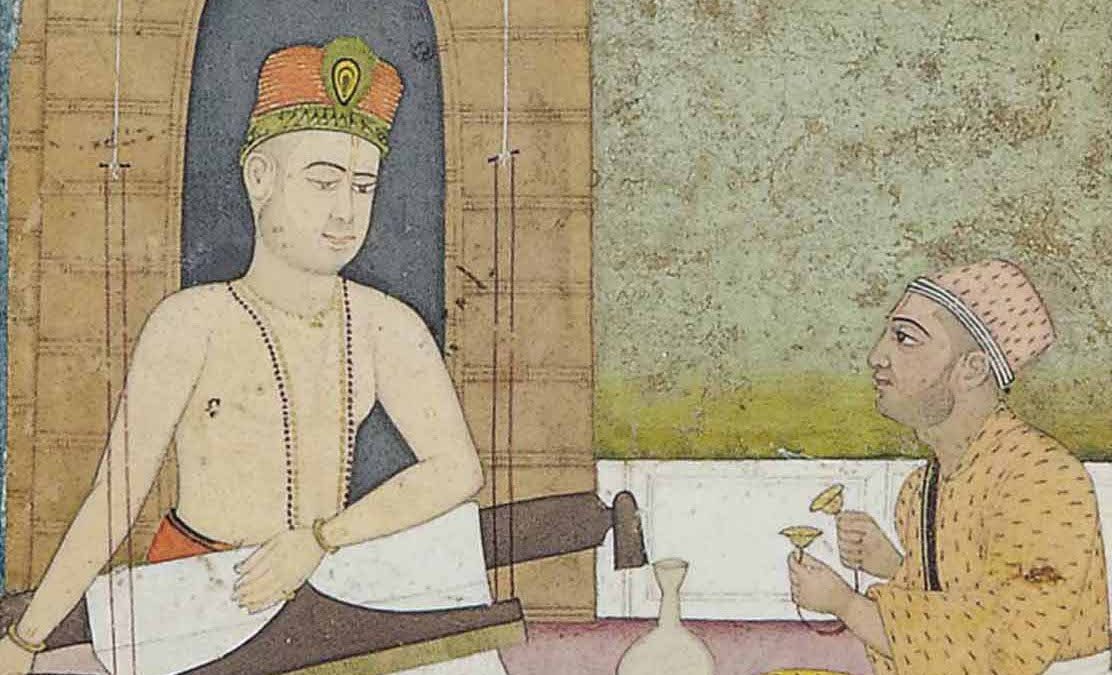
Kabir (15th century) was an Indian mystic poet and saint who lived in Varanasi and earned his living as a weaver. In blunt, vivid couplets and songs composed in the language of the street he taught that God is one and formless and is to be found within, not in temple, mosque, pilgrimage or scripture, and he mocked the pride of priests and the injustice of caste. He is revered by Hindus, Muslims and Sikhs, and his verses have been sung in north India for five hundred years. His dates are uncertain; tradition gives him a life from 1398 to 1518.
Quick Facts
| Name | Kabir (Kabir Das, Sant Kabir) |
| Born | 15th century (traditionally 1398), Varanasi, Uttar Pradesh |
| Died | Traditionally 1518, Maghar, Uttar Pradesh |
| Occupation | Weaver, poet, saint |
| Language | A mixed vernacular often called Sadhukkari |
| Tradition | Nirguna bhakti (devotion to a formless God) |
| Works | Bijak; verses in the Guru Granth Sahib; Kabir Granthavali |
Early Life
Almost nothing about Kabir’s life is documented, and what is told comes from legends recorded by his followers. He grew up in Varanasi in a family of Julahas, Muslim weavers of low social standing; the couple who raised him are named as Niru and Nima. Hindu tradition holds that he was a foundling born to a Brahmin widow. His own verses speak of the loom, the thread and the cloth, and he seems to have had no formal schooling: he says that he never touched ink or paper.
He is said to have wanted the Vaishnava teacher Ramananda as his guru. Knowing that a weaver would be refused, he lay down in the dark on the steps of a bathing ghat; the teacher stumbled on him and exclaimed “Ram!”, and Kabir took the word as his initiation.
Teachings
Kabir’s God has no form, image or incarnation and is called by many names: Ram, Hari, Allah, the True Name. He rejected the authority of the Vedas and the Quran alike, and ridiculed idol worship, ritual bathing, fasting, circumcision, the call to prayer and the sacred thread with the same energy. What mattered was honest labour, truthfulness, compassion and the constant remembrance of God.
He was merciless about caste. He asked the Brahmin by what different road he had come into the world, and whether milk ran in his veins while blood ran in others’. Many of his poems dwell on death, urging the listener to wake before it is too late. Others, the “upside-down sayings”, are deliberate riddles.
Poetry
His compositions were oral and were written down by others. They include sakhis or dohas, two-line couplets that have become proverbs; sabads, songs; and ramainis. Three main collections preserve them: the Bijak, the scripture of the Kabir Panth; the Rajasthani Kabir Granthavali; and the Sikh scripture, the Guru Granth Sahib, which contains several hundred of his verses.
Maghar
It was believed that to die in Varanasi brought salvation and that to die at Maghar, a town near Gorakhpur, brought rebirth as a donkey. Kabir, who had lived all his life in the holy city, is said to have moved to Maghar to die, to show that a person’s deeds and heart decide his fate, not the place. Legend adds that Hindus and Muslims quarrelled over his body and found only flowers beneath the shroud, which they divided. A Hindu shrine and a Muslim tomb stand side by side there.
Legacy
The Kabir Panth, the community of his followers, has millions of members, and the Sikh Gurus honoured him as a forerunner. His songs are central to the folk music of Malwa, Rajasthan and Uttar Pradesh and to classical singers. Rabindranath Tagore translated a hundred of his poems into English in 1915, and the district around Maghar is named Sant Kabir Nagar.
Frequently Asked Questions
When and where was Kabir born?
Birth details: 15th century (traditionally 1398), Varanasi, Uttar Pradesh.
When did Kabir die?
Died: Traditionally 1518, Maghar, Uttar Pradesh.
What is Kabir’s occupation?
Occupation: Weaver, poet, saint.
Featured image: Kabir at his loom, painting from Amber, about 1750–1800. Photo by Qa’im Khan, in the public domain, via Wikimedia Commons.



