
The Sensex closed at 73,246.03 on 28 October, and the Nifty at 22,698.85, leaving both about 14 percent below the highest closing levels of the past year, which were set on 2 January. The Sensex has lost roughly 14.6 percent from its peak close of 85,762.01, and the Nifty about 13.8 percent from 26,328.55, according to exchange index data. Information technology shares led the decline on the day, and 1,650 stocks fell against 1,192 that rose on the NSE in early trade, according to India TV News, with Infosys falling about 4 percent in early trading. Three forces are behind the slide: foreign investors selling Indian equities, a weaker rupee and a steep rise in oil prices that has followed the war in the Middle East.
The argument that the fall is justified starts with foreign money. Foreign portfolio investors pulled a record Rs 3.08 lakh crore from Indian equities in 2026 through 12 October, nearly double the 2025 total, according to depository data reported by Business Standard and The Statesman. The rupee has weakened from about Rs 89.8 per dollar at the end of 2025 to Rs 94.94 on 23 October, according to Federal Reserve data, which cuts the dollar value of Indian shares for overseas holders. Brent crude, which India depends on for most of its oil, rose from $71.32 a barrel on 27 February to $123.10 on 27 October, an increase of about 73 percent, according to US Energy Information Administration data. Higher oil raises India's import bill and inflation risks, so lower valuations have a rational basis.
The counterargument is that the market has already priced much of this in, and that domestic buyers are providing a cushion. The Sensex closed at 71,593.24 on 8 October, its lowest close of the past year, and has risen about 2.3 percent since, and the Nifty's closing low of 22,231.80 also came on 8 October. Domestic institutions bought about Rs 2.2 for every Rs 1 sold by foreign investors in 2026 up to 12 October, according to data reported by The Statesman, and foreign institutions were net buyers of Rs 4,240 crore on 27 October, according to India TV News, which suggests that selling may be easing. A drop of nearly 14 percent from a peak is a sizeable correction, and investors who focus on earnings and long-term growth may see lower prices as a chance to buy, especially if oil prices fall.
The slide matters beyond traders. A prolonged fall affects the savings of households that invest through mutual funds, while higher oil prices and a weaker rupee raise costs for companies and consumers alike. The Reserve Bank of India faces pressure from both inflation and a weak currency, which limits its room to support growth. Policymakers in Delhi will be watching foreign flows closely, because capital that leaves quickly can make borrowing more expensive for the whole economy.
The Sensex is in a correction driven by money leaving, a falling rupee and expensive oil, but it has also found support from domestic buyers. Whether the market has found a floor will depend on oil prices and on whether foreign investors return.
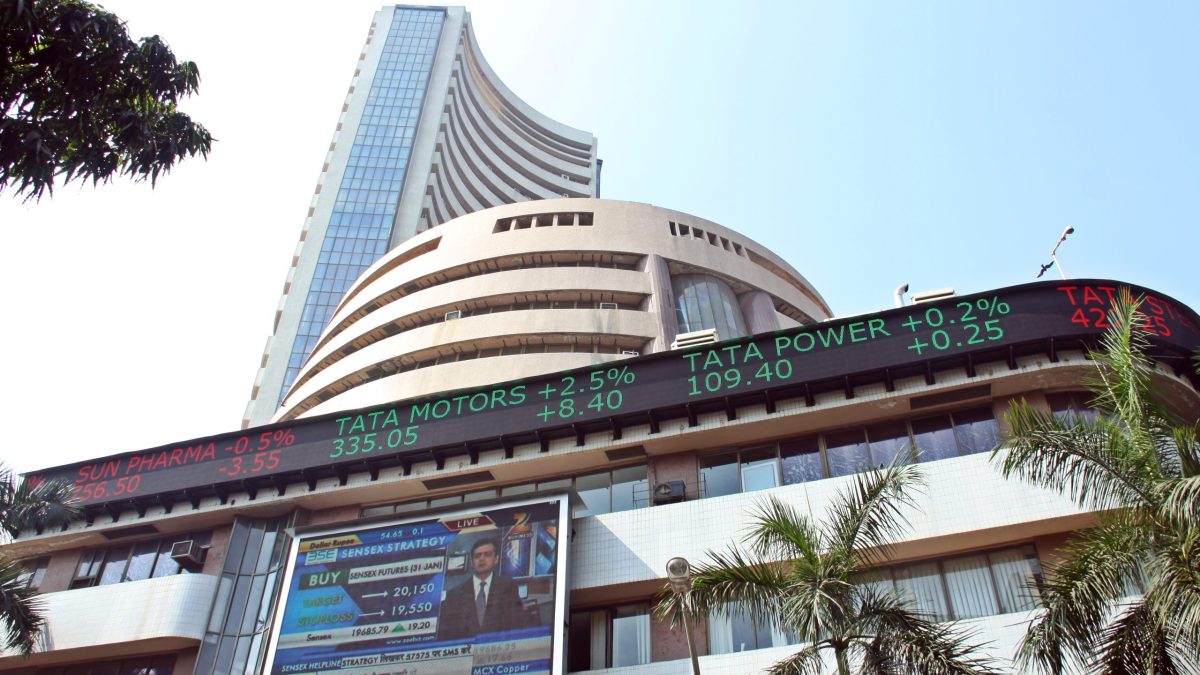
Featured image: The BSE building on Dalal Street in Mumbai (file photo). Photo: BSEINDIA, CC BY-SA 3.0, via Wikimedia Commons.




Leave a Reply