
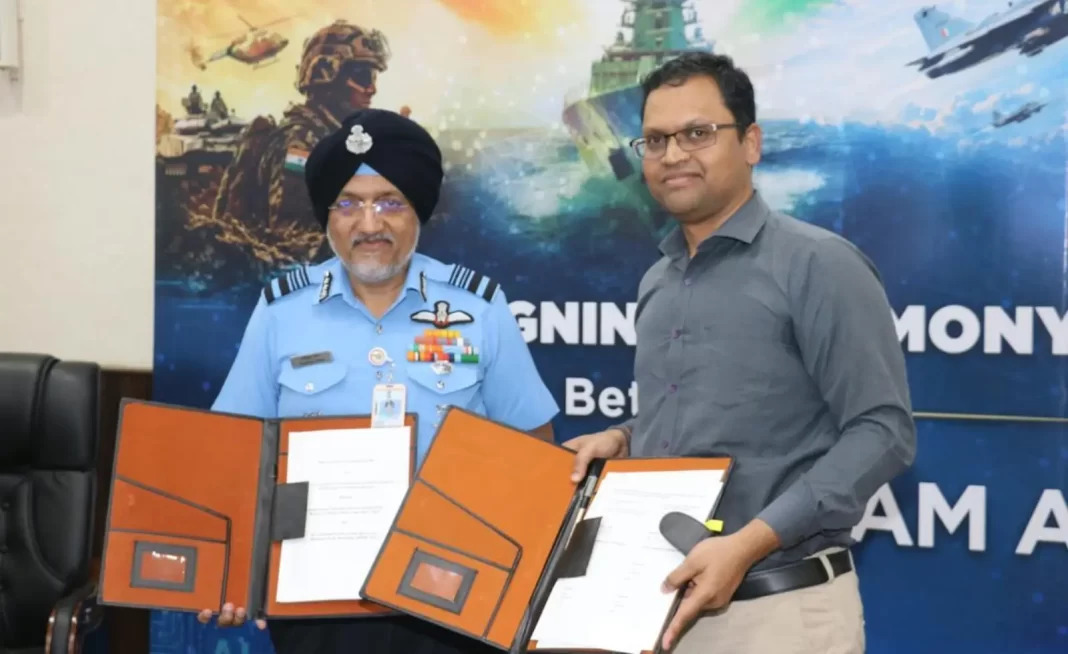
Sarvam AI, the Bengaluru-based artificial intelligence company, has signed an umbrella memorandum of understanding with Headquarters Integrated Defence Staff, an organisation under the Ministry of Defence, to design, develop and deploy AI applications for the Army, Navy and Air Force. HQ IDS announced the agreement on 26 October and Sarvam published details on 27 October, then clarified on 28 October that the document was signed with HQ IDS and not with the Ministry of Defence itself, as some reports had said. Several outlets, including ThePrint, describe it as a five-year agreement, although Sarvam's own post does not state the duration. The financial terms have not been disclosed. The framework also extends to joint, tri-service and integrated organisations under HQ IDS.
The argument that the agreement is a positive step for national security rests on sovereignty and coordination. Sarvam says the AI layer will be built in India and run on sovereign infrastructure, so that sensitive military data does not leave the country or pass through foreign cloud services. All services will share the same foundation models, agentic infrastructure, and geospatial and perception systems, so that lessons from one project can be applied by the others instead of each service buying separate, incompatible tools. The work will be carried out by Chanakya, a firewalled division of Sarvam created for national security and defence, using the company's AI stack, including its Sarvam 105B model. The focus areas are decision support, target acquisition and data fusion across what the company calls the sensor-to-shooter loop, and Sarvam says "human oversight" is retained on operational decisions. For a country that buys much of its defence technology abroad, an Indian supplier of AI is a notable shift.
The counterargument is that important details remain unknown and that the subject is sensitive. The value of the deal, the duration in the company's own words and the specific projects have not been published, which makes it hard for outsiders to judge whether the money is well spent. The initial reports mistakenly described the counterparty as the Ministry of Defence, which shows how easily such agreements can be misunderstood. Target acquisition and the sensor-to-shooter loop are areas in which mistakes can have severe consequences, and the assurance that humans will oversee operational decisions is a company statement and not a published rule. Critics of military AI also worry about reliance on one private supplier, about bias and errors in models trained on incomplete data, and about the difficulty of auditing systems that are, by their nature, classified. An umbrella MoU is also not a purchase order, so it commits neither side to any particular system, and the reports do not say how the projects will be selected, who will test them or what happens if an application fails to meet expectations. Sarvam's own description says that all services will share the same foundations, which also means that a flaw in one model could affect several services at once.
The agreement matters because it shows how quickly AI is moving from research into defence planning. Armed forces around the world are experimenting with tools that sort satellite images, summarise intelligence and suggest options to commanders, and India has chosen to work with a domestic company. If the work succeeds, it could reduce dependence on imported software and create a base of skilled engineers who understand military needs. If it goes badly, it could waste public money or, worse, produce systems that cannot be trusted in a crisis. Parliament and the public will want to see clear safeguards on how such tools are tested and used. Questions about accountability are likely to grow as the projects move from planning into deployment.
Sarvam's agreement with HQ IDS marks a significant step for sovereign AI in defence. Its value will depend on transparency, testing and the human oversight that the company promises.




Leave a Reply