Kasturbhai Lalbhai (19 December 1894 – 20 January 1980) was an Indian industrialist and institution builder from Ahmedabad. He founded Arvind Mills, which became one of the country’s leading textile companies, and Atul, which began the manufacture of dyes in India. With a small group of fellow citizens he gave Ahmedabad the colleges, research laboratories and schools of management and design for which it is known, and he directed the restoration of some of the greatest Jain temples.
Quick Facts
| Full name | Kasturbhai Lalbhai |
| Born | 19 December 1894, Ahmedabad, Gujarat |
| Died | 20 January 1980, Ahmedabad (aged 85) |
| Community | Jain |
| Occupation | Industrialist, philanthropist |
| Founded | Arvind Mills (1931); Atul Products (1947); Ahmedabad Education Society (co-founder, 1935) |
| Awards | Padma Bhushan (1969) |
| Spouse | Sharda |
| Children | Shrenik and Siddharth Lalbhai |
Early Life
He was born into one of the oldest merchant families of Ahmedabad. An ancestor, Shantidas Jhaveri, had been jeweller and banker to the Mughal emperors, and the head of the family held the hereditary position of Nagarsheth, chief citizen of the city. His father, Lalbhai Dalpatbhai, had set up cotton mills.
In 1912, when Kasturbhai was seventeen and in his first year at college, his father died. He left his studies to manage the Raipur Mill, the family’s newest.
Textiles
He began as timekeeper and storekeeper and learnt the business from the mill floor, above all the buying of cotton, in which he became expert. The mill prospered in the First World War.
In 1931, at the height of the swadeshi movement and in the middle of the world depression, he and his brothers founded Arvind Mills, equipped with the most modern machinery to make the fine cloth that India then imported from Lancashire. The family came to control seven mills, and Arvind became the flagship. In later decades it turned to denim and became one of the largest makers of it in the world.
Atul
During the Second World War India could not get dyes, all of which came from abroad. In 1947 he founded Atul Products, on a tract of empty land by a river near Valsad in south Gujarat, in collaboration with an American company. Jawaharlal Nehru opened the works in 1952. It was the beginning of India’s dye and chemical industry, and the company built a town around the factory.
Public Life
He was elected to the Central Legislative Assembly in 1923 as the representative of the mill owners and secured the abolition of the excise duty on Indian cloth. He helped Mahatma Gandhi and Vallabhbhai Patel with relief in famine and flood and gave to the national movement, while keeping out of politics.
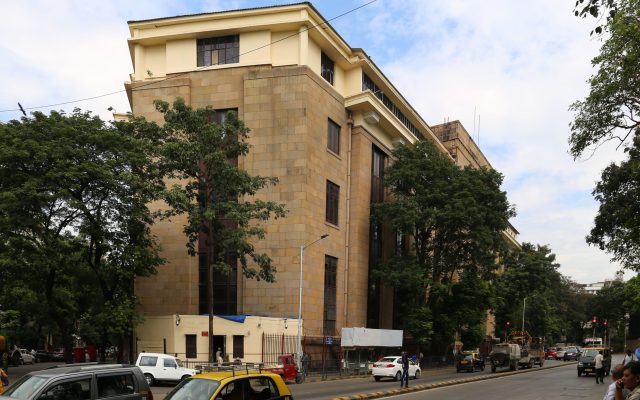
After independence the government used him often: as a director of the Reserve Bank, on delegations abroad, and as chairman of the committee that chose Kandla as the site of a new port to replace Karachi.
The Institutions of Ahmedabad
With the Sarabhai family, the lawyer G. V. Mavalankar and others, he set out to make a mill town a centre of learning.
- **The Ahmedabad Education Society (1935),** which founded the city’s arts, science, commerce and pharmacy colleges and gave the land for Gujarat University
- **The Ahmedabad Textile Industry’s Research Association (1947),** with Vikram Sarabhai
- **The Physical Research Laboratory,** which Sarabhai directed
- **The Indian Institute of Management, Ahmedabad (1961),** for which he was a chief mover and whose buildings were designed by Louis Kahn
- **The Lalbhai Dalpatbhai Institute of Indology,** housing a great collection of manuscripts, and the engineering college that bears the same name
- **The National Institute of Design** and the school of architecture founded by B. V. Doshi
He had a discerning eye and brought to the city the best architects of the day, among them Le Corbusier, who designed the mill owners’ building.
The Temples
For fifty years he was president of the trust that manages the principal Jain shrines. Under his personal direction the temples of Ranakpur, Dilwara at Mount Abu, Taranga and Shatrunjaya were repaired by traditional craftsmen, using the old methods, with a care for authenticity that became a model for such work.
Character
He was frugal, punctual and reserved, and wore plain white khadi. He believed that wealth should be used and not shown.
Death
He died in Ahmedabad on 20 January 1980.
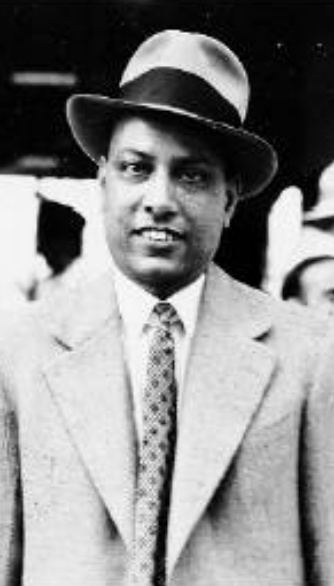
Featured image: Kasturbhai Lalbhai in 1940. Photo by The Times of India, in the public domain, via Wikimedia Commons.