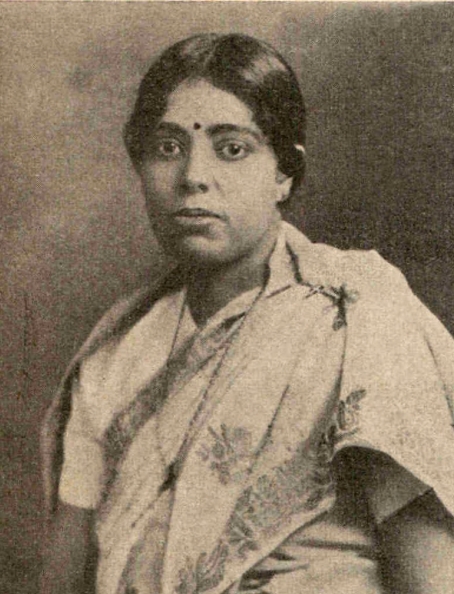
Edavaleth Kakkat Janaki Ammal (4 November 1897 – 7 February 1984) was an Indian botanist who worked on the genetics of plants. She helped breed the sweet sugarcane varieties that India grows, co-wrote a standard reference work on plant chromosomes, and reorganised the Botanical Survey of India. She was among the first Indian women to earn a doctorate in science.
Quick Facts
| Full name | Edavaleth Kakkat Janaki Ammal |
| Born | 4 November 1897, Tellicherry (Thalassery), Madras Presidency |
| Died | 7 February 1984, Madras (aged 86) |
| Field | Botany, cytogenetics, plant geography |
| Education | Queen Mary’s College and Presidency College, Madras; University of Michigan (M.S., 1925; D.Sc., 1931) |
| Known for | Sugarcane hybrids; Chromosome Atlas of Cultivated Plants |
| Positions | Sugarcane Breeding Institute, Coimbatore; John Innes Horticultural Institution; Royal Horticultural Society, Wisley; Botanical Survey of India |
| Honours | Padma Shri (1977) |
Early Life
She was born at Tellicherry on the Malabar coast into a large Thiyya family. Her father, E. K. Krishnan, was a sub-judge with a love of natural history who kept a garden and wrote about the birds of north Malabar. In a time and place where girls were married in their teens, she chose to study.
Education
She took her bachelor’s degree from Queen Mary’s College and an honours degree in botany from Presidency College in Madras, and taught at the Women’s Christian College. In 1924 she went to the University of Michigan on a Barbour Scholarship for Asian women, took a master’s degree in 1925, and returned for a doctorate, awarded in 1931. She is regarded as the first Indian woman to receive a doctorate in botany in the United States.
Career
Sugarcane
In 1934 she joined the Sugarcane Breeding Institute at Coimbatore. Indian sugarcane was then hardy but low in sugar, and the country imported sweeter cane from Java. By studying the chromosomes of different canes and crossing them, including crosses between sugarcane and other grasses, she helped produce hybrids that were both sweet and suited to Indian conditions. She also showed that the cane species Saccharum spontaneum had originated in India.
As an unmarried woman from a caste regarded as backward, she faced hostility from some colleagues.
England
She left for London in 1940 and worked through the war at the John Innes Horticultural Institution. With C. D. Darlington she wrote the Chromosome Atlas of Cultivated Plants (1945), listing the chromosome numbers of about 100,000 plants, which became a standard tool for breeders. From 1945 to 1951 she was a cytologist at the Royal Horticultural Society’s garden at Wisley, where she worked on magnolias. A white-flowered variety, Magnolia kobus ‘Janaki Ammal’, still grows there.
Return to India
In 1951 Jawaharlal Nehru invited her to return and reorganise the Botanical Survey of India. She set up its Central Botanical Laboratory, argued that Indian plants should be collected and studied by Indians, and took an interest in the plants used by tribal communities. She later worked at the Bhabha Atomic Research Centre and at the University of Madras.
Silent Valley
In her eighties she spoke out against the hydroelectric project that would have flooded the Silent Valley forest in Kerala, and made a study of its plants. The project was abandoned, and the forest was declared a national park in 1984, the year she died.
Personal Life
She never married, lived simply, and described herself as a Gandhian. She is said to have remarked that her work was what would survive.
Legacy
The Padma Shri was conferred on her in 1977. A national award for plant taxonomy carries her name, as do a herbarium in Jammu and scholarships offered by the John Innes Centre to students from developing countries.
Featured image: Janaki Ammal in 1938. Photo by an unknown photographer, in the public domain, via Wikimedia Commons.