Birbal Sahni (14 November 1891 – 10 April 1949) was an Indian palaeobotanist who studied the fossil plants of the subcontinent and founded the research institute at Lucknow that now carries his name. He was the first Indian botanist elected a Fellow of the Royal Society, and he made the study of ancient plant life an Indian science.
Quick Facts
| Full name | Birbal Sahni |
| Born | 14 November 1891, Bhera, Shahpur district, Punjab (now in Pakistan) |
| Died | 10 April 1949, Lucknow (aged 57) |
| Field | Palaeobotany, geology |
| Education | Government College, Lahore; Emmanuel College, Cambridge; University of London (D.Sc., 1919); Cambridge (Sc.D., 1929) |
| Known for | Fossil plants of India; founder of the Institute of Palaeobotany |
| Position | Professor of Botany, Lucknow University (1921–1949) |
| Honours | Fellow of the Royal Society (1936) |
| Spouse | Savitri Suri (m. 1920) |
Early Life
He was born at Bhera in the Salt Range of Punjab, the third child of Ruchi Ram Sahni, a professor of chemistry at Government College, Lahore, and a social reformer, and Ishwar Devi. His father took the children on long treks in the Himalayas, and the boy collected plants, rocks and fossils. The house in Lahore was visited by nationalist leaders, and Birbal grew up a supporter of the freedom movement and wore khadi all his life.
Education
After graduating from Government College, Lahore, in 1911, he went to Emmanuel College, Cambridge. He studied under the palaeobotanist Sir Albert Seward, who became his teacher and friend. He received the D.Sc. of London University in 1919 for work on fossil plants, and in 1929 the Sc.D. of Cambridge.
Career
Lucknow
He returned to India in 1919 and taught at Banaras and Lahore before becoming, in 1921, the first professor of botany at the new Lucknow University. He stayed for the rest of his life, built the department, and later started the university’s department of geology as well.
Research
His work ranged across the plant fossils of India.
- **Gondwana plants:** He described the seed ferns and other plants of the ancient southern continent, and reconstructed an extinct plant, Williamsonia sewardiana, from the Rajmahal Hills of Bihar.
- **A new group:** From the same hills he described the Pentoxyleae, a group of Jurassic plants unlike any known before.
- **Dating rocks with plants:** Using microscopic plant remains, he argued that the Deccan Traps of central India were younger than had been thought, and entered the long debate on the age of the Salt Range.
- **Continental drift:** He used the distribution of fossil plants as evidence that the continents had moved.
He also wrote on archaeology, including a study of the technique of casting coins in ancient India.
The institute
He believed India needed a centre for the study of fossil plants. With a group of colleagues he formed the Palaeobotanical Society in 1946 and founded the Institute of Palaeobotany at Lucknow, at first in the university’s botany department. On 3 April 1949, Jawaharlal Nehru laid the foundation stone of its building. A week later, on 10 April, Sahni died of a heart attack.
Personal Life
He married Savitri Suri in 1920. She travelled with him on field trips and helped with his collections and photographs. After his death she took charge of the unfinished institute and saw it completed. They had no children.
Legacy
The institute was renamed the Birbal Sahni Institute of Palaeobotany, now the Birbal Sahni Institute of Palaeosciences. He had been chosen as president of the International Botanical Congress to be held in Stockholm in 1950, an honour he did not live to take up.
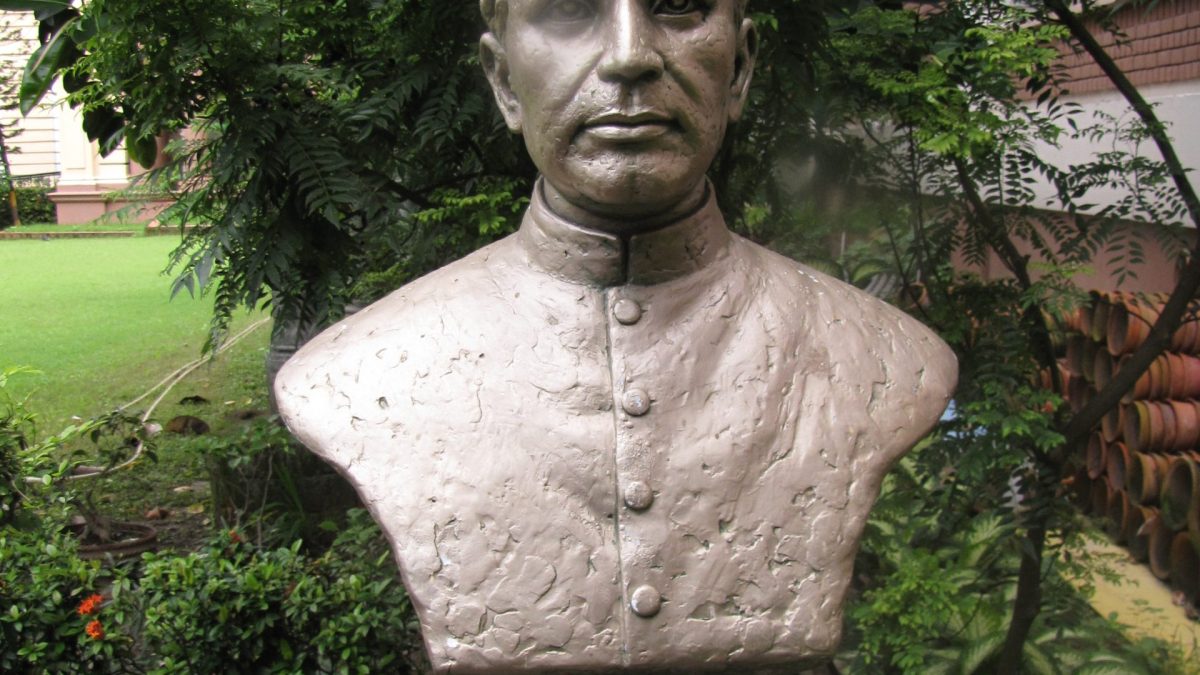
Featured image: A bust of Birbal Sahni at the Birla Industrial and Technological Museum, Kolkata. Photo by AshLin, licensed under CC BY-SA 3.0, via Wikimedia Commons.