
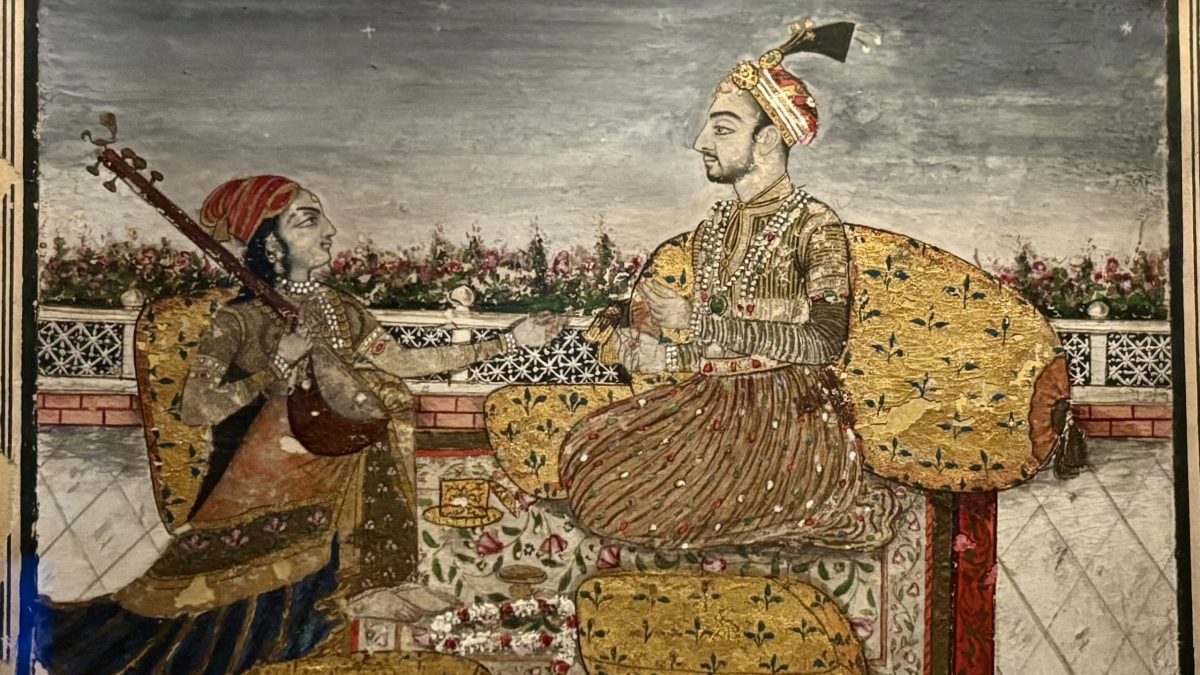
Siraj-ud-Daulah (c. 1733 – 2 July 1757) was the last independent Nawab of Bengal, Bihar and Orissa. He succeeded his grandfather in April 1756 when he was in his early twenties and reigned for fifteen months. In that time he captured the East India Company’s settlement at Calcutta, lost it again, and was defeated at the Battle of Plassey on 23 June 1757 through the treachery of his own commanders. His fall opened the way to British rule in India.
Quick Facts
| Full name | Mirza Muhammad Siraj-ud-Daulah |
| Born | c. 1733, Murshidabad, Bengal |
| Died | 2 July 1757, Murshidabad |
| Title | Nawab of Bengal, Bihar and Orissa |
| Reign | April 1756 – June 1757 |
| Predecessor | Alivardi Khan (grandfather) |
| Successor | Mir Jafar |
| Known for | Capture of Calcutta (1756); Battle of Plassey (1757) |
| Burial | Khushbagh, Murshidabad |
Early Life
Siraj was the son of the youngest daughter of Alivardi Khan, who seized the government of Bengal in 1740 and ruled it ably for sixteen years, fighting off Maratha invasions. The old Nawab had no son, doted on this grandson, took him on campaign as a boy and in 1752 named him heir, passing over older relatives. Contemporary accounts, most of them written by his enemies or after his fall, describe the young prince as headstrong and harsh; how far they can be trusted is uncertain.
Accession
Alivardi died in April 1756. Siraj’s succession was resented by his aunt Ghaseti Begum, who had wealth and a party of her own, by his cousin Shaukat Jang, governor of Purnea, and by senior officers including the paymaster of the army, Mir Jafar. The great banking house of the Jagat Seths, which financed the government, also distrusted him. He disarmed his aunt at once and later that year defeated and killed Shaukat Jang.
Conflict with the Company
The English East India Company traded in Bengal under old imperial grants that exempted its goods from duty, a privilege its servants abused for their private trade. In 1756, expecting war with France, the Company began to strengthen the defences of Fort William in Calcutta without the Nawab’s permission, and it gave shelter to a fugitive from his court. When his orders to stop were ignored, he seized the Company’s factory at Kasimbazar and marched on Calcutta. The governor and many of the garrison fled by river, and the fort fell on 20 June 1756.
That night a number of European prisoners were confined in a small guardroom, and many died of suffocation and heat. The account written by one survivor, which gave the figures as 146 imprisoned and 123 dead, made the “Black Hole of Calcutta” notorious in Britain; historians consider the numbers greatly exaggerated, and there is no evidence that the Nawab ordered or knew of it.
Plassey
A force from Madras under Robert Clive and Admiral Watson retook Calcutta in January 1757. After a skirmish near the city Siraj, threatened also by an Afghan invasion of northern India, signed a treaty restoring the Company’s privileges. Clive then captured the French settlement at Chandernagore and entered into a secret agreement with the discontented nobles: Mir Jafar would be made Nawab, and the Company and its officers would be richly rewarded.
The armies met on 23 June 1757 in the mango groves at Plassey, on the Bhagirathi north of Calcutta. Siraj had some fifty thousand men and Clive about three thousand, but the greater part of the Nawab’s army, under Mir Jafar and others, stood aside. A rainstorm soaked his artillery’s powder, his loyal general Mir Madan was killed, and on treacherous advice he ordered a withdrawal that turned into a rout.
Death
He fled to Murshidabad and then up river in disguise with his wife, Lutfunnisa, and their small daughter. He was recognised, brought back and, on 2 July 1757, put to death on the orders of Mir Jafar’s son. He is buried at Khushbagh beside his grandfather.
Legacy
Mir Jafar’s name became a byword for treachery in Bengal, and the Company became the real ruler of the province. In the nationalist memory of Bengal, in plays, poems and films, Siraj-ud-Daulah is remembered as a young ruler who resisted foreign domination and was brought down by betrayal.
Frequently Asked Questions
When and where was Siraj-ud-Daulah born?
Birth details: c. 1733, Murshidabad, Bengal.
When did Siraj-ud-Daulah die?
Died: 2 July 1757, Murshidabad.
What is Siraj-ud-Daulah known for?
Known for: Capture of Calcutta (1756); Battle of Plassey (1757).
Featured image: Siraj-ud-Daulah listening to music, a Murshidabad-school miniature. Photo by SpeakingArch, licensed under CC BY-SA 4.0, via Wikimedia Commons.



