
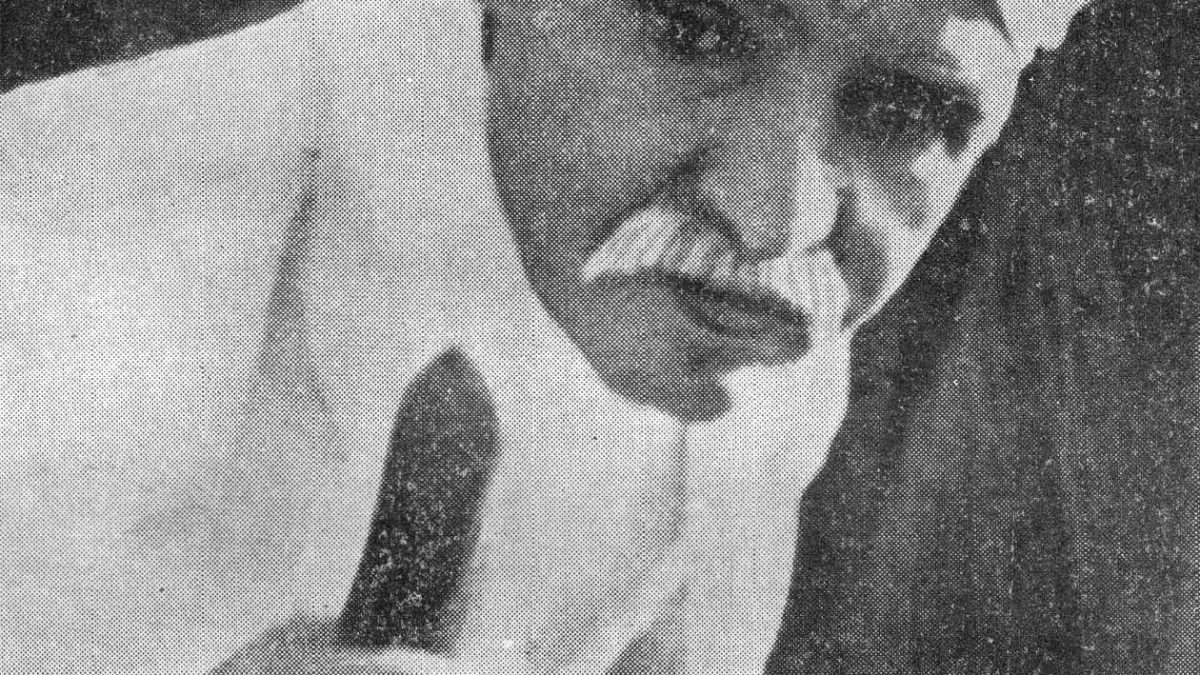
Pandit Madan Mohan Malaviya (25 December 1861 – 12 November 1946) was an Indian educationist, lawyer, journalist and nationalist leader, known by the title Mahamana, “great soul”. He founded Banaras Hindu University in 1916, raising the money for it coin by coin from princes and villagers, and was its vice-chancellor for nearly twenty years. He presided over the Indian National Congress in 1909 and 1918 and was elected to the office on two further occasions. He was awarded the Bharat Ratna posthumously in 2014.
Quick Facts
| Full name | Madan Mohan Malaviya |
| Born | 25 December 1861, Allahabad (now Prayagraj), Uttar Pradesh, India |
| Died | 12 November 1946 (aged 84), Varanasi |
| Occupation | Educationist, lawyer, journalist, politician |
| Known for | Founder of Banaras Hindu University |
| Offices | President, Indian National Congress (1909, 1918); Vice-Chancellor, BHU (1919–1938) |
| Education | Muir Central College, Allahabad (B.A.); LL.B. |
| Honours | Bharat Ratna (2014, posthumous) |
Early Life
Malaviya was born in Allahabad into a family of Sanskrit scholars of modest means; his father earned his living by reciting and expounding the Bhagavata Purana. He studied at a Sanskrit school and then in English at Muir Central College, taking his degree in 1884. Too poor to continue, he became a schoolteacher.
Career
At the second session of the Indian National Congress in Calcutta in 1886 his speech impressed a landowner of Oudh, who invited him to edit the Hindi daily Hindustan. He went on to found or edit several papers, among them the Hindi weekly Abhyudaya (1907) and the English daily The Leader (1909) in Allahabad, and in the 1920s he raised the funds that saved the Hindustan Times and chaired its board for many years. He qualified in law in 1891 and built a large practice at the Allahabad High Court, which he gave up in 1911 for public work. He returned to court once, in 1923, to argue the appeal of the villagers sentenced to death after the Chauri Chaura incident, and saved most of them from the gallows.
He sat in the provincial and then the Imperial Legislative Council from 1902 to 1920, where he spoke against the Rowlatt Bills and the system of indentured labour and for free primary education. He was a moderate by temperament and often differed with Mahatma Gandhi on tactics, but he supported the Salt Satyagraha and was jailed in 1930 and 1932. He was a leader of the Hindu Mahasabha and at the same time a signatory, with B. R. Ambedkar, of the Poona Pact of 1932, and he worked for the admission of Dalits to temples. He attended the second Round Table Conference in London in 1931.
He first proposed a university at Varanasi in 1904. For years he travelled across the country asking for donations, earning the name “prince of beggars”. The university was established by an Act of 1915, and the foundation stone was laid on 4 February 1916. It was designed as a residential university teaching modern science, engineering, medicine and agriculture alongside Sanskrit learning, open to students of all communities, and it became one of the largest in Asia. He was vice-chancellor from 1919 to 1938.
He helped found the scout movement for Indian boys, led the agitation that secured an agreement in 1916 to keep the Ganga flowing freely at Haridwar, and popularised the phrase “Satyameva Jayate”, later adopted as the national motto.
Death and Legacy
He died in Varanasi on 12 November 1946, months before independence. Institutions across India bear his name, and in December 2014 the government announced the Bharat Ratna for him, together with Atal Bihari Vajpayee.
Frequently Asked Questions
When and where was Madan Mohan Malaviya born?
Madan Mohan Malaviya was born on 25 December 1861 in Allahabad (now Prayagraj), Uttar Pradesh, India.
When did Madan Mohan Malaviya die?
Died: 12 November 1946 (aged 84), Varanasi.
What is Madan Mohan Malaviya known for?
Known for: Founder of Banaras Hindu University.
What honours has Madan Mohan Malaviya received?
Bharat Ratna (2014, posthumous).
Featured image: Madan Mohan Malaviya, undated photograph from Banaras Hindu University. Photo by Banaras Hindu University, in the public domain, via Wikimedia Commons.



