
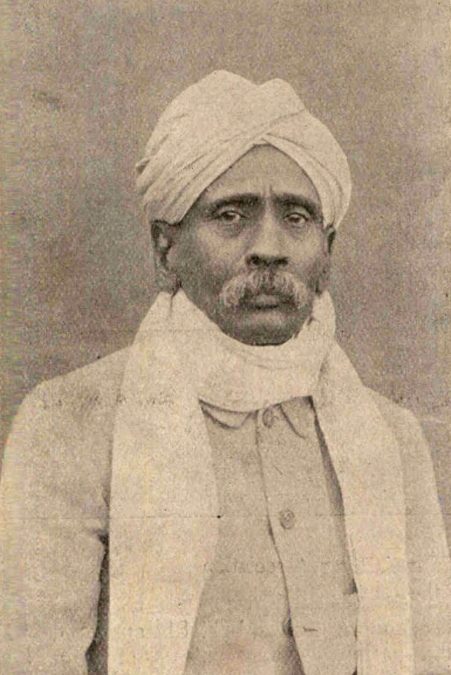
Dhondo Keshav Karve (18 April 1858 – 9 November 1962), known as Maharshi Karve and affectionately as Anna, was an Indian social reformer and educator who devoted his long life to the education of women and the welfare of widows. He married a widow in defiance of his community, founded a home and school for widows near Pune, and in 1916 established the first university for women in India. He was awarded the Bharat Ratna in 1958, the year of his hundredth birthday.
Quick Facts
| Full name | Dhondo Keshav Karve |
| Born | 18 April 1858, Sheravali, Ratnagiri district, Maharashtra |
| Died | 9 November 1962, Pune (aged 104) |
| Education | Elphinstone College, Bombay (B.A. in mathematics, 1884) |
| Occupation | Social reformer, educator, professor of mathematics |
| Founded | Widow Marriage Association (1893); Hindu Widows’ Home, Hingne (1896); Indian Women’s University (1916) |
| Awards | Padma Vibhushan (1955), Bharat Ratna (1958) |
| Spouse | Radhabai (d. 1891); Godubai, later Anandibai (m. 1893) |
Early Life
He was born in a village on the Konkan coast and grew up at Murud, in a poor Chitpavan Brahmin family. To sit a public examination at seventeen he walked more than a hundred and seventy kilometres over the hills to Satara, and was then turned away because he looked too young. He passed later, supported himself by tutoring, and graduated in mathematics from Elphinstone College at twenty-six.
He had been married at fourteen to Radhabai, a girl of eight. She died in 1891, leaving a son.
The Teacher
At the invitation of Gopal Krishna Gokhale he joined Fergusson College in Pune in 1891 as professor of mathematics, and taught there for twenty-three years on the small salary of a life member of the Deccan Education Society.
Marriage to a Widow
Among upper-caste Hindus of the time a widow, even a child, could not marry again. Her head was shaved, she wore a single coarse garment, ate once a day and was treated as a creature of ill omen. Widow marriage had been legal since 1856 but was almost never performed.
Karve resolved that if he married again it would be to a widow. In 1893 he married Godubai, the sister of a friend, who had been widowed at eight and was the first student of Pandita Ramabai‘s school for widows. His village excommunicated him, and for years his relatives would not eat with him. In the same year he founded an association to promote widow marriage.
The Widows’ Home
He came to believe that remarriage was a remedy for few, and that what widows needed was education and the means to stand on their own feet. In 1896 he founded a home for widows, which settled in a hut on donated land at Hingne, a village outside Pune. He walked there and back from the college each day and went about the city collecting small donations. A school for girls was added in 1907. His wife’s sister, Parvatibai Athavale, herself a widow, became its chief worker and fund-raiser.
The Women’s University
In 1915 he read of the women’s university in Tokyo and announced, in his presidential address to the national social conference, that he would found one in India. It opened the next year with five students. Teaching was in Marathi, and the courses were designed for women’s lives as he understood them.
In 1920 the Bombay industrialist Vithaldas Thackersey gave fifteen lakh rupees, and the university took the name of his mother: Shreemati Nathibai Damodar Thackersey, or SNDT, Women’s University. It later moved to Bombay and received statutory recognition in 1949.
At seventy-one he toured Europe, America, Japan and Africa to raise money. He later founded a society to open primary schools in villages and another to promote equality between castes.
His Family
His son Raghunath Karve was a pioneer of birth control in India and lost his college post for advocating it. His daughter-in-law Irawati Karve became a celebrated anthropologist.
Recognition
- Padma Vibhushan (1955)
- Bharat Ratna (1958)
- Honorary doctorates from several universities
He wrote his autobiography in Marathi and, in English, Looking Back.
Death
He died in Pune on 9 November 1962, at a hundred and four. The institution at Hingne is today a large educational complex for women, and the road to it bears his name. He stands in the line of Maharashtra’s reformers that began with Jyotirao Phule and Savitribai Phule.
Featured image: Dhondo Keshav Karve in 1928. Photo by an unknown photographer, in the public domain, via Wikimedia Commons.



