
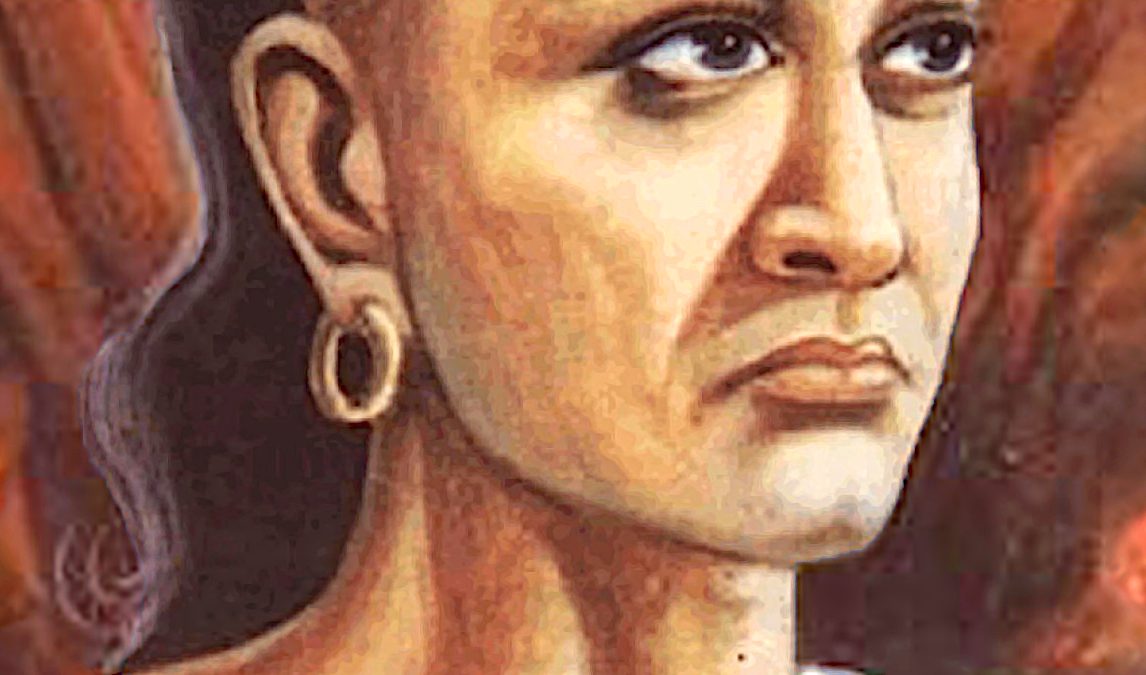
Chanakya (traditionally about 375–283 BCE), also known as Kautilya and Vishnugupta, was an ancient Indian teacher, strategist and royal adviser. Tradition makes him the man who brought down the Nanda dynasty and placed Chandragupta Maurya on the throne of Magadha, and the author of the Arthashastra, a treatise on government, economics and war. His name has become a byword in India for political shrewdness.
Quick Facts
| Also known as | Kautilya, Vishnugupta |
| Lived | 4th century BCE (traditional dates about 375–283 BCE) |
| Associated with | Takshashila (Taxila); Pataliputra |
| Occupation | Teacher, minister, political thinker |
| Known for | Adviser to Chandragupta Maurya; the Arthashastra |
| Works attributed | Arthashastra; Chanakya Niti |
The Sources
No record of Chanakya survives from his own lifetime. The Greek accounts of Chandragupta do not mention him. His story is told in Buddhist chronicles from Sri Lanka, in Jain texts, in Kashmiri collections of tales and in the Sanskrit play Mudrarakshasa, all composed many centuries later and differing in detail. Historians accept that there was such a minister; much of the rest is legend.
The Legend
He was a Brahmin, learned in the Vedas and in the science of politics, and according to most versions a teacher at Takshashila, the great centre of learning in the north-west. He is described as ugly, with crooked teeth, and proud.
He came to Pataliputra, the capital of the Nanda king. At a royal ceremony he was insulted and thrown out of the assembly. He untied the knot of hair that Brahmins wear and swore not to tie it again until he had destroyed the Nanda line.
He found a boy, Chandragupta, playing at being king among his friends, saw his promise and took him away to be trained. With treasure he had amassed and troops recruited from the frontier, the two attacked the Nanda kingdom and were beaten. Learning from the failure, they conquered the outlying provinces first and closed in on the capital. The Nandas fell about 321 BCE.
As chief minister he is said to have built the new king’s administration and guarded him, even accustoming him to poison in small doses so that he would be immune to assassins. The play Mudrarakshasa shows him winning over the last loyal minister of the old dynasty by an elaborate web of plots, not for his own gain but to secure the kingdom.
The Arthashastra
The Arthashastra, “the science of material gain” or of statecraft, was known for centuries only from references in other works. In 1905 a pandit brought a palm-leaf manuscript to the Oriental Library at Mysore, where the librarian, R. Shamasastry, recognised it and published it in 1909.
It is a manual for a king, in fifteen books.
- **The state:** its seven elements, the king, the ministers, the territory, the fort, the treasury, the army and the ally
- **The king’s duty:** “In the happiness of his subjects lies the king’s happiness; in their welfare, his welfare.” His day is divided into strict periods of work.
- **Administration:** departments for agriculture, mines, trade, weights and measures, forests and much else, with rules for officials and for auditing them
- **Law:** courts, contracts, marriage, inheritance and punishments
- **Espionage:** a large secret service, with spies disguised as monks, merchants and householders, to watch officials and enemies
- **Foreign policy:** the “circle of kings”, in which one’s neighbour is a natural enemy and the neighbour’s neighbour a natural friend, and six policies ranging from peace to war
- **War:** by open battle, by deception and by silent means
It is unsentimental about power and has often been compared with Machiavelli’s Prince, written eighteen centuries later, though its concern for the people’s welfare is stronger.
The Question of Date
The text names Kautilya as its author. Many scholars now think it was compiled and revised over several centuries, reaching its present form in the early centuries of the Common Era, perhaps around a core that goes back to Mauryan times.
Chanakya Niti
A collection of sayings on conduct and worldly wisdom, known as the Chanakya Niti, circulates under his name and is widely read.
Legacy
The diplomatic quarter of New Delhi is called Chanakyapuri, and institutes of public policy and law carry his name. A television series on his life was widely watched in the early 1990s. For Indians he stands for the idea that a state needs cool calculation as well as moral purpose.
Featured image: Chanakya, in an artist’s impression of 1915. Photo by an unknown artist, in the public domain, via Wikimedia Commons.



