
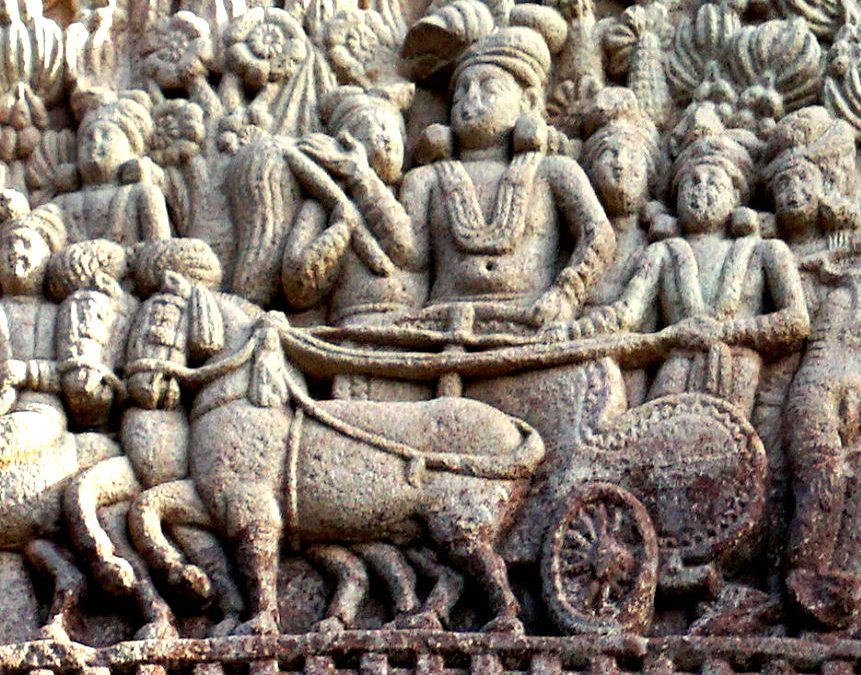
Ashoka (c. 304 – c. 232 BCE), also known as Ashoka the Great, was the third emperor of the Maurya dynasty. He ruled almost the entire Indian subcontinent from about 268 to 232 BCE. After a brutal war of conquest in Kalinga, he turned away from violence and embraced Buddhism. He then devoted the rest of his reign to dhamma, a code of moral conduct built on non-violence, tolerance and welfare. His edicts, carved on rocks and pillars across his empire, are the earliest surviving written records of Indian history. His Lion Capital at Sarnath is today the National Emblem of India.
Quick Facts
| Name | Ashoka (Asoka); titled Devanampiya Piyadasi, “Beloved of the Gods” |
| Born | c. 304 BCE, Pataliputra (present-day Patna, Bihar) |
| Died | c. 232 BCE, Pataliputra |
| Reign | c. 268 – 232 BCE |
| Dynasty | Maurya |
| Father | Emperor Bindusara |
| Grandfather | Chandragupta Maurya, founder of the dynasty |
| Capital | Pataliputra |
| Religion | Buddhism (after the Kalinga War) |
| Children | Including Mahinda, Sanghamitta and Tivala |
| Legacy | Lion Capital of Sarnath (National Emblem of India), Ashoka Chakra on the national flag |
Early Life
Ashoka was a son of the Maurya emperor Bindusara and a grandson of Chandragupta Maurya, who had founded the empire around 321 BCE. Much of what is known about his youth comes from later Buddhist texts, such as the Ashokavadana and the Sri Lankan chronicles, which mix history with legend. According to these accounts, the young prince was a capable soldier and administrator. His father sent him to put down a revolt in Taxila and made him governor of Ujjain.
Rise to the Throne
When Bindusara died around 273 BCE, a struggle for succession followed. Buddhist legends say Ashoka killed many of his brothers to seize power, though historians treat these stories with caution. They may have been exaggerated to contrast “Ashoka the Fierce” with the later “Ashoka the Righteous”. He was formally crowned around 268 BCE.
The Kalinga War
Around 261 BCE, in the eighth year of his reign, Ashoka invaded Kalinga, a rich kingdom on the east coast in present-day Odisha. The conquest was devastating. In his own words, recorded in Rock Edict XIII, 150,000 people were deported, 100,000 were killed and many more died. The suffering filled him with deep remorse. He declared that true conquest was conquest by dhamma, not by the sword. The Kalinga War is remembered as one of history’s rare examples of a ruler publicly regretting his own victory.
Embracing Buddhism and Dhamma
After Kalinga, Ashoka became a lay follower of Buddhism and made pilgrimages to sacred sites such as Lumbini, the birthplace of the Buddha. His dhamma was not a narrow religious creed. It was a moral code urging respect for parents and elders, kindness to servants and animals, honesty, generosity and tolerance of all religious sects. He appointed special officers, the dhamma-mahamattas, to spread these values and look after people’s welfare.
Ashoka’s government built rest houses and wells along roads, planted shade trees and set up medical treatment for humans and animals. He restricted the killing of animals, including in the royal kitchens. According to Buddhist tradition, he supported the Third Buddhist Council at Pataliputra. He also sent missionaries far and wide, including his son Mahinda and daughter Sanghamitta, who took Buddhism to Sri Lanka.
The Edicts of Ashoka
Ashoka had his messages carved on rocks and polished stone pillars across his empire, from Afghanistan to Karnataka. Most were written in Prakrit using the Brahmi script. In the northwest he used Kharosthi, and at Kandahar Greek and Aramaic. These Major Rock Edicts, Minor Rock Edicts and Pillar Edicts are the earliest deciphered written records in India. Scholars could not read them for centuries, until the British scholar James Prinsep deciphered the Brahmi script in 1837. Most edicts refer to the king only as “Devanampiya Piyadasi”. His identity as Ashoka was confirmed when an edict naming him was found at Maski in Karnataka in 1915.
Empire and Administration
At its height, Ashoka’s empire stretched from present-day Afghanistan in the west to Bengal in the east and deep into southern India. Only the Tamil kingdoms of the far south, such as the Cholas and Pandyas, lay outside it, and his edicts mention them as neighbours. The empire was governed from Pataliputra through provincial capitals such as Taxila, Ujjain and Tosali. Ashoka also kept up diplomatic contact with Hellenistic kingdoms to the west.
Monuments
Tradition credits Ashoka with building or enlarging thousands of stupas. The Great Stupa at Sanchi in Madhya Pradesh has its origins in his reign. His finely polished sandstone pillars, crowned with animal capitals, are among the masterpieces of ancient Indian art. The most famous of them is the Lion Capital at Sarnath, where the Buddha gave his first sermon.
Family
Ashoka had several wives. They included Devi of Vidisha, mother of Mahinda and Sanghamitta; Queen Karuvaki, the only queen named in his edicts and the mother of Prince Tivala; Asandhimitra; and Tishyarakshita.
Death and Decline of the Empire
Ashoka died around 232 BCE after ruling for about 36 years. The Maurya Empire weakened quickly under his successors. Around 185 BCE the last Maurya ruler, Brihadratha, was assassinated by his general, Pushyamitra Shunga, who founded the Shunga dynasty.
Legacy
For centuries after his death Ashoka was remembered mainly in Buddhist lands such as Sri Lanka. His full historical importance was only rediscovered after his edicts were deciphered in the 19th century. When India became a republic, it chose symbols from his reign for the nation. The Lion Capital of Sarnath was adopted as the National Emblem on 26 January 1950, and the 24-spoke Ashoka Chakra sits at the centre of the national flag. The historian H. G. Wells ranked him among the greatest rulers who ever lived.
Frequently Asked Questions
When and where was Ashoka the Great born?
Birth details: c. 304 BCE, Pataliputra (present-day Patna, Bihar).
When did Ashoka the Great die?
Died: c. 232 BCE, Pataliputra.
Featured image: Emperor Ashoka in his chariot on a visit to the Ramagrama stupa, a relief carving on the southern gateway of the Great Stupa at Sanchi, Madhya Pradesh (1st century BCE). Photo by Photo Dharma from Sadao, Thailand, licensed under CC BY 2.0, via Wikimedia Commons.



