
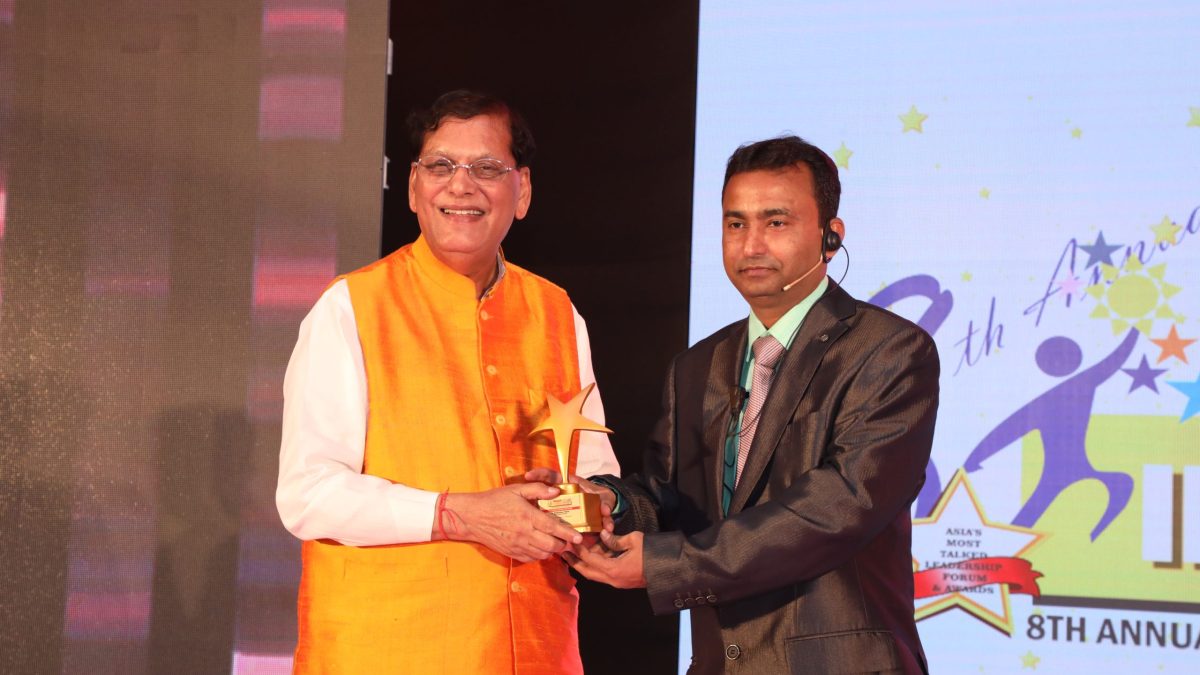
Bindeshwar Pathak (2 April 1943 – 15 August 2023) was an Indian sociologist and social reformer, the founder of Sulabh International. He devised a cheap toilet that needed no sewer and no one to clean it by hand, built more than a million of them in homes and thousands of pay-and-use public facilities, and campaigned for half a century to free the people whom caste had condemned to carry away human waste.
Quick Facts
| Full name | Bindeshwar Pathak |
| Born | 2 April 1943, Rampur Baghel, Vaishali district, Bihar |
| Died | 15 August 2023, New Delhi (aged 80) |
| Education | Patna University (B.A. in sociology; M.A.; Ph.D., 1985) |
| Occupation | Sociologist, social entrepreneur |
| Founded | Sulabh International Social Service Organisation (1970) |
| Awards | Padma Bhushan (1991), Stockholm Water Prize (2009), Gandhi Peace Prize (to Sulabh, 2016), Padma Vibhushan (2024, posthumous) |
| Spouse | Amola Pathak |
| Children | 3 |
Early Life
He was born into an orthodox Brahmin family in a village in Bihar. The house had many rooms and no toilet; the women went out to the fields before dawn. As a child he once touched a woman of the scavenger caste who came to the house. His grandmother made him swallow cow dung and urine and bathed him in Ganga water to purify him. He never forgot it.
He graduated in sociology from Patna and drifted through jobs as a teacher and a clerk.
The Turning Point
In 1968 he joined the committee set up in Bihar to celebrate the centenary of Gandhi’s birth and was assigned to its cell for the liberation of scavengers. He was sent to live for three months in a scavengers’ colony at Bettiah. There he saw a newly married girl forced by her in-laws to clean latrines, and a boy in a red shirt gored by a bull and left to die because no one would touch him.
At that time most Indian towns had no sewers. Dry latrines were emptied each morning by people of the lowest castes, mostly women, who carried the buckets on their heads.
The Sulabh Toilet
He worked out a design that had been proposed in outline before: a pan with a steep slope and a water seal, flushed with a litre or two of water poured by hand, leading to two pits used in turn. While one fills, the contents of the other dry out over two years into a harmless, odourless manure. It can be built with local materials for very little, and nobody has to handle fresh waste.
He founded the Sulabh organisation in 1970. For three years no one would give him work; he sold his wife’s ornaments and borrowed. In 1973 a municipality in Bihar asked him to convert two latrines, and orders followed.
Public Toilets
In 1974, in Patna, he opened the first public toilet with baths and urinals, kept clean by attendants day and night and paid for by a small charge from users. People had said that no Indian would pay to use a toilet. They did. Sulabh has built some ten thousand such complexes at stations, markets and pilgrim towns, some of them producing cooking gas from the waste.
Freeing the Scavengers
He ran schools and training centres for the families who had lost their old work, teaching tailoring, food processing and beauty care. He took former scavenger women into temples, arranged for Brahmins to dine with them, and in the towns of Alwar and Tonk in Rajasthan ended the practice entirely. He also organised support for the widows of Vrindavan and Varanasi.
Manual scavenging was outlawed in India in 1993 and again by a stronger law in 2013, though it has not wholly disappeared.
Recognition
- Padma Bhushan (1991)
- Stockholm Water Prize (2009)
- Gandhi Peace Prize to Sulabh International for 2016
- Padma Vibhushan (2024, posthumous)
The Sulabh museum of toilets in New Delhi, which he created, is a popular curiosity.
Death
On Independence Day 2023 he hoisted the national flag at the Sulabh campus in Delhi, collapsed soon afterwards and died in hospital of a cardiac arrest. He was survived by his wife, Amola, and three children.
Legacy
The twin-pit toilet he popularised was the main design used in the national sanitation campaign launched in 2014. He liked to say that he had tried to finish a task that Mahatma Gandhi had set.
Featured image: Bindeshwar Pathak in August 2017. Photo by Sanaha222, licensed under CC BY-SA 4.0, via Wikimedia Commons.



