
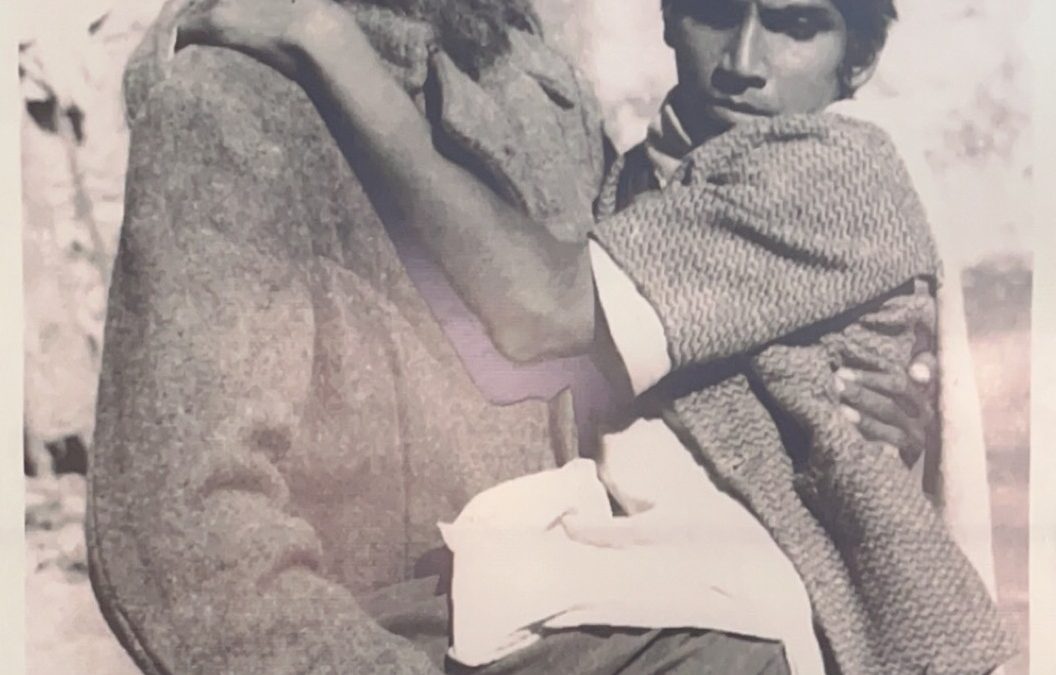
Bhagat Puran Singh (4 June 1904 – 5 August 1992) was an Indian humanitarian, writer and environmentalist who founded Pingalwara, a home in Amritsar for the destitute, the disabled, the mentally ill and the dying. Without money, training or patrons, he began by carrying one abandoned child on his back and ended by building an institution that shelters well over a thousand people. He is sometimes called the Mother Teresa of Punjab.
Quick Facts
| Birth name | Ramji Das |
| Born | 4 June 1904, Rajewal, Ludhiana district, Punjab, India |
| Died | 5 August 1992 (aged 88), Amritsar, Punjab |
| Occupation | Humanitarian, writer, environmentalist |
| Known for | Founder of Pingalwara, Amritsar |
| Honours | Padma Shri (1979; returned 1984) |
Early Life
He was born Ramji Das into a Hindu family in the village of Rajewal. His father, a moneylender, was ruined in a famine, and his mother, Mehtab Kaur, washed dishes in other people’s houses to keep her son at school. She taught him as a small boy to remove stones from the road, feed birds and water plants, habits he kept all his life. He failed his school-leaving examination, and mother and son moved to Lahore to look for work.
Lahore
In Lahore he began to spend his days at the Gurdwara Dehra Sahib, drawn by the Sikh tradition of service. He cleaned the precincts, served in the kitchen, carried the sick to hospital and cremated the unclaimed dead, and he took the Sikh faith and the name Puran Singh. He also read for hours each day in the public library, educating himself in history, religion and current affairs.
In 1934 a small boy, unable to walk or speak, was left at the gate of the gurdwara. Puran Singh took him in, named him Piara, “beloved”, and for the next fourteen years carried him on his back wherever he went.
Pingalwara
At Partition in August 1947 he walked into a refugee camp in Amritsar with Piara on his back and a few rupees. The camp held thousands, among them the wounded, the insane and the abandoned. He begged food and clothes for them, washed them and nursed them. When the camp closed he kept his growing family of patients wherever he could: under trees, in empty buildings, beside a cinema and a railway station.
He called his refuge Pingalwara, the home of the crippled. A registered society was formed in 1957 and the present site on the Grand Trunk Road in Amritsar was acquired soon afterwards. Collecting donations himself outside the Golden Temple, he built wards for the mentally ill, the paralysed, those with tuberculosis and the terminally ill, and later schools and workshops. Nobody was turned away or asked their religion.
Writer and Environmentalist
Long before such concerns were common in India he warned about deforestation, soil erosion, pollution and the waste of resources. He printed hundreds of pamphlets on these subjects, on the backs of used paper, and gave them away free, planted trees and refused to use motor transport when he could walk. He wore hand-spun cloth and owned nothing.
Recognition and Death
The government awarded him the Padma Shri in 1979. He returned it in 1984 in protest against the army action at the Golden Temple. He died in Amritsar on 5 August 1992, having named Dr Inderjit Kaur to succeed him. Pingalwara now runs several branches, schools, a prosthetics centre and a printing press, and continues to be financed by small public donations.
Frequently Asked Questions
When and where was Bhagat Puran Singh born?
Bhagat Puran Singh was born on 4 June 1904 in Rajewal, Ludhiana district, Punjab, India.
When did Bhagat Puran Singh die?
Died: 5 August 1992 (aged 88), Amritsar, Punjab.
What is Bhagat Puran Singh known for?
Known for: Founder of Pingalwara, Amritsar.
What honours has Bhagat Puran Singh received?
Padma Shri (1979; returned 1984).
Featured image: Bhagat Puran Singh carrying Piara Singh, the disabled boy he cared for. Photo by Mnv179, licensed under CC BY-SA 4.0, via Wikimedia Commons.



