
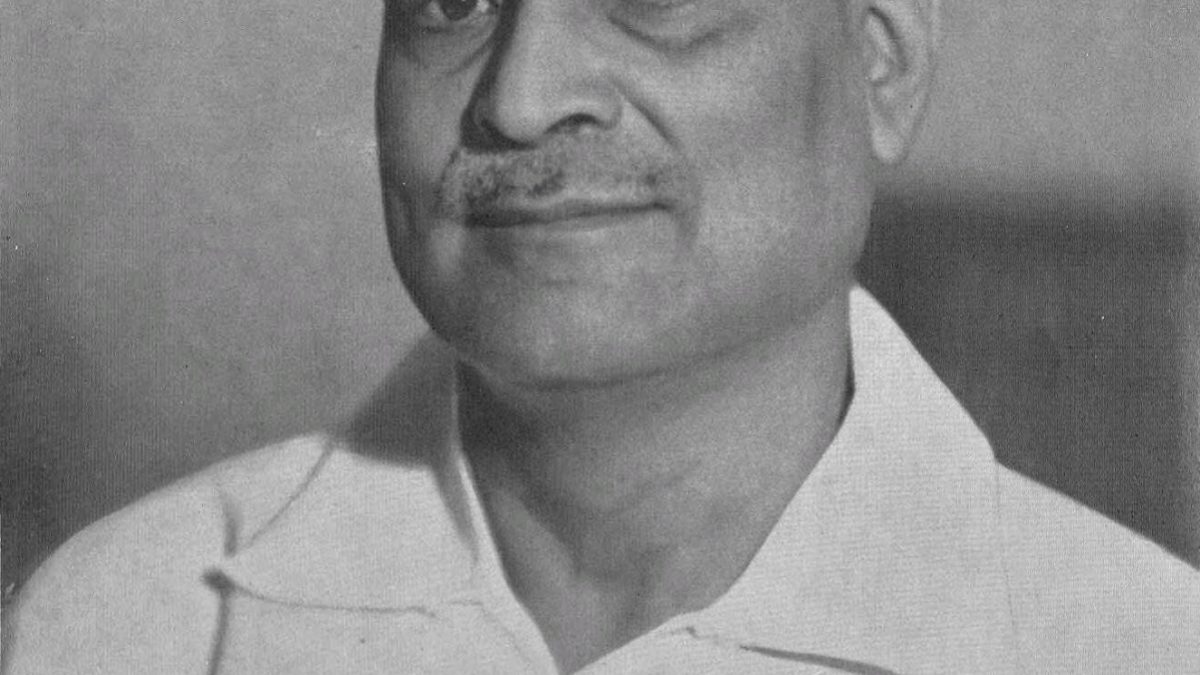
Dr Bidhan Chandra Roy (1 July 1882 – 1 July 1962) was an Indian physician, educationist and statesman who was the second Chief Minister of West Bengal, from 1948 until his death. He is regarded as the architect of modern West Bengal: he steered the state through the aftermath of Partition and founded the towns of Durgapur, Kalyani, Bidhannagar, Ashokenagar and Habra. One of the foremost doctors of his time, he was awarded the Bharat Ratna in 1961, and his birthday, which is also the day he died, is observed in India as National Doctors’ Day.
Quick Facts
| Full name | Bidhan Chandra Roy |
| Born | 1 July 1882, Bankipore, Patna, Bihar |
| Died | 1 July 1962 (aged 80), Calcutta |
| Occupation | Physician, politician |
| Offices | Chief Minister of West Bengal (1948–1962); Mayor of Calcutta (1931–1933); Vice-Chancellor, University of Calcutta (1942–1944) |
| Party | Indian National Congress |
| Education | Presidency College; Calcutta Medical College; St Bartholomew’s Hospital, London (MRCP, FRCS) |
| Honours | Bharat Ratna (1961) |
Early Life
Roy was born at Bankipore in Patna, the youngest of five children of an excise inspector. His parents were devout Brahmos who lived simply and gave away much of what they had. He studied at Patna and at Presidency College in Calcutta, took an honours degree in mathematics and entered Calcutta Medical College in 1901, working as a nurse and tutor to pay his way.
In 1909 he sailed for England with very little money, meaning to study at St Bartholomew’s Hospital in London. The dean was unwilling to admit a student from Asia; Roy is said to have applied some thirty times before he was accepted. He then became a Member of the Royal College of Physicians and a Fellow of the Royal College of Surgeons within a little over two years, a rare double.
Physician and Educator
Back in Calcutta in 1911 he taught at the medical colleges and built an enormous practice, known for the speed and accuracy of his diagnosis. He helped found or develop several of the city’s hospitals, among them the Jadavpur tuberculosis hospital, the Chittaranjan Seva Sadan for women, the Kamala Nehru Hospital and the Chittaranjan Cancer Hospital. He was the first president of the Medical Council of India, and he was Mahatma Gandhi‘s doctor during several of his fasts.
Political Career
He entered politics in 1923 by defeating the veteran Surendranath Banerjee in an election to the Bengal Legislative Council, with the support of Chittaranjan Das. He joined the Congress Working Committee, was jailed in 1930 during the Civil Disobedience Movement, and as Mayor of Calcutta from 1931 expanded free education, medical aid, roads and lighting.
Chief Minister
He became Chief Minister on 23 January 1948. Partition had cut West Bengal off from its jute fields and brought millions of refugees from East Pakistan; food was short and Calcutta was near collapse. He organised refugee rehabilitation, townships and industry. Durgapur was built as a steel and engineering centre, Kalyani as a planned town with a university, and the salt marshes east of Calcutta were reclaimed for the suburb that bears his name. He promoted the Damodar Valley project, the Chittaranjan Locomotive Works, the dairy at Haringhata, the resort at Digha and the country’s first Indian Institute of Technology at Kharagpur. Critics pointed to the persistence of poverty and to police action against the food movement of 1959.
Throughout he continued to see patients, without charge, for an hour each morning.
Death and Legacy
He never married. On 1 July 1962, his eightieth birthday, he treated his morning patients, attended to state business and died a few hours later. He left his house to be used as a nursing home. The B. C. Roy National Award, instituted in 1976, is the highest honour in Indian medicine.
Frequently Asked Questions
When and where was Bidhan Chandra Roy born?
Bidhan Chandra Roy was born on 1 July 1882 in Bankipore, Patna, Bihar.
When did Bidhan Chandra Roy die?
Died: 1 July 1962 (aged 80), Calcutta.
What is Bidhan Chandra Roy’s occupation?
Occupation: Physician, politician.
What honours has Bidhan Chandra Roy received?
Bharat Ratna (1961).
Featured image: Dr Bidhan Chandra Roy, second Chief Minister of West Bengal. Photo by an unknown photographer, in the public domain, via Wikimedia Commons.



