
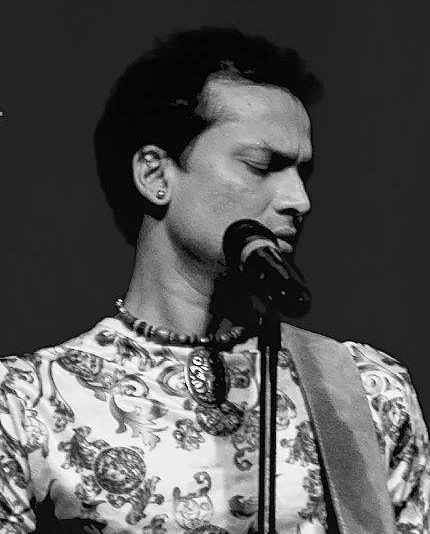
Zubeen Garg (18 November 1972 – 19 September 2025) was an Indian singer, composer, actor and film-maker from Assam. He recorded thousands of songs in Assamese, Bengali, Hindi and many other languages, and was known across India for “Ya Ali” from the film Gangster. In Assam he was far more than a singer: an idol and an outspoken public voice. His death by drowning in Singapore at fifty-two brought the state to a standstill.
Quick Facts
| Full name | Zubeen Garg (born Zubeen Borthakur) |
| Born | 18 November 1972, Tura, Meghalaya |
| Died | 19 September 2025, Singapore (aged 52) |
| State | Assam |
| Occupation | Singer, composer, lyricist, actor, film director |
| Years active | 1992–2025 |
| Known for | Ya Ali; Assamese albums including Anamika and Maya; the film Mission China |
| Spouse | Garima Saikia Garg (m. 2002) |
Early Life
He was born at Tura in the Garo Hills of Meghalaya, where his father was posted, into an Assamese Brahmin family from Jorhat. His father, Mohini Mohon Borthakur, was a magistrate who wrote poetry under a pen name; his mother, Ily, was a singer and his first teacher. He was named after the conductor Zubin Mehta, and later took Garg, the name of his family’s gotra, as his surname.
He learnt the tabla and several other instruments as a boy, and left his science degree at a Guwahati college to make music.
Career
Assam
His first album, Anamika (1992), was an immediate success, and a stream of albums followed through the 1990s: Maya, Asha, Pakhi, Mukti and many more. He brought rock, pop and electronic sounds into Assamese music while keeping its folk and devotional roots, and he sang the Bihu songs of the spring festival to enormous crowds every April.
Bollywood
He moved to Mumbai in the mid-1990s and sang for Hindi films including Dil Se, Fiza and Kaante. “Ya Ali”, in Gangster (2006), was one of the biggest hits of the decade. He also sang “Dilruba” in Namastey London and “Dil Tu Hi Bataa” in Krrish 3. He never settled in Mumbai and returned to Guwahati.
Films
He acted in, directed and composed for Assamese films. Mission China (2017) and Kanchanjangha (2019) were among the most successful Assamese films ever made and helped revive the industry.
Range
He is said to have recorded songs in about forty languages and dialects and to have played a dozen instruments.
The Public Figure
He was unpredictable and fearless. He told audiences at Bihu functions that he would sing what he pleased, refused orders from militants who had banned Hindi songs on stage, and in 2019 was a leading voice in the protests in Assam against the Citizenship Amendment Act. He gave freely to people in need, planted trees and spoke for animals and the environment. He said he had no caste and no religion.
Death
In September 2025 he went to Singapore to perform at a festival of the North-East. On 19 September, the day before the event, he drowned while swimming in the sea off an island during a yacht outing.
His body was brought to Guwahati, where enormous crowds, by some estimates more than a million people, lined the roads. He was cremated with state honours on 23 September at Kamarkuchi, near Sonapur, outside the city.
The Investigation
The Assam government set up a special investigation team, and several people connected with the trip, including the festival’s organiser and the singer’s manager, were arrested. In Singapore, the police found no evidence of foul play, and a coroner later ruled the death an accidental drowning, noting that he had declined to wear a life jacket.
Personal Life
He married Garima Saikia, a fashion designer, in 2002. His younger sister, Jonkie Borthakur, a singer and actress, was killed in a road accident in 2002. His last film as an actor and composer was released some weeks after his death and drew record audiences in Assam.
For Assam he stood in the line of Bhupen Hazarika, whom he revered.
Featured image: Zubeen Garg during a live performance. Photo by Donvikro, licensed under CC BY-SA 4.0, via Wikimedia Commons.



