
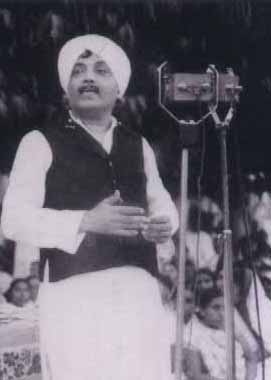
Jhaverchand Kalidas Meghani (28 August 1896 – 9 March 1947) was an Indian poet, folklorist, novelist and journalist who wrote in Gujarati. He travelled the villages of Saurashtra collecting the ballads and tales of its bards before they were lost, and his own songs became anthems of the freedom movement. Mahatma Gandhi called him Rashtriya Shayar, the national poet.
Quick Facts
| Full name | Jhaverchand Kalidas Meghani |
| Born | 28 August 1896, Chotila, Kathiawar (now in Surendranagar district, Gujarat) |
| Died | 9 March 1947, Botad, Gujarat (aged 50) |
| Language | Gujarati |
| Occupation | Poet, folklorist, novelist, journalist |
| Notable works | Saurashtra ni Rasdhar, Sorathi Baharvatiya, Yugvandana, Sindhudo, Sorath Tara Vaheta Pani, Vevishal, Mansai na Diva |
| Awards | Ranjitram Suvarna Chandrak (1928), Mahida Prize (1946) |
| Title | Rashtriya Shayar |
Early Life
He was born at Chotila, at the foot of the hill of the goddess Chamunda, into a Jain Vania family. His father was a police officer in the service of the Kathiawar Agency, posted from one remote outpost to another, and the boy grew up among the hills, herdsmen and bards of the peninsula.
Education and Calcutta
He graduated in English and Sanskrit from Samaldas College, Bhavnagar, in 1917. He went to Calcutta and worked for an aluminium company, which sent him on a visit to England. In Calcutta he learnt Bengali and read Tagore. In 1921, feeling the pull of his own country, he gave up the job and came home.
Career
Journalist
In 1922 he joined the weekly Saurashtra at Ranpur, a nationalist paper, and later edited Phulchhab. He also worked for Janmabhoomi in Bombay, where his column on books was widely read.
Folklorist
For years he went on foot, by cart and on horseback through Kathiawar, sitting with Charan bards, shepherds, fishermen and old women, and writing down what they sang and told.
- Saurashtra ni Rasdhar (five volumes, 1923–27): tales of the valour, love and sacrifice of the region
- Sorathi Baharvatiya: stories of the outlaws of Sorath
- Radhiyali Raat: women’s folk songs
- Kankavati: tales told at religious observances
For this work he received the first Ranjitram Suvarna Chandrak, the highest award in Gujarati literature, in 1928.
Poet of the freedom movement
In 1930, during the salt satyagraha, he published Sindhudo, a book of fifteen patriotic songs. The government seized it; copies circulated in handwriting. He was arrested on a false charge and sentenced to two years in prison. In jail he wrote “Chhello Katoro” (“The Last Cup of Poison”), addressed to Gandhi as he left for the Round Table Conference in London. On reading it Gandhi said the poet had seen into his heart.
His best-known songs include “Kasumbi no Rang”, “Shivaji nu Halardu”, a lullaby for the infant Shivaji, and “Mor Bani Thanghat Kare”, a version of a poem by Tagore that is still sung at every Gujarati festival. His collected poems are in Yugvandana and Ravindra Veena.
Novelist
- Sorath Tara Vaheta Pani: a novel of Kathiawar at the turn of the century
- Vevishal: an engagement between a rich family and a poor one
- Tulsi Kyaro, Samarangan, Gujarat no Jay
- Mansai na Diva (1945): true stories told to him by the Gandhian worker Ravishankar Maharaj about the reform of the so-called criminal tribes of central Gujarat, for which he received the Mahida Prize
Personal Life
He married Damayanti in 1922; she died in 1933. In 1934 he married Chitradevi, a widow from Nepal. He had nine children; a son, Mahendra Meghani, became a well-known editor and publisher. He was a striking figure, with long hair, a moustache and a turban, and sang his own songs in a powerful voice.
He died of a heart attack at Botad on 9 March 1947, five months before independence, aged fifty.
Legacy
India issued a postage stamp in his honour in 1999. His songs were used in the film Goliyon Ki Raasleela Ram-Leela (2013) and remain part of Gujarat’s living folk music.
Featured image: Jhaverchand Meghani addressing a gathering. Photo by an unknown photographer, in the public domain, via Wikimedia Commons.



