Amritlal Nagar (17 August 1916 – 23 February 1990) was an Indian novelist, short-story writer and dramatist in Hindi, often described as the true literary heir of Premchand. He lived almost all his life in the old Chowk quarter of Lucknow, and the city, with its lanes, dialects, festivals and fading gentry, is the setting and often the real subject of his best novels. He received the Sahitya Akademi Award and the Padma Bhushan.
Quick Facts
| Full name | Amritlal Nagar |
| Born | 17 August 1916, Agra, Uttar Pradesh, India |
| Died | 23 February 1990 (aged 73), Lucknow |
| Occupation | Novelist, short-story writer, playwright |
| Language | Hindi |
| Notable works | Boond Aur Samudra, Amrit Aur Vish, Manas Ka Hans, Nachyo Bahut Gopal, Khanjan Nayan |
| Awards | Sahitya Akademi Award (1967); Soviet Land Nehru Award; Padma Bhushan (1981) |
Early Life
Nagar was born at his mother’s family home in Agra into a Gujarati Brahmin family that had been settled in the United Provinces for generations, and he grew up in Lucknow. His grandfather, a bank official, encouraged his reading. His father’s death when Amritlal was nineteen ended his formal education, and he took a job as a clerk in an insurance office, which he soon left to write.
Career
He edited small magazines in Lucknow, among them the humorous weekly Chakallas. From 1940 to 1947 he worked in the film industry in Bombay, Kolhapur and Madras, writing screenplays and dialogue and making a speciality of dubbing foreign films into Hindi. He returned to Lucknow for good, and from 1953 to 1956 was a drama producer at All India Radio there, before giving up employment altogether to live by his pen.
Boond Aur Samudra (1956), “The Drop and the Ocean”, portrays the life of a Chowk neighbourhood through dozens of characters and is counted among the great Hindi novels of the century. Amrit Aur Vish (1966), “Nectar and Poison”, a novel within a novel about an ageing writer and the generation after independence, won the Sahitya Akademi Award in 1967 and the Soviet Land Nehru Award. Shatranj Ke Mohre returns to Awadh on the eve of 1857, and Karvat and Peedhiyan follow families of the city across a century.
Suhag Ke Nupur is set in ancient Tamil country. Manas Ka Hans (1972), a fictional life of Tulsidas, and Khanjan Nayan (1981), on the blind poet Surdas, are among the most popular biographical novels in Hindi. Nachyo Bahut Gopal (1978) tells the story of a Brahmin woman who becomes part of the community of manual scavengers; he spent a long time among sanitation workers before writing it.
Nagar believed in fieldwork. For Gadar Ke Phool he travelled through the villages of Awadh collecting memories and songs of the rebellion of 1857, and for Ye Kothewaliyan he interviewed the courtesans of Lucknow and other towns about their lives and their art.
Personal Life
He married Pratibha in 1932, and they had four children. His daughter, Achala Nagar, became a screenwriter. He was a famously warm host and talker, and his house in the Chowk was a meeting place for writers, actors and scholars. He died in Lucknow on 23 February 1990.
Legacy
His language, which moves easily between literary Hindi, Urdu and the Awadhi of the street, is considered a model of spoken prose. Several of his works have been adapted for television and the stage, and his house in the Chowk remains a landmark of literary Lucknow.
Frequently Asked Questions
When and where was Amritlal Nagar born?
Amritlal Nagar was born on 17 August 1916 in Agra, Uttar Pradesh, India.
When did Amritlal Nagar die?
Died: 23 February 1990 (aged 73), Lucknow.
What is Amritlal Nagar’s occupation?
Occupation: Novelist, short-story writer, playwright.
What honours has Amritlal Nagar received?
Sahitya Akademi Award (1967); Soviet Land Nehru Award; Padma Bhushan (1981).
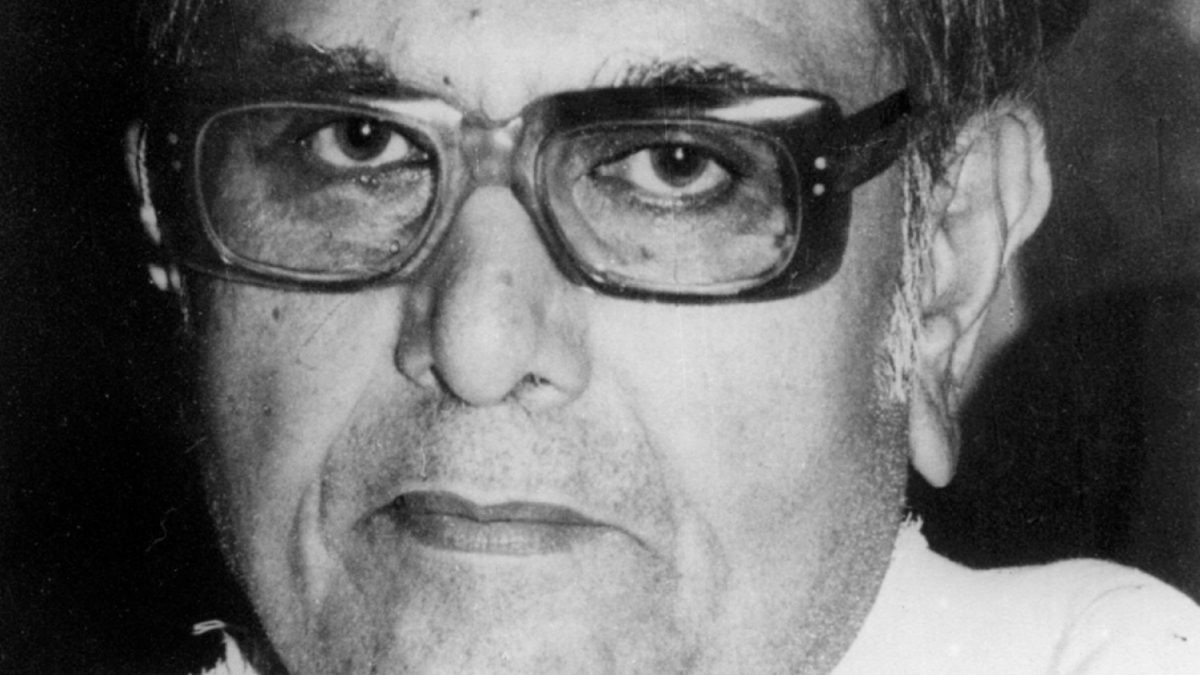
Featured image: Amritlal Nagar in February 1989. Photo by Vashishtha30, licensed under CC BY-SA 4.0, via Wikimedia Commons.