Wing Commander Rakesh Sharma (born 13 January 1949) is a former Indian Air Force pilot who, in April 1984, became the first Indian citizen to travel into space. He flew aboard the Soviet spacecraft Soyuz T-11 and spent nearly eight days on the space station Salyut 7. For forty-one years he remained the only Indian to have done so.
Quick Facts
| Full name | Rakesh Sharma |
| Born | 13 January 1949, Patiala, Punjab |
| Age | 77 |
| Occupation | Air Force pilot, test pilot, cosmonaut |
| Service | Indian Air Force (1970–1987) |
| Space mission | Soyuz T-11 to Salyut 7, 3–11 April 1984 |
| Time in space | 7 days, 21 hours and 40 minutes |
| Awards | Ashoka Chakra; Hero of the Soviet Union |
| Spouse | Madhu Sharma |
| Children | 2 |
Early Life
He was born in Patiala and grew up in Hyderabad, where he attended St George’s Grammar School and Nizam College. He wanted to fly from boyhood. He joined the National Defence Academy in 1966 and was commissioned into the Indian Air Force as a fighter pilot in 1970.
Air Force Career
During the war of 1971 he flew twenty-one combat missions in a MiG-21. He later qualified as a test pilot.
Selection
In 1980 the Soviet Union offered to fly an Indian on one of its spacecraft under its Interkosmos programme, and Prime Minister Indira Gandhi accepted. About 150 Air Force pilots were considered. After medical and psychological tests, including several days shut in a closed room, two were chosen in 1982: Squadron Leader Rakesh Sharma and Wing Commander Ravish Malhotra. They trained for about eighteen months at Star City, near Moscow, learning Russian from scratch. Sharma was named for the flight and Malhotra as his reserve.
During the training, his young daughter died.
The Mission
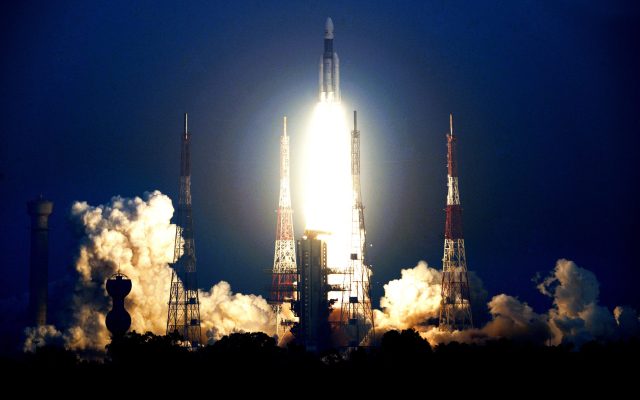
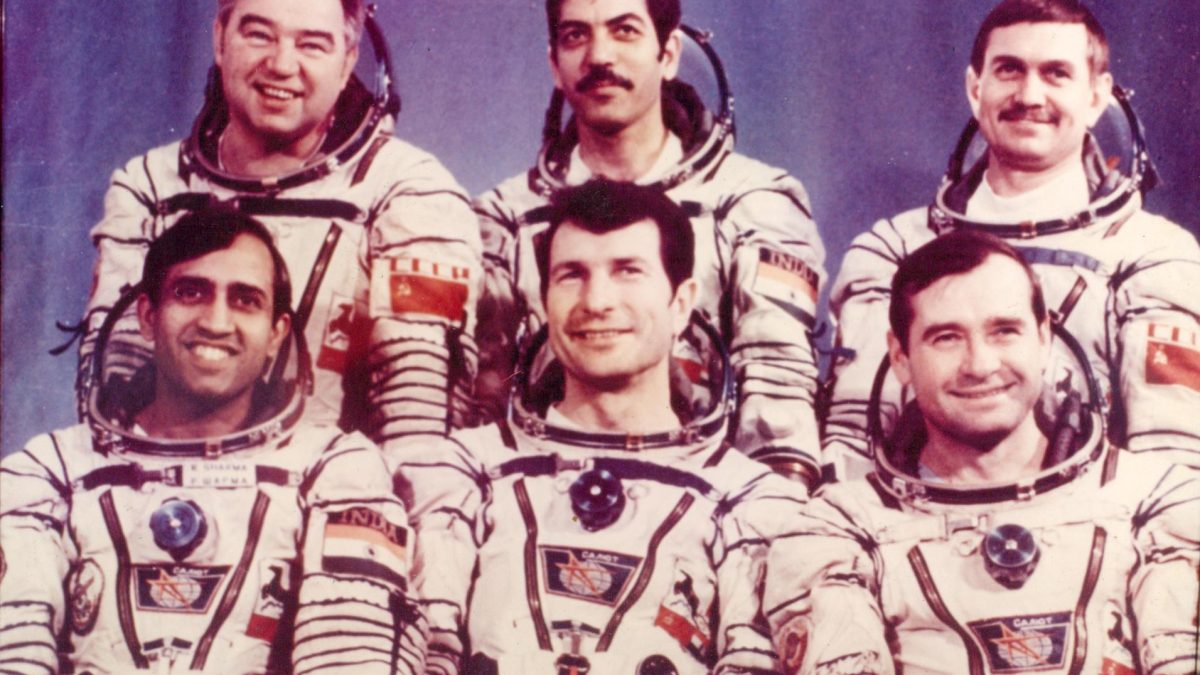
On 3 April 1984 Soyuz T-11 lifted off from Baikonur in Soviet Kazakhstan with Sharma and two Soviet cosmonauts, Yuri Malyshev, the commander, and Gennady Strekalov. The next day they docked with Salyut 7, where three cosmonauts were already living.
He carried out the experiments India had prepared.
- **Remote sensing:** photographing India from orbit to study the Himalayan glaciers, forests, water resources and possible oilfields
- **Materials:** experiments on the behaviour of alloys in weightlessness
- **Medicine:** studies of the heart and of the effect of yoga exercises on the body in space
He also took with him portraits of Indian leaders and soil from Raj Ghat.
“Saare Jahan Se Achha”
In a television link from orbit, the Prime Minister asked him how India looked from space. He replied with the words of the poet Iqbal: “Saare jahan se achha”, better than all the world. The exchange was watched across the country and is remembered by everyone who saw it.
The crew landed in Kazakhstan on 11 April.
Honours
He was made a Hero of the Soviet Union. India awarded him the Ashoka Chakra, its highest peacetime award for gallantry, which was also given to his two Soviet crewmates.
Later Career
He retired from the Air Force in 1987 as a Wing Commander and joined Hindustan Aeronautics Limited, where he was chief test pilot at Nashik and then Bangalore, flying the Light Combat Aircraft among others. He survived an ejection from a MiG-21 during a test flight. After leaving HAL in 2001 he worked in the software industry and has served on advisory panels for India’s human spaceflight programme, Gaganyaan.
Personal Life
He and his wife, Madhu, have a son, Kapil, a film director, and a daughter, Kritika. They live quietly at Coonoor in the Nilgiri hills.
In June 2025 Group Captain Shubhanshu Shukla became the second Indian in space, flying to the International Space Station. Sharma, then seventy-six, sent his good wishes.
Featured image: Rakesh Sharma with the prime and backup crews of Soyuz T-11, 1984. Photo by the Indian Air Force, licensed under Government Open Data License – India, via Wikimedia Commons.