
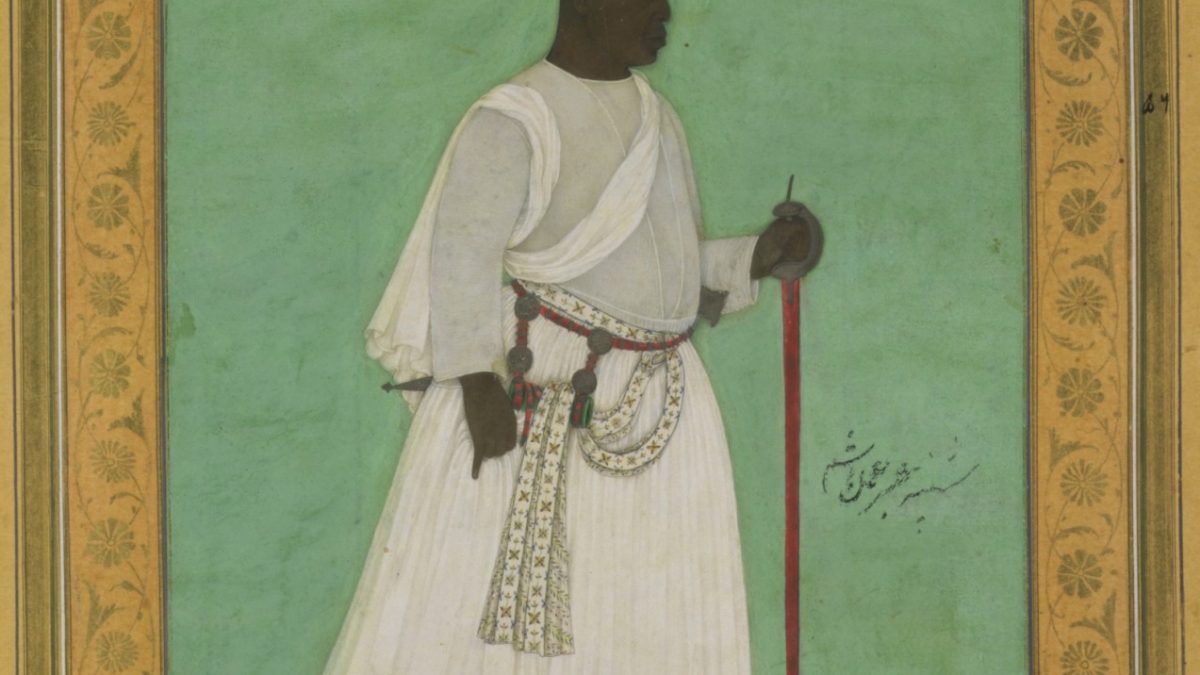
Malik Ambar (1548 – 14 May 1626) was a military leader and statesman of the Deccan who rose from slavery to become the regent and effective ruler of the Ahmadnagar Sultanate. Born in Ethiopia and sold as a child, he was brought to India, won his freedom and for a quarter of a century blocked the southward advance of the Mughal Empire under Akbar and Jahangir. He founded the city that became Aurangabad, devised a land revenue system that long outlived him and developed the methods of light cavalry warfare later used by the Marathas.
Quick Facts
| Birth name | Chapu |
| Born | 1548, Ethiopia |
| Died | 14 May 1626 (aged about 78), Deccan, India |
| Office | Peshwa (regent) of the Ahmadnagar Sultanate (c. 1600–1626) |
| Known for | Resistance to the Mughal Empire; founding Khadki (Aurangabad) |
| Burial | Khuldabad, Maharashtra |
Early Life
He was born in the highlands of Ethiopia and named Chapu. As a boy he was captured or sold, a common fate in a region ravaged by war, and passed through the slave markets of the Red Sea to Baghdad. There a merchant who recognised his intelligence had him educated in Arabic, finance and administration, converted him to Islam and gave him the name Ambar.
In the early 1570s he was sold again and taken to the Deccan, where he was bought by Chengiz Khan, the chief minister of the Sultan of Ahmadnagar and himself a former slave of African origin. The Deccan sultanates valued such men, known as Habshis, as soldiers and officials loyal to their patrons, and some rose very high.
Rise
On his master’s death Ambar was freed. He served as a soldier in Ahmadnagar and neighbouring Bijapur, gathered a small band of horsemen and gradually built it into a force of several thousand. In 1600 the Mughals captured the fort of Ahmadnagar and the sultanate seemed finished. Ambar found a young prince of the ruling family, placed him on the throne at a new capital, married his own daughter to him and governed as regent with the title of Peshwa.
War with the Mughals
For the next twenty-five years he fought the armies of the richest empire in the world to a standstill. He avoided pitched battles against the heavy Mughal cavalry and artillery and relied on fast-moving light horsemen, many of them Marathas, who cut supply lines, raided camps at night and vanished into the hills. Among the Maratha chiefs who served under him were Maloji and Shahaji Bhonsle, the grandfather and father of Shivaji, and the style of warfare he perfected was to be turned against the Mughals with greater effect in the next generation.
His greatest victory came at Bhatvadi in 1624, when he defeated the combined armies of the Mughals and Bijapur. The emperor Jahangir, who never managed to subdue him, raged against him in his memoirs and had himself painted shooting an arrow at Ambar’s severed head, a fantasy that was never fulfilled.
Administrator
In 1610 he founded a new capital at the village of Khadki, laying out streets, palaces and mosques and supplying it with water through an ingenious system of underground channels drawing on the surrounding hills, parts of which still function. The city was later renamed Aurangabad. He reformed the collection of revenue by measuring the land and assessing it according to fertility, taking a fixed share and allowing payment in cash or kind, a system that gave the peasantry security and was widely admired.
Death and Legacy
He died in May 1626, nearly eighty years old and still undefeated. A Mughal chronicler who had no reason to praise him wrote that in warfare, in command, in sound judgement and in administration he had no rival or equal. Within a decade of his death Ahmadnagar was absorbed by the Mughals. His tomb is at Khuldabad, and he is remembered as one of the most remarkable figures of the African diaspora and of Deccan history.
Frequently Asked Questions
When was Malik Ambar born?
Malik Ambar was born in 1548, Ethiopia.
When did Malik Ambar die?
Died: 14 May 1626 (aged about 78), Deccan, India.
What is Malik Ambar known for?
Known for: Resistance to the Mughal Empire; founding Khadki (Aurangabad).
Featured image: Malik Ambar, painting by Hashim, about 1624. Photo by Hashim, in the public domain, via Wikimedia Commons.



