
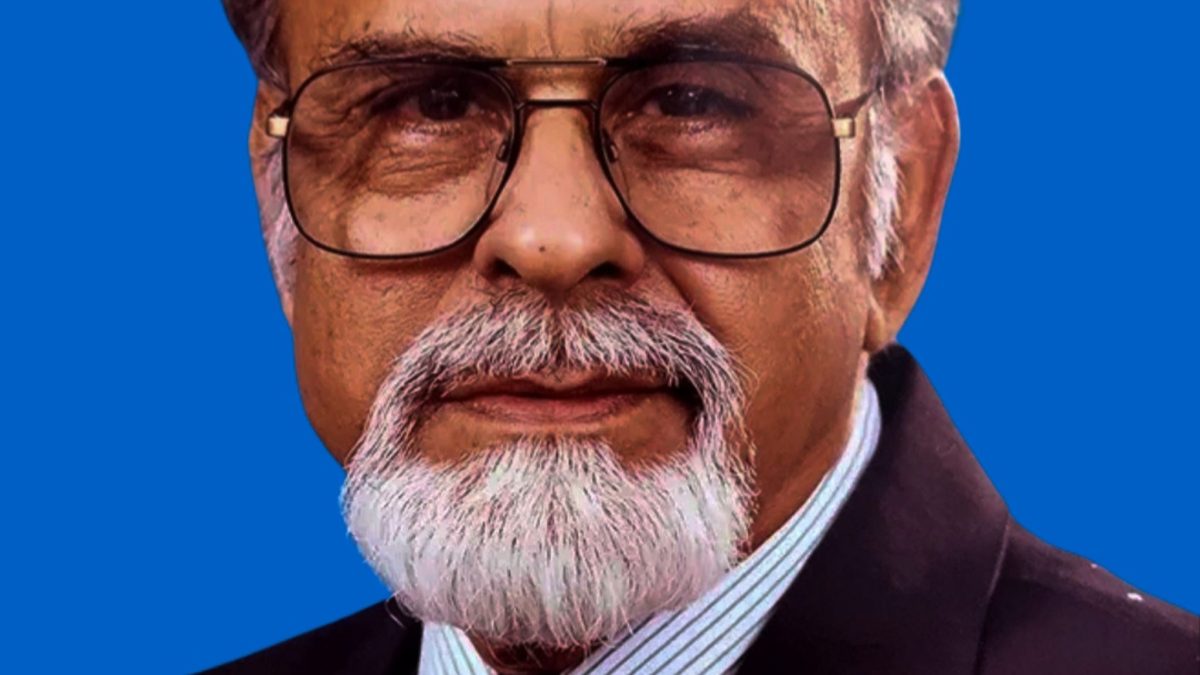
Inder Kumar Gujral (4 December 1919 – 30 November 2012) was an Indian politician and diplomat who was the twelfth Prime Minister of India, from April 1997 to March 1998. Twice External Affairs Minister, he is remembered for the Gujral Doctrine, a policy of generosity towards India’s smaller neighbours, and as a courteous, scholarly figure in a turbulent period of coalition politics.
Quick Facts
| Full name | Inder Kumar Gujral |
| Born | 4 December 1919, Jhelum, Punjab, British India (now in Pakistan) |
| Died | 30 November 2012, Gurgaon, Haryana (aged 92) |
| Education | D.A.V. College, Hailey College of Commerce and Forman Christian College, Lahore |
| Parties | Indian National Congress; Janata Dal |
| Offices | Prime Minister of India (1997–1998); Minister of External Affairs (1989–1990, 1996–1997); Ambassador to the Soviet Union (1976–1980) |
| Spouse | Sheila Gujral (died 2011) |
| Children | Naresh and Vishal |
Early Life
He was born at Jhelum in western Punjab. His parents, Avtar Narain and Pushpa Gujral, were both active in the freedom movement. As a boy of eleven he was beaten by the police for leading a children’s procession, and he was jailed during the Quit India movement in 1942. He studied in Lahore, where he was a student leader with left-wing sympathies.
At Partition the family lost its home and moved to Delhi.
Career
Under Indira Gandhi
He entered municipal politics in Delhi and was elected to the Rajya Sabha in 1964. He belonged to the group of younger advisers around Indira Gandhi and held several ministries from 1967.
In June 1975, when the Emergency was declared, he was Minister of Information and Broadcasting. He is said to have refused to take orders on censoring the news from the Prime Minister’s son Sanjay Gandhi, who held no office. Within days he was moved out of the ministry, and in 1976 he was sent to Moscow as ambassador, where he remained under two governments until 1980.
Janata Dal
He left the Congress in the 1980s and joined the Janata Dal. As External Affairs Minister in V. P. Singh’s government in 1989–90 he had to deal with Iraq’s invasion of Kuwait, and oversaw the airlift of more than a hundred thousand Indians from the Gulf.
The Gujral Doctrine
Returning to the ministry in 1996, he set out five principles for relations with the countries of South Asia. The chief of them was that with neighbours such as Bangladesh, Nepal, Bhutan, Sri Lanka and the Maldives, India, as the larger country, should give what it could in good faith without asking for an equal return. The treaty with Bangladesh on sharing the waters of the Ganga in 1996 was its first result. He also reopened talks with Pakistan.
Prime Minister
In April 1997 the Congress, which supported the United Front coalition from outside, forced the removal of Prime Minister Deve Gowda. Gujral, acceptable to all, was chosen to succeed him and took office on 21 April.
- He refused to sign the international treaty banning nuclear tests.
- When his Cabinet recommended dismissing the state government of Uttar Pradesh, the President returned the advice, and he let the matter drop.
- In November 1997 a commission’s report on the assassination of Rajiv Gandhi criticised one of the coalition’s parties. The Congress demanded its removal, he refused, and the Congress withdrew support. He resigned and remained as caretaker until March 1998.
Later Life
He was elected to the Lok Sabha from Jalandhar in 1998 and retired from politics in 1999. His autobiography, Matters of Discretion, appeared in 2011.
Personal Life
He married Sheila, a poet who wrote in Punjabi, Hindi and English. Their son Naresh Gujral became a member of the Rajya Sabha. His younger brother was the painter and architect Satish Gujral. He was a lover of Urdu poetry and spoke the language with great polish.
Featured image: I. K. Gujral as Prime Minister, September 1997. Photo by the Prime Minister’s Office, licensed under Government Open Data License – India, via Wikimedia Commons.



