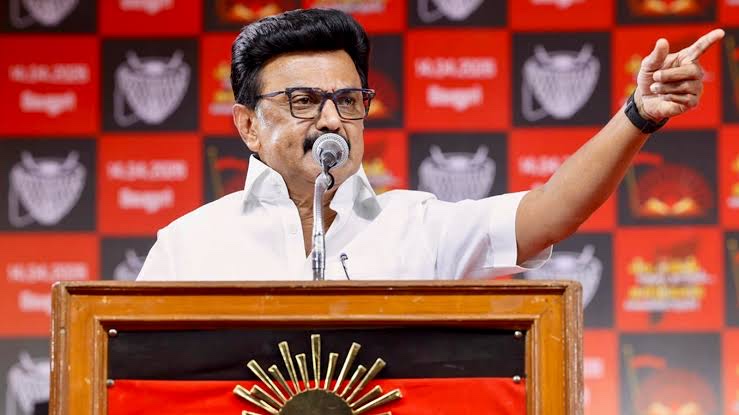
DMK president M.K. Stalin said on Friday, 27 November 2026, that there is no change in his party's position and "no question of any compromise" on delimitation, as speculation grew about where the DMK would stand when Parliament meets in a special sitting beginning on 30 November. In a post on X, Stalin said the DMK "stands firm on its two demands": that if the number of parliamentary constituencies is increased, Tamil Nadu's existing 7.18% share of seats in the lower house must not be reduced under any circumstances, and that the existing proportion of parliamentary representation among states, determined on the basis of the 1971 Census and frozen earlier, must remain frozen for another 25 years. The Hindu reported the statement alongside an announcement that Stalin will chair a meeting of the party's Lok Sabha and Rajya Sabha members on Saturday morning at Anna Arivalayam, the DMK headquarters.
The statement was a direct response to talk, reported in the media, that the DMK might be open to a deal. The CPI(M)'s state secretary, P. Shanmugam, referred to the special sitting of Parliament beginning 30 November, during which an amended Delimitation Bill is likely to be tabled, and said "reports that the Union government has reached an understanding with the DMK on the issue are worrying". He urged the DMK to "remain firm in its stand that the interests of Tamil Nadu and the southern States must be protected" and to spell out its position to the people without leaving room for speculation. Stalin's reply did not name the CPI(M), but it addressed the speculation head on: "Neither the speculations being circulated in the media nor the wails of backstabbers can shake our resolve," he wrote, adding that the DMK "will never compromise on Tamil Nadu's interests".
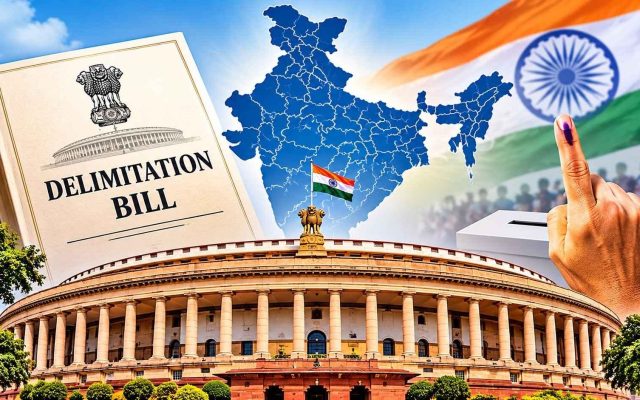
To understand what is at stake, recall what happened in April. The Hindu and earlier IndiaX24 reports describe a package of three bills that the government introduced that month to expand the Lok Sabha and speed up one-third reservation for women. The Delimitation Bill, 2026, introduced on 16 April, proposed raising the Lok Sabha from 543 seats to 850, with 815 elected from states and 35 from Union territories. The Constitution (131st Amendment) Bill, which would have lifted the freeze on constituency boundaries and allowed delimitation on the 2011 Census, secured 298 votes in the Lok Sabha, short of the 352 needed. The defeat left the women's quota, which Parliament passed unanimously in September 2023, on paper. Now the government has asked the Lok Sabha Speaker and the Rajya Sabha Chairman to reconvene the two Houses on 30 November and 2 December, and Parliamentary Affairs Minister Kiren Rijiju has said the sittings may conclude on 3 December, "subject to exigencies of the business".
The DMK's concern is a federal one. Tamil Nadu and other southern states controlled population growth after 1971, and the DMK argues that any new allocation of seats based on later census data would shrink their share of the House relative to faster-growing northern states. That is why Stalin's two demands focus on proportion, not on the total number of seats: even if the Lok Sabha grows, the DMK wants Tamil Nadu to keep 7.18% and wants state-wise proportions frozen for a further 25 years. The government's argument, as reported in April, was that the south would not lose out; Home Minister Amit Shah said the five southern states would go from 129 to 195 seats and that their share of the House would rise slightly. The opposition countered that the numbers hide the real risk of later rounds of delimitation. Stalin's claim that "it was only in Chennai that political leaders from across the country came together for the first time to demand fair delimitation" is a reminder that the DMK has made this cause its own.
The politics are tangled. The Congress has taken a hard line. General secretary Jairam Ramesh said the special session "has little to do with women's reservation" and is a "desperate move by a nervous and rattled Prime Minister", and said the Congress will "firmly oppose" the delimitation bill. He argued that the Nari Shakti Vandan Adhiniyam was passed in September 2023 but was not notified until 10:40 pm on 16 April 2026, and alleged that delimitation would be carried out under a "compromised" Chief Election Commissioner, Gyanesh Kumar. The Congress and the NCP (SP) have also issued whips to their MPs for the special session, according to The Hindu's related coverage. NCP (SP) leader Supriya Sule has taken a more conditional line, demanding a uniform formula for every state and implementation of women's reservation as part of the process, while saying she had not yet read the full bill.
There are allegations too. Shiv Sena (UBT) MP Sanjay Raut said on 22 November that the BJP was offering ₹150 crore to MPs to gain backing for the Delimitation Bill, and that the government lacked the support of 40 to 45 MPs. These are Raut's claims as reported by The Hindu; no evidence was cited in the report, and the government has not been quoted responding. They nonetheless show the pressure on every party whose numbers could matter in a vote that needs a two-thirds majority.
Why does the DMK's position matter so much? The arithmetic is simple. A constitutional amendment needs two-thirds of the members present and voting, and in April the government fell well short. To pass anything in the special sitting it would need support beyond the NDA, and the votes of southern parties would be central. If the DMK stays opposed, the bill's prospects look slim; if it were to support a version with guarantees for the southern states, the numbers could change. That is why every statement from Chennai is read as a signal, and why Stalin moved quickly to say there is nothing to read into the speculation.
The DMK's stand also has to be understood in the context of Tamil Nadu's new political landscape. The state government is now led by Chief Minister C. Joseph Vijay of the TVK, and the DMK is in the opposition in the state. Stalin's reference to people who "abandoned their principles for positions of power" was not explained in the report, and it would be speculation to attach it to any individual. What can be said is that the DMK is under pressure from allies, rivals and the public to show it will not trade away Tamil Nadu's representation.
The test comes quickly. The MPs' meeting on 28 November will show how the party plans to vote and speak when the Houses meet on 30 November. The text of the amended Delimitation Bill, which Sule said she had not yet seen in full, will determine whether the DMK's two demands are met, including whether the 7.18% share and a further freeze are written into the bill. And the numbers in the Lok Sabha will show whether the government can bridge the gap that defeated its earlier amendment. For Tamil Nadu and the other southern states, the question is whether a larger Parliament can be built without shrinking their voice, and for the DMK, whether it can keep its promise of "no compromise" through the most consequential vote on representation in decades.

Leave a Reply