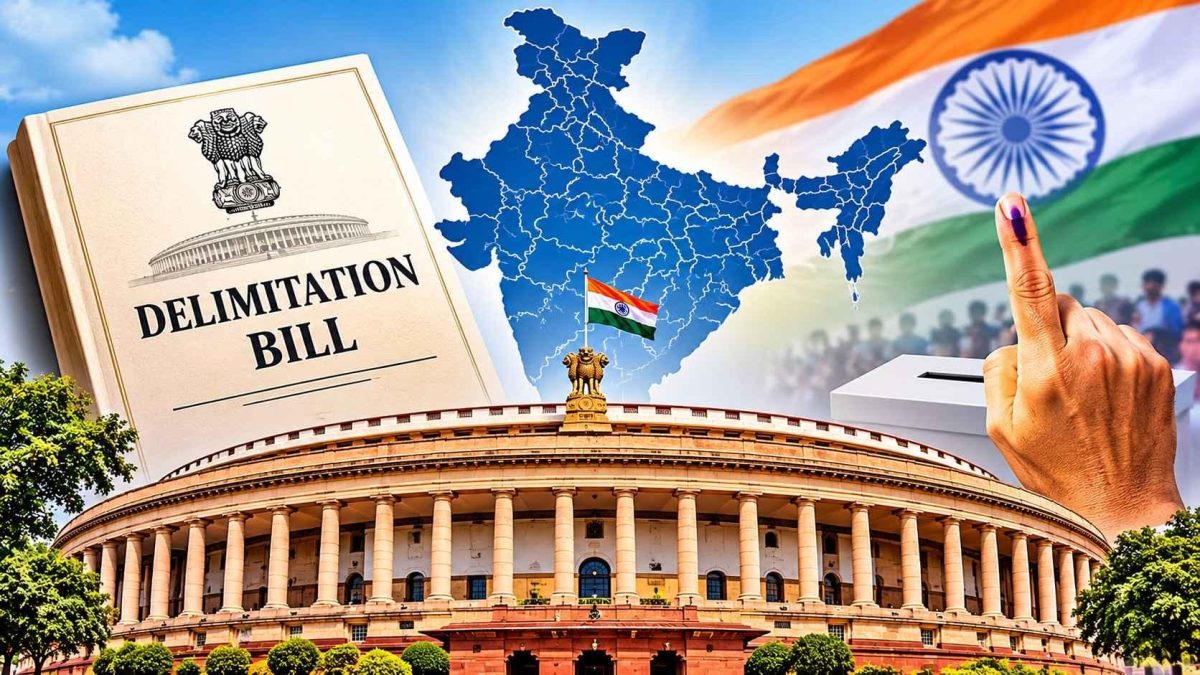
The Union Cabinet has approved a fresh Constitution Amendment Bill that would raise the number of seats in every state by 50% and, in the process, give immediate effect to one-third reservation for women in the Lok Sabha and state Assemblies. The Hindu reported on Saturday, 28 November 2026, that the proportionate increase would hold for 25 years, until the distribution changes according to the Census conducted after 2051. The Bill, formally the Constitution (132nd Amendment) Bill, 2026, will be taken up at a special sitting of Parliament that begins on Monday, 30 November, and the politics around it has already rearranged the Opposition: the DMK, which is no longer allied with the Congress, and the Sharad Pawar-led NCP (SP), part of the INDIA bloc, have said they will support it, while the Congress, the Shiv Sena (UBT) and others are preparing to fight it.
The proposal is easier to understand against what came before. On 17 April 2026, an earlier constitutional amendment Bill, the 131st, fell 54 votes short of the two-thirds majority it needed in the Lok Sabha, with 298 MPs voting in favour and 230 against. The government did not proceed with the accompanying Bills. According to a Hindu explainer, it then took the Modi government 225 days to go back to the drawing board and come up with a more carefully drafted package, one meant to ensure that states that had done better at controlling population growth do not lose representation in the House of the People. The new Bill is the result. The government has called the special sitting, announced by Union Parliamentary Affairs Minister Kiren Rijiju on Thursday, 26 November, on the 104th day since the Monsoon Session was adjourned indefinitely on 13 August. The Lok Sabha reconvenes on 30 November and the Rajya Sabha on 2 December, and the sittings are due to end on 3 December, subject to the business of the government.
On its terms, the Bill does three main things. It raises the maximum strength of the Lok Sabha to 850, with up to 815 members from states and 35 from Union Territories. It raises the ceiling on the size of a state Assembly from 500 to 650. And it freezes the revised allocations and boundaries until 2051. The Statement of Objects and Reasons says the aim is to give immediate effect to one-third reservation for women, including women from the Scheduled Castes and Scheduled Tribes, in the House of the People and the Legislative Assemblies, through a delimitation exercise that raises the number of seats by 50% over the number existing just before it. Sources told The Hindu that the fresh Bill seeks to use the 2011 Census to redraw the increased seats while keeping each state's percentage share unchanged. The Centre had also made an oral assurance, while introducing the earlier Bill, that each state's share would rise by 50% on a pro-rata basis.
For the government, the pitch is about women's representation and fairness between states. BJP spokesperson Yamini Sharma said the revised Bill was not about politics but about fulfilling the promise of 33% women's reservation by 2029, adding that from April to November the NDA government had listened to each state's concern, expanded the Lok Sabha to 850 seats with a uniform 50% rise for every state, and frozen the state ratio until 2051. Andhra Pradesh Deputy Chief Minister Pawan Kalyan said the reform would strengthen democratic representation by ensuring every state and region has an adequate voice in Parliament, and called it a reflection of cooperative federalism. BSP chief Mayawati welcomed the move to facilitate 33% reservation for women but said it would have been historic had a separate quota been provided within it for women from the SC and ST communities.
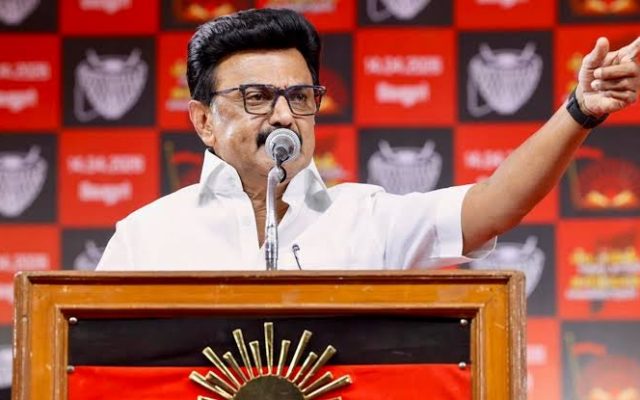
The most consequential shift is in the south. The DMK, whose 22 MPs are crucial for the passage of the Bill, held a meeting of its MPs chaired by party president M.K. Stalin on Saturday and adopted a resolution supporting it. The party's argument is that Tamil Nadu's existing share of 7.18% of parliamentary constituencies will not be reduced and that the Bill extends the freeze on the inter-state distribution of seats for another 25 years. Explaining the resolution, party MP A. Raja said that Tamil Nadu's share would in fact be 7.21% rather than 7.18%, and that there was "no loss", pointing out that Tamil Nadu had lost two seats in the 1971 delimitation. He said the DMK had maintained a consistent position, whether in Opposition or in government, and that it was "politically indecent" to portray it as having adopted a new position because it was no longer in alliance with the Congress. Senior DMK MP Dayanidhi Maran said, "Our demand has been accepted. We want the status quo to prevail." The Hindu's analysis described the party's stance as a choice of the lesser evil in the face of the inevitability of delimitation, given that the existing freeze lapses once the figures from the first Census after 2026 are published.
The DMK resolution was sharp towards its former ally. It asked the Congress to stop lecturing the party on principles, called its conduct a "treacherous act" towards the interests of states including Tamil Nadu, and said the Congress had "surreptitiously jumped ship" from the alliance at midnight. It also recalled the resolution adopted by the Tamil Nadu Assembly in February 2024, which said that if the number of constituencies had to be increased on the basis of population, the existing proportion among states, as determined on the basis of the 1971 Census, must be maintained. Stalin's two conditions for supporting the Bill, The Hindu reported, are that Tamil Nadu's share should not be reduced and that the existing proportional strength of all states under the 1971 Census should stay frozen for another 25 years. Raja added that the party had found some shortcomings in the Bill and would discuss them with the government and suggest amendments where necessary.
The other crack in the Opposition is in Maharashtra. NCP (SP) leader Jitendra Awhad announced on Friday that Supriya Sule and the party's eight MPs had decided to support the Bill, and that a whip had been issued asking all of them to be present in Delhi. Sharad Pawar remains in hospital in Mumbai and is likely to be discharged over the weekend; Awhad said the general point discussed was that delimitation is a constitutional process and will have to be done at some point. Congress leaders called the decision "unfortunate", and Shiv Sena (UBT) MP Sanjay Raut said it was a unilateral step that would invite a backlash in Maharashtra, reminding the NCP (SP) that its eight MPs had won as part of the Maha Vikas Aghadi. Raut had earlier said that those voting for the Bill would be "traitors" to the nation.
The INDIA bloc's floor leaders met at the residence of Rajya Sabha Leader of the Opposition Mallikarjun Kharge on Saturday to plan a joint strategy. Rahul Gandhi, Trinamool's Abhishek Banerjee, Kapil Sibal, the RJD's Manoj Jha and leaders of the CPI, the IUML and the RSP took part. The DMK, the Aam Aadmi Party and the Biju Janata Dal were invited but stayed away. Sibal set out the Opposition case. If the Bill passes, the Lok Sabha could grow to around 850, and the first question, he said, was whether a House of that size can function; the more serious issue, he alleged, was that the real objective was not women's reservation, which could be implemented immediately within the existing 543 seats, but control over the delimitation body and the drawing of boundaries, which he called gerrymandering. The BJP has not accepted that characterisation. Congress MP Shashi Tharoor backs women's reservation but argues it should not be linked to delimitation, and has raised concerns about the proposed expansion to 850, the lack of consultation with states and the effect on Parliament's functioning. RJD working president Tejashwi Yadav suggested the special sitting may have been called with an eye on Assembly elections due in a few months, while writer Arundhati Roy told a conclave in Delhi that delimitation "will break the back of democracy."
The numbers will decide it. A constitutional amendment needs two-thirds of the members present and voting. The Lok Sabha has 540 sitting members and three vacancies, and if the suspension of Trinamool MP Kalyan Banerjee stays in force, 539 members including the Speaker can attend. The Hindu calculated that the Bill would need 359 votes if all 538 members other than the Speaker vote, and that absentees would lower the threshold. The NDA, it reported, could muster 319 votes with the backing of the 20 Trinamool MPs who broke away in June and merged with the NDA-supporting Nationalist Citizens Party of India, and the lone MP of the Shiromani Akali Dal, which returned to the NDA on 24 November. That could rise to 353 if the DMK's 22, the NCP (SP)'s eight and the YSR Congress Party's four also vote in favour. On those figures the government would still depend on absences or on other parties that opposed the April Bill, even though the BJP says it is confident of securing the required two-thirds majority. Disqualification proceedings against the Trinamool rebels are pending before Speaker Om Birla.
Beyond the arithmetic, there are institutional questions that The Hindu has flagged: the increase could weaken the Rajya Sabha's role as a check on the lower House, and the Lok Sabha's limited sitting days would leave a larger body of MPs with less time to raise issues. Whether the Bill passes on Monday or Tuesday, it is already clear that delimitation has reshaped alliances, drawn the DMK closer to the BJP on this issue and widened the rift between the Congress and its allies. The next four days in Parliament will show whether that realignment holds when the votes are counted.

Leave a Reply