
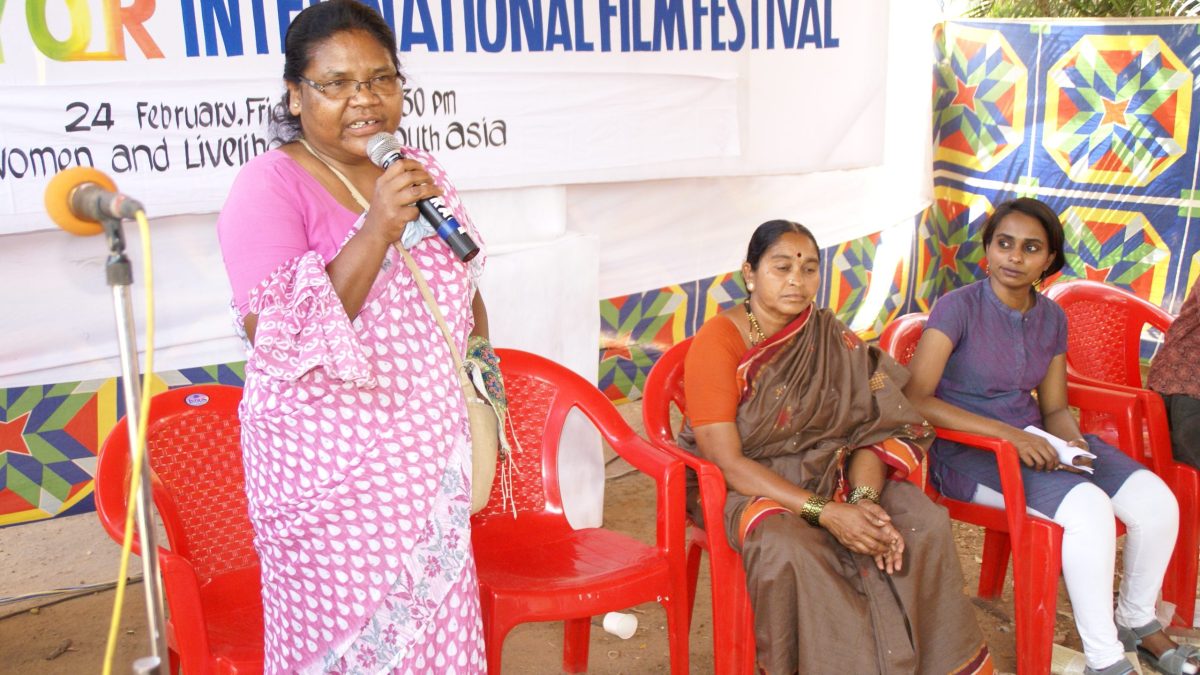
Dayamani Barla is an Indian tribal journalist and activist from Jharkhand. A member of the Munda community who worked as a domestic help to pay for her schooling, she became the first Adivasi woman journalist in the state and then the leader of movements against the taking of tribal land for dams, industry and institutions. She is best known for the campaign that kept a proposed ArcelorMittal steel plant out of the Khunti–Gumla region, and is often called the “Iron Lady of Jharkhand”.
Quick Facts
| Full name | Dayamani Barla |
| Born | Arhara village, Jharkhand, India |
| Community | Munda |
| Occupation | Journalist, activist |
| Known for | Movements against displacement in Jharkhand |
| Education | Ranchi University (M.Com.) |
| Awards | Counter Media Award for rural journalism (2000); Ellen L. Lutz Indigenous Rights Award (2013) |
Early Life
Barla was born in a village in what is now Jharkhand. Her father, who could not read, lost the family’s land when he was tricked into putting his thumbprint on papers he did not understand. The family broke up to find work: her father became a servant in one town, her mother a maid in Ranchi, her brothers labourers. Dayamani stayed in the village and worked on farms while attending school, then moved to Ranchi, where she washed dishes in homes and typed for a living, sometimes sleeping at the railway station, while she completed a master’s degree in commerce.
Journalism
She began writing for the Hindi newspaper Prabhat Khabar about the villages she knew, reporting on displacement, hunger and the working of government schemes from the point of view of those affected. She bought and ran a small tea shop in Ranchi to pay her way, and it became a meeting place for activists and reporters. She received the Counter Media Award for rural journalism in 2000 and a fellowship from the National Foundation for India in 2004.
Movements
In the 1990s she joined the long resistance to the Koel Karo hydroelectric project, which would have submerged scores of villages and sacred groves. After police fired on protesters at Tapkara in 2001, killing eight people, the project was eventually shelved.
In 2005 the Jharkhand government signed an agreement with the world’s largest steel company for a plant requiring some 12,000 acres in Khunti and Gumla districts. Barla helped form a forum of Adivasi and other local residents to oppose it, under the slogan that they would not give up an inch of land. For several years villagers refused entry to survey teams, and the company finally abandoned the site.
In 2012 she led farmers at Nagri, near Ranchi, who objected to their fields being taken for the campuses of a law university and management and technology institutes. She was arrested that October in connection with older protest cases and spent about two and a half months in jail.
Politics and Recognition
She contested the Khunti Lok Sabha seat in 2014 as a candidate of the Aam Aadmi Party and has stood in later elections, without success. In 2013 the organisation Cultural Survival gave her its first Ellen L. Lutz Indigenous Rights Award.
Views
Barla argues that for Adivasis land, forest and water are not property to be compensated for but the basis of language, religion and identity, and that development which destroys them is no development. She continues to live in Ranchi with her husband, Nelson, and to write and organise.
Frequently Asked Questions
When and where was Dayamani Barla born?
Birth details: Arhara village, Jharkhand, India.
What is Dayamani Barla known for?
Known for: Movements against displacement in Jharkhand.
What honours has Dayamani Barla received?
Counter Media Award for rural journalism (2000); Ellen L. Lutz Indigenous Rights Award (2013).
Featured image: Dayamani Barla speaks at the ViBGYOR International Film Festival, Thrissur, February 2012. Photo by ViBGYOR Film Collective, licensed under CC BY-SA 2.0, via Wikimedia Commons.



