
The Permanent Settlement was an agreement made in 1793 between the East India Company and the landlords of Bengal, fixing for ever the amount of land revenue they had to pay. It was the work of Lord Cornwallis, and it reshaped the countryside of eastern India for a century and a half. It gave the Company a reliable income, created a landed class loyal to the Raj, and left the peasant with little protection.
Quick Facts
| Year | 1793 |
| Introduced by | Charles, Earl Cornwallis, Governor-General |
| Area | Bengal and Bihar, later Varanasi and northern Madras districts |
| Principle | Fixed revenue payable by zamindars, treated as owners of land |
| Part of | The Cornwallis Code |
| Ended | Abolished by zamindari abolition laws after independence |
The Background
After winning the Diwani of Bengal at Buxar and the Treaty of Allahabad, the Company needed money and stability. Revenue was auctioned or collected through short-term arrangements, which led to over-collection and ruin. Cornwallis, arriving in 1786, wanted a fixed demand that would encourage landlords to invest and would give the Company a predictable income.
How It Worked
- **Zamindars as owners:** the zamindars who collected revenue were recognised as proprietors of the land, with rights that could be sold or inherited
- **Fixed demand:** the amount payable to the Company was fixed in perpetuity, so that the zamindar kept any increase from clearing land or raising rents
- **The sunset law:** if the revenue was not paid on the fixed date, the estate could be sold at auction
- **Separation of services:** the Cornwallis Code divided the Company’s service into revenue, judicial and commercial branches
The regulations of 1 May 1793 spread the system across much of north India. The other two main systems that developed elsewhere were the ryotwari system in Madras and Bombay, where the cultivator paid the state directly, and the mahalwari system in the north-west, where villages were assessed together.
The Consequences
- **For the Company:** the income fixed in 1793 stayed fixed as costs and prices rose, so the Company’s revenue fell behind in the long term
- **For zamindars:** many were unable to meet the demand and lost their estates, while a new class of absentee landlords and moneylenders bought land
- **For peasants:** rents rose, and landlords who risked sale for default pressed cultivators to grow cash crops, which many historians connect with debt and famine
- **For politics:** the landed class gave the Raj a base of support, while the Bengali middle class that grew up around it later provided many leaders of nationalism
The End of the System
Zamindari abolition acts after independence, beginning in East Bengal in the early 1950s and in West Bengal at about the same time, ended the intermediaries and gave tenants direct rights. The Permanent Settlement is still debated: some historians see it as a deliberate move to create a loyal elite, others as a flawed attempt at reform. Its effects in a region later struck by famine, as in the Bengal famine of 1943, remain central to the debate about colonial economic policy.
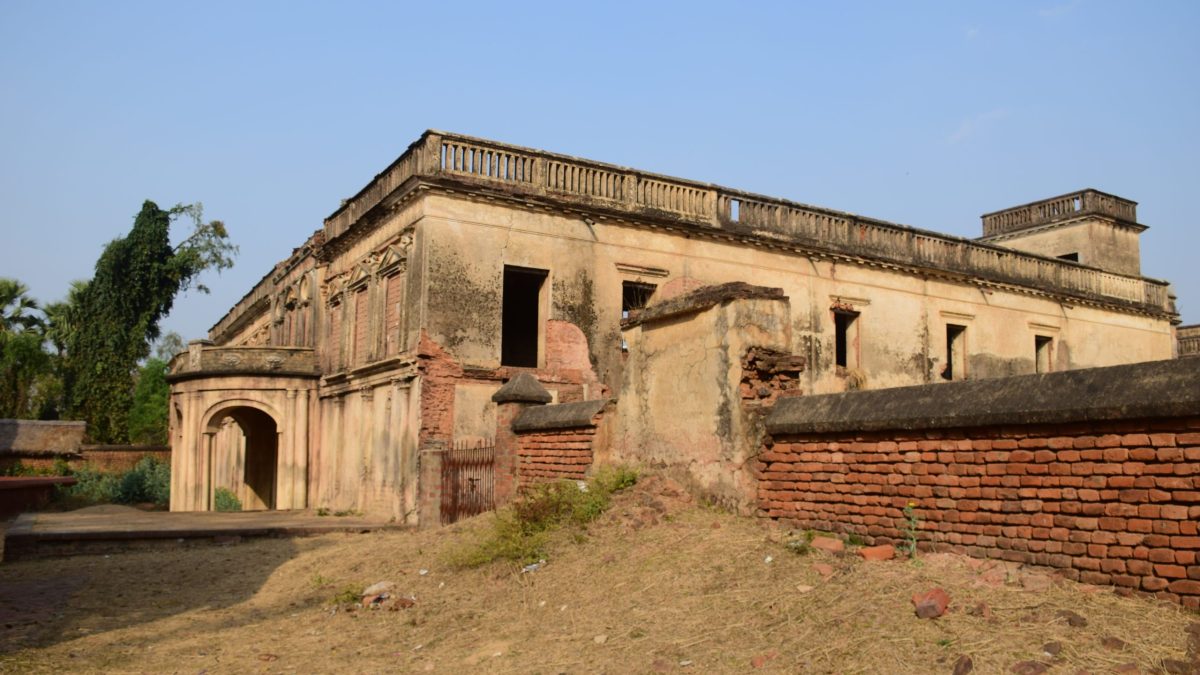
Featured image: A zamindar’s house at Kalikapur in Purba Bardhaman district, West Bengal (file photo). Photo by Amitabha Gupta, licensed under CC BY 4.0, via Wikimedia Commons.



Leave a Reply