
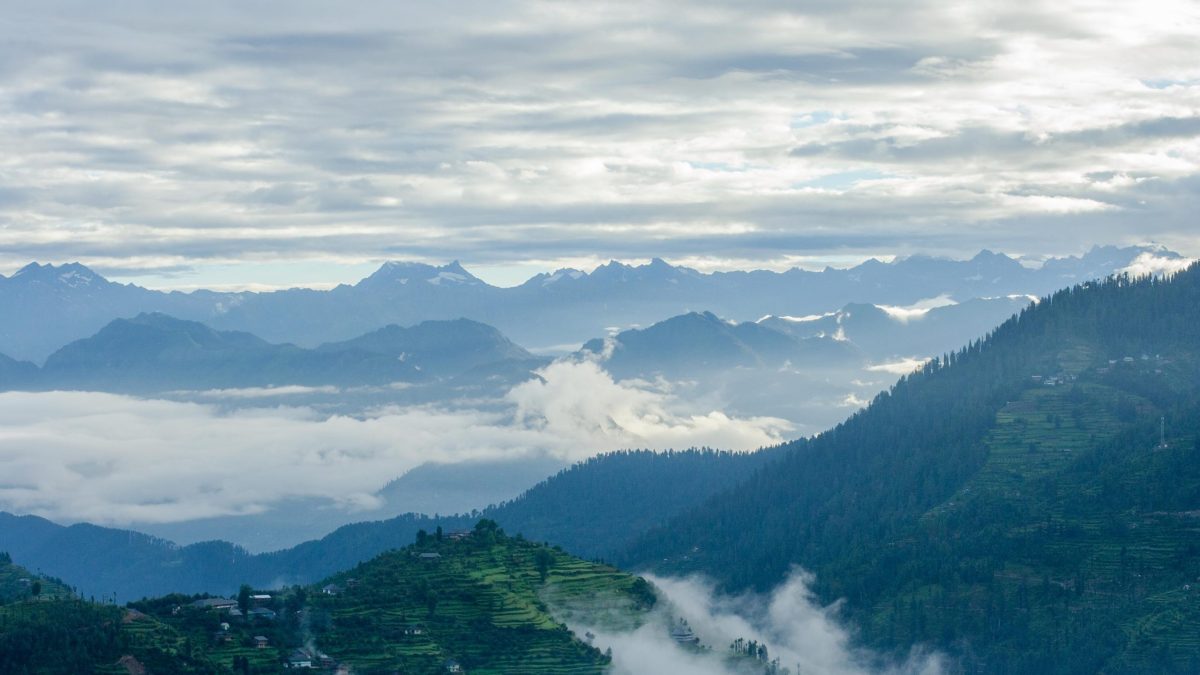
In the Kullu district of Himachal Pradesh, four river valleys climb from forest to glacier without a single road. The Great Himalayan National Park protects one of the least disturbed stretches of the western Himalaya. UNESCO inscribed the Great Himalayan National Park Conservation Area as a World Heritage Site in 2014.
At a glance
- Location: Kullu district, Himachal Pradesh
- Inscribed: 2014
- Type: Natural
- Area: about 905 square kilometres, including two adjoining sanctuaries
- Altitude: from about 1,500 to over 6,000 metres
History
The area was surveyed in the early 1980s as part of a search for the best site for a national park in the state. It was notified in 1984 and formally declared a national park in 1999, when the rights of local people to graze animals and collect plants inside it were settled with compensation. The Sainj and Tirthan wildlife sanctuaries are part of the World Heritage property.
The landscape
The park covers the upper catchments of four rivers, the Tirthan, the Sainj, the Jiwa Nal and the Parvati, all of which flow to the Beas. Because the altitude rises by more than four kilometres over a short distance, it contains a full sequence of Himalayan habitats.
- Lower slopes: forests of oak, blue pine, horse chestnut and deodar
- Higher: fir, spruce and birch, then rhododendron scrub
- Above the tree line: alpine meadows, rich in medicinal herbs
- Highest: rock, snow and glaciers
Wildlife
- Western tragopan: a spectacular and very rare pheasant, the state bird of Himachal Pradesh, for which the park is the most important refuge
- Other pheasants: the Himalayan monal, the koklass and the cheer
- Mammals: snow leopard, Himalayan brown and black bears, musk deer, blue sheep, Himalayan tahr, serow and goral
- In all: more than 200 species of birds and about 30 of mammals
People
There are no villages inside the park, but about 160 villages lie in the buffer zone on its western side. The park authorities work with women’s savings groups there on income from handicrafts, organic produce and guiding, to reduce dependence on the forest.
Why it is a World Heritage Site
The park lies at the meeting point of two of the world’s major biological regions and protects the most intact range of western Himalayan habitats, with many threatened species.
Visiting
The park can be entered only on foot, with a permit and usually with local guides and porters. Treks range from a day’s walk in the Tirthan valley to demanding journeys of a week or more to the high passes. The starting points are the villages of Gushaini in the Tirthan valley and Neuli in the Sainj valley, reached from Aut on the highway to Kullu. The best seasons are April to June and September to November.
Image: The Great Himalayan National Park in Kullu district, Himachal Pradesh. Photo by Samir Azad, licensed under CC BY-SA 4.0, via Wikimedia Commons.




Leave a Reply