Geeta Dutt, born Geeta Ghosh Roy Chowdhuri on 23 November 1930 and died on 20 July 1972, was an Indian classical and playback singer, considered one of the best playback singers of all time in Hindi films. She rose to particular prominence in Hindi and Bengali cinema and also sang many modern Bengali songs outside films.
She was one of ten children of a wealthy zamindar family in Idilpur village in the Madaripur subdivision of Faridpur district, in the Bengal Presidency, in what is now Bangladesh. In the early 1940s the family moved to Calcutta and Assam, leaving their land and property behind, and in 1942 her parents moved to a flat in Bombay. She was 12 and continued her schooling at the Bengali High School. As a child she trained under her music teacher Hirendranath Nandy.
In 1946 the composer K. Hanuman Prasad launched her film career when, at 16, she was given two lines to sing in two songs in the mythological film Bhakta Prahlad. She rose to fame as a playback singer in Do Bhai (1947), for which she recorded the popular song “Mera Sundar Sapna Beet Gaya”, composed by S. D. Burman. Within two years she had worked on 15 films, and by 1949 she was established as one of the leading playback singers of the era, with hit songs in Shaheed, Ek Thi Larki, Darogaji, Shabnam and Jeet.
Darogaji (1949) and Jogan (1950) each featured 12 or more songs by her, composed by Bulo C. Rani, and between 1947 and 1964 the two worked together on 60 songs. In 1951 her songs in Baazi, with music by S. D. Burman, were very well received, and “Tadbeer Se Bigdi Hui Taqdeer Bana Le” became a favourite. She met and fell in love with the film’s director, Guru Dutt, while recording it. In the 1950s she was one of the highest-paid and most in-demand singers in Hindi cinema, singing in around 12 films in 1948 and at least 25 the next year.
Her work in Gujarati cinema, despite her not knowing the language, brought early success. In 1948 she recorded songs for four films, Gunsundari, Kariyavar, Nanand Bhojai and Varasdar, working with the composers Avinash Vyas and Ajit Merchant, and between 1948 and 1967 she recorded almost 80 songs for 25 Gujarati films.
Her Bengali output was large. She recorded two songs for Mahakobi Girishchandra (1956), composed by Anil Bagchi, worked with Nachiketa Ghosh on songs for Prithibi Aamaare Chaay (1957) and Indrani (1958), and collaborated with Hemanta Mukherjee on eleven films, including Joutuk (1958), Sonar Harin (1959) and Sathi Hara (1961). With Kishore Kumar she sang “Shudhu Ektukhani Chaowa” for Lukochuri (1958), and she worked with Kanu Ghosh, Sudhin Dasgupta and Salil Chowdhury on devotional and folk music.
She married Guru Dutt on 26 May 1953 at her mother’s home in Santa Cruz, after her relatives, who were reluctant because he was neither established nor Bengali, gave way with the support of his family. After their marriage she sang in all of his subsequent films, with widely praised work in Mr. & Mrs. ’55, C.I.D., Pyaasa, Kaagaz Ke Phool and Sahib Bibi Aur Ghulam, and also sang for Dev Anand’s films, including Nau Do Gyarah and Kala Bazar. His production Gouri, in which he cast her in her first leading role, was shelved after a few days of shooting in Calcutta in 1957.
Her career declined in the late 1950s. In 1956 she was forced to declare personal bankruptcy after the financial failure of Sailaab, a film produced by her brother Mukul Roy, and regular collaborators such as S. D. Burman and O. P. Nayyar began to use Lata Mangeshkar and Asha Bhosle more. After Guru Dutt’s death in 1964 she appeared in fewer films, though she played the lead in the 1967 Bengali film Badhu Baran, the last Bengali film in which she sang. In 1971 she recorded three songs for Basu Bhattacharya’s Anubhav, composed by Kanu Roy, which have since become popular. She died on 20 July 1972, and her voice remains a landmark of 1950s film music.
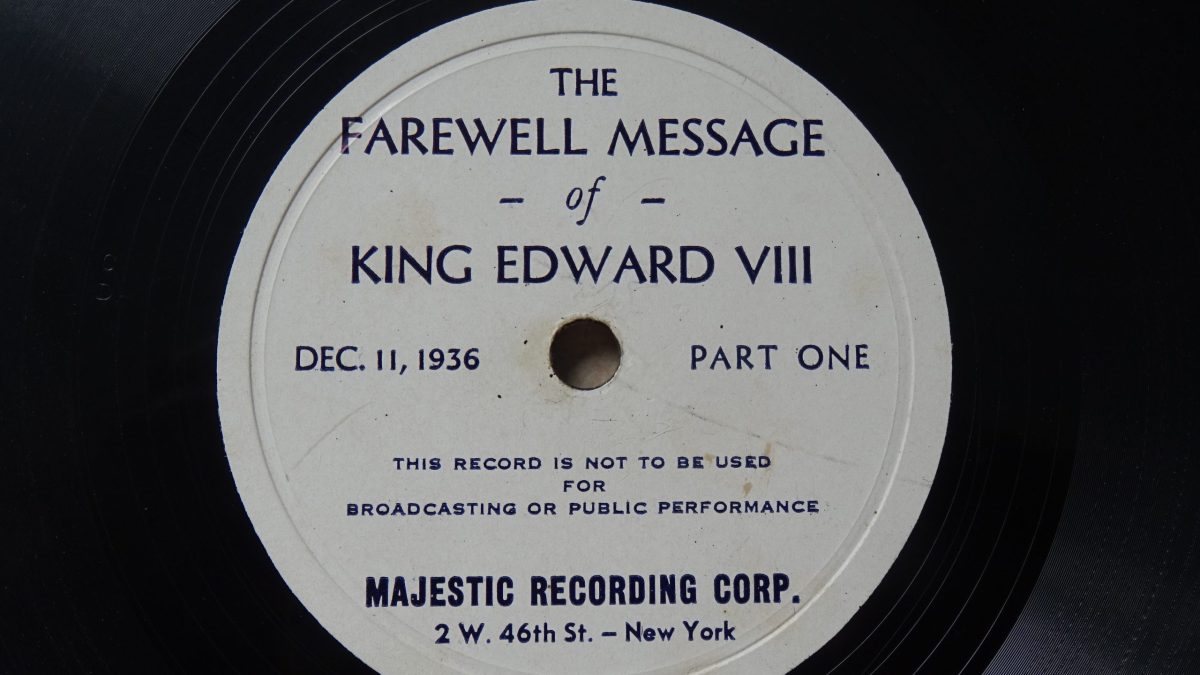
Featured image: Old gramophone records (file photo, 2025; Geeta Dutt recorded for such discs, and this is not a photo of her). Photo by Dr. Iqbal Matin, licensed under CC0, via Wikimedia Commons.