Sachin Dev Burman (1 October 1906 – 31 October 1975) was an Indian music director and singer, one of the greatest composers in the history of Hindi cinema. A prince of the royal house of Tripura, he brought the folk melodies of Bengal and the North-East into film music. In three decades in Bombay he composed for about a hundred films, among them Pyaasa, Guide, Aradhana and Abhimaan. He was the father of the composer R. D. Burman.
Quick Facts
| Full name | Sachin Dev Burman |
| Born | 1 October 1906, Comilla, Bengal Presidency (now in Bangladesh) |
| Died | 31 October 1975, Bombay (aged 69) |
| State | Tripura |
| Occupation | Music director, singer |
| Years active | 1932–1975 |
| Notable films | Baazi, Devdas, Pyaasa, Kaagaz Ke Phool, Bandini, Guide, Jewel Thief, Aradhana, Abhimaan |
| Awards | Sangeet Natak Akademi Award (1958), Padma Shri (1969), two National Film Awards, two Filmfare Awards |
| Spouse | Meera Dev Burman (m. 1938) |
| Children | Rahul Dev Burman |
Early Life
He was born at Comilla, where the Tripura royal family had a palace. His father, Nabadwipchandra Dev Burman, was a son of a Maharaja of Tripura who had been passed over in the succession; he was a sitar player and singer of dhrupad, and his son’s first teacher. His mother was a princess of Manipur.
As a boy he learnt as much from the family’s servants and from the boatmen and wandering singers of the East Bengal countryside as from his masters. The Bhatiali songs of the river and the Baul songs of the mystics stayed in his music for life. He took a degree from Comilla Victoria College and went to Calcutta, where he gave up his studies for music.
Training and Bengal
He studied with the blind singer K. C. Dey and, later, with the classical masters Bhishmadev Chattopadhyay, Badal Khan and Allauddin Khan. He began singing on Calcutta radio in 1932, and his records of Bengali folk and light classical songs, in a thin, nasal, piercing voice like no other, made him famous in Bengal. He composed for Bengali films and plays. His family disapproved of a prince making a living from music, and he broke with them.
Bombay
He moved to Bombay in 1944. Success came slowly. Do Bhai (1947) had a hit song, and Baazi (1951), for Dev Anand’s company Navketan, made his name. He was associated with Navketan and with the director Guru Dutt for the rest of the decade.
- **1950s:** Taxi Driver, Devdas, Pyaasa (1957), Kaagaz Ke Phool, Sujata
- **1960s:** Bandini, Tere Ghar Ke Samne, Guide (1965), Jewel Thief, Aradhana (1969)
- **1970s:** Sharmilee, Abhimaan (1973), Chupke Chupke, Mili
He was known for tunes of great simplicity, for his sense of where a song belonged in a film, and for moving with the times: the score of Aradhana, written when he was past sixty, made a star of the singer Kishore Kumar. He worked closely with Lata Mangeshkar, Asha Bhosle and Mohammed Rafi, and was among the first to recognise the talent of each.
The Singer
He sang a handful of songs in his own films, usually as a voice heard over the action: “Sun Mere Bandhu Re” in Sujata, “Wahan Kaun Hai Tera” in Guide, and “Safal Hogi Teri Aradhana”, which won him the National Film Award for best male playback singer.
Honours
- Sangeet Natak Akademi Award (1958)
- Padma Shri (1969)
- Filmfare Awards for Taxi Driver and Abhimaan
- National Film Awards for singing (1970) and for the music of Zindagi Zindagi (1974)
Personal Life
In 1938 he married his student Meera Dasgupta, who became a lyricist and his assistant. Their only child, Rahul Dev Burman, known as Pancham, assisted his father and became the most influential film composer of the next generation. He was a passionate follower of football and of the East Bengal club, and famously careful with money and with his paan.
He fell into a coma after a stroke while recording Mili and died on 31 October 1975.
Legacy
Tripura honours him as a son of its royal house: its government music college at Agartala carries his name, and a memorial award is given in his memory. The cricketer Sachin Tendulkar was named after him by a father who loved his music.
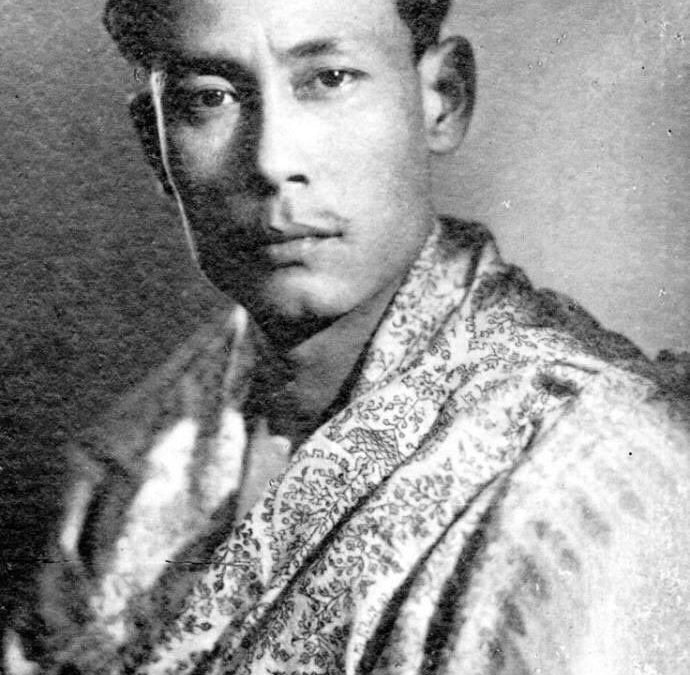
Featured image: S. D. Burman in the 1930s. Photo by an unknown photographer, in the public domain, via Wikimedia Commons.