
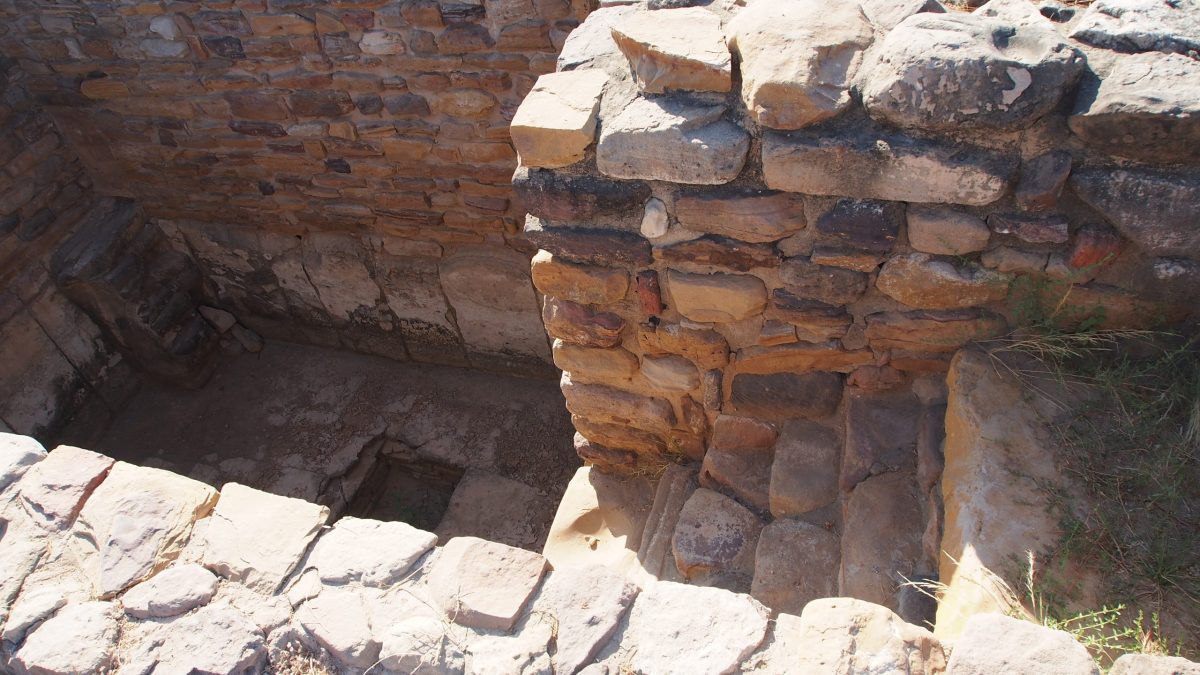
Dholavira, on the island of Khadir in the salt desert of the Great Rann of Kutch, is one of the largest and best-preserved cities of the Indus Valley, or Harappan, Civilisation. It was lived in for some 1,500 years. UNESCO inscribed it as a World Heritage Site in 2021, the first site of that civilisation in India to be listed.
At a glance
- Location: Khadir Bet, Kutch district, Gujarat
- Inscribed: 2021
- Type: Cultural
- Occupied: about 3000 to 1500 BCE
- Discovered: 1967–68, by J. P. Joshi
Discovery
The mounds, known locally as Kotada, were identified by the archaeologist Jagat Pati Joshi in the 1960s. The Archaeological Survey of India, under R. S. Bisht, excavated the site from 1990 to 2005.
The city
Most Harappan cities have two parts. Dholavira has three, all within an outer wall.
- The citadel: on the highest ground, heavily fortified, in two sections that the excavators called the castle and the bailey
- The middle town
- The lower town: where most people lived
Unlike the brick cities of the Indus plain, Dholavira was built largely of stone, which is why so much survives. Between the citadel and the middle town is a large open ground, with stepped seating along its sides, which may have been used for ceremonies or markets.
Water
The island has no river and little rain. The people of Dholavira built one of the most elaborate water systems of the ancient world.
- Dams: across the two seasonal streams that run past the city
- Reservoirs: a chain of large tanks, some cut into the rock, along the inside of the city walls, taking up a considerable part of the area
- Drains: stone channels to carry rainwater from the citadel to the tanks
The signboard
In a room beside the citadel’s north gate the excavators found ten large signs of the Indus script, each about 37 centimetres high, made of pieces of white mineral that had been set into a wooden board. It is the longest known Harappan inscription in large letters, and is thought to have hung over the gate. The script has not been deciphered.
Why it is a World Heritage Site
Dholavira is an exceptional example of a planned Harappan city, showing the civilisation’s rise and fall and its people’s skill in surviving in a harsh environment.
Visiting
The site is about 220 kilometres from Bhuj. A road across the Rann, opened in recent years, has shortened the journey. The best season is from November to February. A small museum stands at the entrance.
Image: Stone-built water reservoirs at the citadel of Dholavira, Gujarat. Photo by Prof Ranga Sai, licensed under CC BY-SA 4.0, via Wikimedia Commons.


Leave a Reply