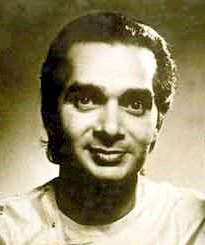
Uday Shankar (8 December 1900 – 26 September 1977) was an Indian dancer and choreographer, the pioneer of modern dance in India. With no formal training in any classical style, he created a dance of his own from Indian painting, sculpture, folk movement and music, and in the 1930s his company made Indian dance famous in Europe and America. He was the elder brother of the sitar player Ravi Shankar.
Quick Facts
| Full name | Uday Shankar Chowdhury |
| Born | 8 December 1900, Udaipur, Rajasthan |
| Died | 26 September 1977, Calcutta (aged 76) |
| Occupation | Dancer, choreographer, film-maker |
| Education | Sir J. J. School of Art, Bombay; Royal College of Art, London |
| Known for | Creating modern Indian dance; the film Kalpana (1948) |
| Awards | Sangeet Natak Akademi Fellowship (1962), Padma Vibhushan (1971), Desikottama (1975) |
| Spouse | Amala Shankar (m. 1942) |
| Children | Ananda Shankar, Mamata Shankar |
Early Life
He was born at Udaipur, after which he was named, the eldest son of Shyam Shankar Chowdhury, a Bengali barrister and scholar who served the Maharaja of Jhalawar as a minister. He spent much of his childhood at his mother’s village near Benares and at Jhalawar, where he watched the folk dancers of Rajasthan and learnt conjuring and music.
He studied painting at the Sir J. J. School of Art in Bombay, and in 1920 went to the Royal College of Art in London, where he worked under Sir William Rothenstein and won prizes.
Pavlova
His father, then in London, staged Indian entertainments in which the son danced. In 1923 the Russian ballerina Anna Pavlova, planning items on Indian themes, asked him to help. He composed two short ballets, A Hindu Wedding and Radha-Krishna, and danced Krishna to her Radha at Covent Garden and on tour in America.
After a year and a half he left her. She advised him to go back to his own country’s sources and not to imitate the West.
The Company
He spent hard years in Paris, dancing in cabarets and studying Indian art in museums. With the Swiss sculptor Alice Boner he returned to India in 1930, travelled, collected instruments and costumes, and came back to Paris with a troupe drawn largely from his family: his brothers, among them the ten-year-old Ravi, and the musician Timir Baran, later joined by the great Allauddin Khan.
The company opened in Paris in March 1931 and toured Europe and the United States for most of the decade. Audiences who had never seen Indian dance were captivated. The items were short and vivid, Indra, Tandava Nritya, Kartikeya, a snake-charmer’s dance, a harvest dance, accompanied by an orchestra of Indian instruments on the stage. He used movements suggested by classical forms and by sculpture, but the grammar was his own.
Almora
In 1938, with money from the Elmhirsts of Dartington Hall in England, he founded the Uday Shankar India Culture Centre at Almora in the Himalaya. He invited the great masters to teach there: Sankaran Namboodiri for Kathakali, Kandappa Pillai for Bharatanatyam, Amobi Singh for Manipuri and Allauddin Khan for music. Among the students were Guru Dutt, later a film director, and Zohra Sehgal. There he composed his ballets on contemporary themes, Rhythm of Life and Labour and Machinery. The centre closed in 1942 for want of funds.
Kalpana
He spent four years making a film, Kalpana (1948), a fantasy about a dancer who dreams of founding an academy, told almost entirely through dance. It failed at the box office and exhausted his resources. It is now regarded as a landmark of Indian cinema and has been restored. See also Satyajit Ray, who admired it.
Later Years
He settled in Calcutta, formed new troupes and toured, and in 1960 created Samanya Kshati, on a poem by Rabindranath Tagore, for the poet’s centenary. His last large production combined dance and film.
Honours
- Sangeet Natak Akademi Award for creative dance (1960) and Fellowship (1962)
- Padma Vibhushan (1971)
- Desikottama of Visva-Bharati (1975)
Personal Life
In 1942 he married Amala Nandy, his dance partner, who lived to a hundred and one. Their son, Ananda Shankar, was a composer who mixed Indian and Western music, and their daughter, Mamata Shankar, is a dancer and film actress. The couple lived apart in his last years. He died in Calcutta on 26 September 1977.
The classical dances were being revived in the same years by others, among them Rukmini Devi Arundale.
Featured image: Uday Shankar in the 1930s. Photo by an unknown photographer, in the public domain, via Wikimedia Commons.