
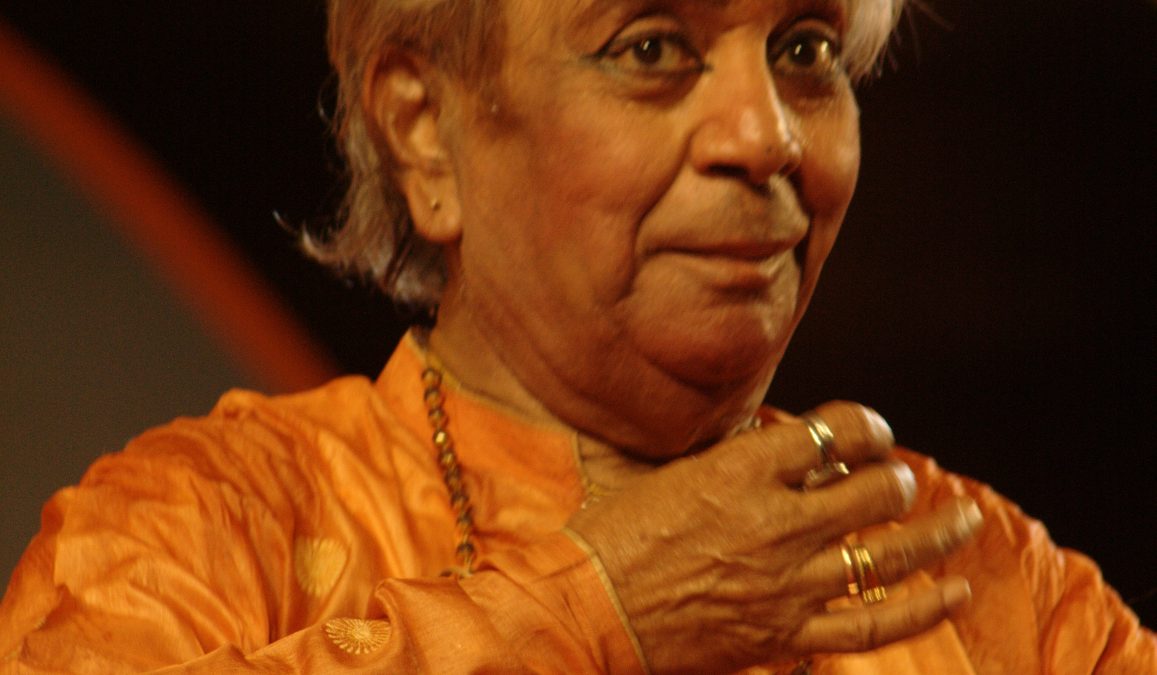
Pandit Birju Maharaj (4 February 1938 – 17 January 2022), born Brijmohan Nath Mishra, was an Indian dancer, choreographer, singer and teacher, and the foremost exponent of Kathak in his lifetime. He was the heir of the Kalka-Bindadin family of Lucknow, whose members shaped the Lucknow style of the dance at the court of Awadh, and he carried that tradition to audiences around the world. He received the Padma Vibhushan in 1986.
Quick Facts
| Birth name | Brijmohan Nath Mishra |
| Born | 4 February 1938, Lucknow, Uttar Pradesh, India |
| Died | 17 January 2022 (aged 83), New Delhi |
| Occupation | Kathak dancer, choreographer, vocalist, teacher |
| Tradition | Lucknow gharana (Kalka-Bindadin) |
| Father | Acchan Maharaj |
| Awards | Sangeet Natak Akademi Award (1964); Padma Vibhushan (1986); Kalidas Samman; National Film Award for Best Choreography (2012) |
Early Life
He was born into a family of hereditary Kathak dancers whose ancestors had served the nawabs of Awadh; his great-grandfather’s generation had been at the court of Wajid Ali Shah. His father, Acchan Maharaj, was a court dancer at Rampur, and his uncles Shambhu Maharaj and Lachhu Maharaj were celebrated performers. He learned by watching and imitating from infancy and gave his first recital at seven.
His father died when he was nine, and the family fell into difficulty. At thirteen he was already teaching, at the Sangeet Bharati in Delhi, to support the household.
Career
He taught at the Bharatiya Kala Kendra and then, for most of his working life, at the Kathak Kendra in Delhi, the national institute for the dance, where he headed the faculty until his retirement in 1998. He then founded his own school, Kalashram. He received the Sangeet Natak Akademi Award in 1964, when he was twenty-eight.
As a soloist he was known for the clarity of his footwork and for abhinaya, the expressive side of Kathak, in which with a glance or the turn of a wrist he could become Krishna, Radha, a peacock or a child stealing butter. He was also a fine singer of thumri and dadra and a skilled player of the tabla and other drums, and he composed the music for many of his own productions.
He created a large body of dance-dramas for groups, among them Gobardhan Leela, Makhan Chori, Malti Madhav and Kumar Sambhav, extending a form that had been mainly for the solo dancer. He also composed pieces on everyday themes, turning the rhythm of a telephone conversation or a moving train into dance.
For Satyajit Ray‘s Shatranj Ke Khilari (1977) he composed, sang and choreographed two dance sequences. Much later he choreographed “Kaahe chhed mohe” for Madhuri Dixit in Devdas (2002), “Unnai kaanadhu naan” for Kamal Haasan in Vishwaroopam, which won him the National Film Award for Best Choreography, and “Mohe rang do laal” for Deepika Padukone in Bajirao Mastani (2015), which brought a Filmfare Award.
Honours
In addition to the Padma Vibhushan he received the Kalidas Samman, the Lata Mangeshkar Puraskar and honorary doctorates from Banaras Hindu University and Khairagarh University.
Personal Life and Death
He had three daughters and two sons, several of whom, along with his long-time disciple Saswati Sen, became Kathak performers and teachers. He died at his home in Delhi on 17 January 2022 after a heart attack, a few weeks before his eighty-fourth birthday.
Legacy
He trained several generations of dancers, in India and abroad, and did more than anyone to make Kathak a concert art known across the world while keeping it rooted in the Lucknow tradition.
Frequently Asked Questions
When and where was Birju Maharaj born?
Birju Maharaj was born on 4 February 1938 in Lucknow, Uttar Pradesh, India.
When did Birju Maharaj die?
Died: 17 January 2022 (aged 83), New Delhi.
What is Birju Maharaj’s occupation?
Occupation: Kathak dancer, choreographer, vocalist, teacher.
What honours has Birju Maharaj received?
Sangeet Natak Akademi Award (1964); Padma Vibhushan (1986); Kalidas Samman; National Film Award for Best Choreography (2012).
Featured image: Birju Maharaj performing in Pune, 2012. Photo by Sudhanwa, licensed under CC BY-SA 3.0, via Wikimedia Commons.



