
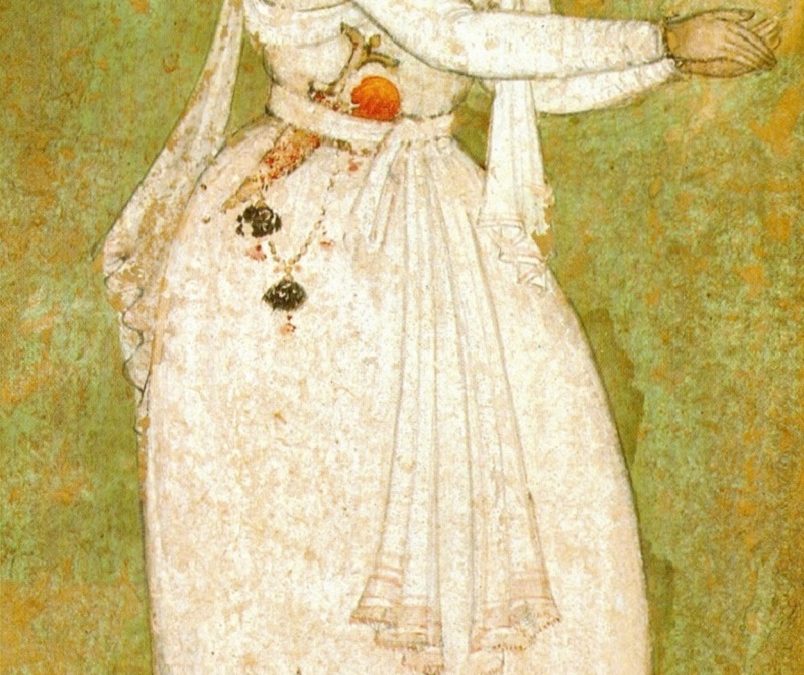
Tansen (c. 1500 – 1589) was an Indian singer, composer and instrumentalist, the most celebrated musician in the history of Hindustani classical music. Born near Gwalior, he spent most of his life at the court of the Raja of Rewa and his last decades at that of the Mughal emperor Akbar, who counted him among the Navaratnas, the nine jewels of the court. Several ragas still sung today are attributed to him, and many of the great lineages of north Indian music trace their descent from him.
Quick Facts
| Born | c. 1500 (traditional dates vary), Behat, near Gwalior, Madhya Pradesh |
| Died | 1589 (some sources give 1586), Agra or Delhi |
| Region | Gwalior, Madhya Pradesh |
| Birth name | Ramtanu (by tradition) |
| Title | Mian |
| Occupation | Singer, composer, instrumentalist |
| Teacher | Swami Haridas (by tradition) |
| Patrons | Raja Ramchandra Singh of Rewa; Emperor Akbar |
| Ragas attributed | Miyan ki Todi, Miyan ki Malhar, Miyan ki Sarang, Darbari Kanada |
| Tomb | Gwalior |
Sources
Little about his life can be fixed with certainty. Contemporary Mughal chronicles mention him briefly, and nearly everything else comes from later tradition. The outline given here is the one generally accepted.
Early Life
He is said to have been born in the village of Behat, some forty kilometres from Gwalior, to a Hindu family; his father, Mukund Pandey, or Misra, is described as a poet and a man of means. The stories say that the boy had a gift for imitating the calls of birds and animals.
Gwalior was then the leading centre of music in north India. Its ruler Man Singh Tomar, who died in 1516, had been a patron and practitioner of dhrupad, the grave and stately form of song in which Tansen was to excel.
Training
By tradition he was the pupil of Swami Haridas, the saint-musician of Vrindavan, who is said to have heard the boy’s voice and taken him as a disciple. He is also linked with the Sufi saint Muhammad Ghaus of Gwalior, to whom, in some accounts, his parents had prayed for a child, and beside whose tomb he lies.
Rewa
For much of his adult life he was the court musician of Raja Ramchandra Singh of the Baghela dynasty of Bandhavgarh, later Rewa, a ruler devoted to music, who showered him with gifts.
Akbar’s Court
His fame reached Akbar, who in 1562 sent an officer to Rewa to bring him to court. The Raja could not refuse. Tansen was by then, by most reckonings, about sixty. The chronicler Abul Fazl records that the emperor gave him a huge sum at his first performance, and wrote that a singer like him had not been in India for a thousand years.
He remained at court for the rest of his life, was given the title Mian, and is counted among the nine jewels, with Birbal and others.
Music
He sang dhrupad. Hundreds of dhrupad texts in Braj Bhasha carry his name, many in praise of Hindu deities and some in praise of his patrons. Works on music are ascribed to him. He is credited with creating or reshaping several ragas, their names prefixed with “Miyan ki”, and with Darbari Kanada, the raga of the royal court. He is also associated with the rabab, a plucked instrument.
The Legends
- **Deepak:** jealous courtiers, the story goes, persuaded Akbar to command him to sing the raga Deepak, which kindles fire. The lamps lit themselves and the singer’s body burned, until two girls, or in some versions his daughter, sang Megh Malhar and brought down the rain.
- **Haridas:** when Akbar asked why Tansen could not sing as his teacher did, he is said to have replied that he sang for the emperor, and Haridas for God.
Religion
Tradition holds that he became a Muslim, and he was buried by Muslim rites, though his compositions remained devoted to Hindu themes. The matter is not settled.
Death and Tomb
He died in 1589, by the most common account, and Akbar ordered that every musician of the court accompany the body. He was buried at Gwalior, in the garden of the tomb of Muhammad Ghaus. A tamarind tree grew beside the grave, and singers have chewed its leaves in the belief that it sweetens the voice.
Legacy
His descendants and their pupils formed the Senia tradition, from which many of the later schools of instrumental and vocal music derive, including the line of Allauddin Khan of Maihar. The Tansen Samaroh, held at his tomb each December, is one of the oldest music festivals in India, and the Government of Madhya Pradesh gives a national award in his name.
Featured image: Tansen of Gwalior, a Mughal miniature of about 1585–90 in the National Museum, New Delhi. Photo by an unknown artist, in the public domain, via Wikimedia Commons.



