
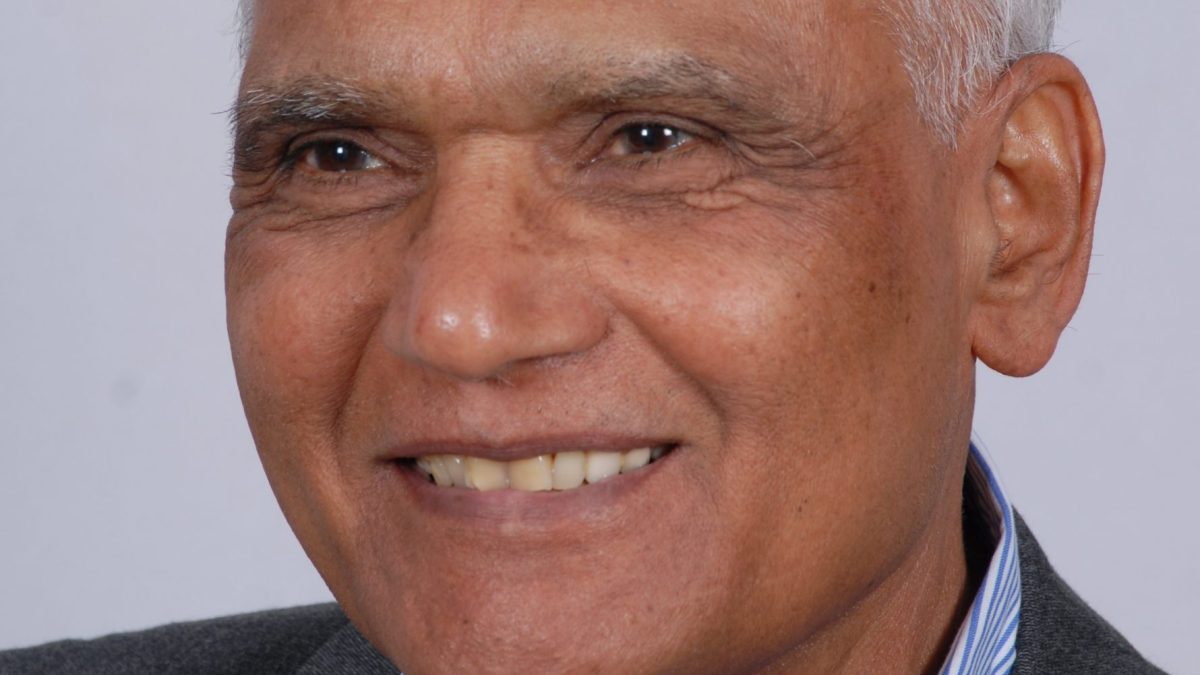
Santeshivara Lingannaiah Bhyrappa (20 August 1931 – 24 September 2025) was an Indian novelist and philosopher who wrote in Kannada. In more than twenty novels over six decades he examined tradition, family, art and history, and he remained for decades the best-selling serious author in the language, widely read in Hindi and Marathi translation as well. He received the Sahitya Akademi Award, the Saraswati Samman and the Padma Bhushan.
Quick Facts
| Full name | Santeshivara Lingannaiah Bhyrappa |
| Born | 20 August 1931, Santeshivara, Hassan district, Kingdom of Mysore |
| Died | 24 September 2025, Bengaluru (aged 94) |
| Language | Kannada |
| Occupation | Novelist, philosopher, teacher |
| Education | University of Mysore (M.A. in philosophy); Maharaja Sayajirao University of Baroda (Ph.D.) |
| Notable works | Vamshavriksha, Gruhabhanga, Daatu, Parva, Saartha, Mandra, Aavarana |
| Awards | Sahitya Akademi Award (1975), Saraswati Samman (2010), Padma Shri (2016), Padma Bhushan (2023) |
| Spouse | Saraswathi |
| Children | 2 |
Early Life
He was born at Santeshivara, a village in the Channarayapatna taluk of Hassan district, into a poor Brahmin family. His childhood was one of hardship. Plague carried off his mother and brothers when he was a boy, and his father was of little help. He earned his schooling by doing whatever work came to hand, and for a time ran away from home, travelling with a theatre troupe and working as a railway porter in Bombay.
The story of those years is told in his novel Gruhabhanga and his autobiography Bhitti.
Education and Teaching
He returned to his studies and took his M.A. in philosophy from the University of Mysore with a gold medal. He received a doctorate from the Maharaja Sayajirao University of Baroda for a thesis on truth and beauty. He taught philosophy for some thirty years, at Hubli, at Sardar Patel University in Gujarat, at the National Council of Educational Research and Training in Delhi and finally at the Regional College of Education in Mysore, from which he retired in 1991.
Novels
He researched each book for years, travelling to the places and learning the subjects it required: classical music for one, the Himalayan routes of the Mahabharata for another.
- Vamshavriksha (1965): a scholar devoted to lineage and tradition discovers the truth about his own birth. The film of 1971 was directed by Girish Karnad and B. V. Karanth.
- Tabbaliyu Neenade Magane (1968): a clash of attitudes to the cow between a villager and his foreign-educated grandson
- Gruhabhanga (1970): a woman’s struggle to hold a family together in a plague-stricken village
- Daatu (“Crossing Over”, 1973): a marriage across caste; it won the Sahitya Akademi Award in 1975
- Parva (1979): the Mahabharata retold without gods or miracles, as the memories of ageing men and women on the eve of war. It is generally considered his masterpiece.
- Saartha (1998): a caravan’s journey through eighth-century India
- Mandra (2001): the life of a great and selfish musician; it won the Saraswati Samman in 2010
- Aavarana (2007): a novel about the writing of medieval Indian history. It went through many printings within months and set off a fierce debate.
- Kavalu, Yaana and Uttarakaanda (2017), the Ramayana from Sita’s point of view
Views and Controversy
He described himself as a writer concerned with truth and not with ideology, but his criticism of what he saw as the distortion of history, and his views on religious conversion and on Tipu Sultan, placed him on the conservative side of public debate. He argued these questions in print with U. R. Ananthamurthy and Girish Karnad, who accused him of prejudice. His readers were not deterred.
Honours
- Sahitya Akademi Award (1975) and Fellowship (2015)
- President of the Kannada Sahitya Sammelana, 1999
- Saraswati Samman, 2010
- National Research Professor, 2014
- Padma Shri (2016) and Padma Bhushan (2023)
Personal Life
He married Saraswathi, and they had two sons. He lived for most of his life in Mysore, and was known for a disciplined routine of early rising, long walks and classical music. He died of a cardiac arrest at a hospital in Bengaluru on 24 September 2025, aged ninety-four.
Featured image: S. L. Bhyrappa in December 2008. Photo by Uday Shankar, in the public domain, via Wikimedia Commons.



