Mirza Asadullah Khan Ghalib (27 December 1797 – 15 February 1869) was an Indian poet who wrote in Urdu and Persian, generally regarded as the greatest poet of the Urdu language. He lived in Delhi through the last years of the Mughal court and the catastrophe of 1857. His small collection of Urdu ghazals, dense with thought and wit, is the most quoted body of verse in the language, and his letters created modern Urdu prose.
Quick Facts
| Full name | Mirza Asadullah Beg Khan |
| Pen names | Ghalib; earlier Asad |
| Born | 27 December 1797, Agra |
| Died | 15 February 1869, Delhi (aged 71) |
| Languages | Urdu, Persian |
| Occupation | Poet, letter writer |
| Titles | Najm-ud-Daula, Dabir-ul-Mulk, Nizam Jang |
| Notable works | Diwan-e-Ghalib; Dastanbu; Urdu-e-Mualla; Ud-e-Hindi |
| Spouse | Umrao Begum |
Early Life
He was born in Agra into a family of soldiers of Turkish descent; his grandfather had come to India from Central Asia. His father was killed in a skirmish in the service of the Raja of Alwar when the boy was about five. An uncle who took charge of him died three years later. He was brought up in his mother’s wealthy family, and was writing verse in Urdu and Persian before he was twelve.
At thirteen he was married to Umrao Begum, of the family of the Nawabs of Loharu, and soon afterwards moved to Delhi, where he lived for the rest of his life, in rented houses.
A Life of Difficulty
He never held a regular post and never owned a house. He lived on a share of a pension granted to his uncle’s heirs by the British, which he believed had been unjustly reduced. In 1827 he travelled to Calcutta to plead his case before the Governor-General, a journey of nearly three years by way of Lucknow and Benares. He lost.
He lived as a nobleman on credit, loved wine, mangoes and gambling, and was always in debt. In 1847 he was jailed for three months for keeping a gaming house. He and his wife had seven children, all of whom died in infancy; a nephew he adopted also died young.
The Court
Recognition came late. In 1850 the last Mughal emperor, Bahadur Shah Zafar, himself a poet, gave him titles and commissioned him to write a history of the dynasty in Persian. In 1854, on the death of his rival Zauq, he became the emperor’s teacher in poetry.
1857
When the rebel sepoys took Delhi in May 1857 he shut himself in his house in Ballimaran. He stayed through the siege and the British reconquest, when the city was sacked and its Muslim population driven out. His brother, who was insane, was shot by soldiers. Many of his friends were hanged or exiled. He recorded the months in a Persian diary, Dastanbu.
His pension stopped and his court was gone. The Nawab of Rampur gave him an allowance, and the pension was restored in 1860.
Poetry
He set most store by his Persian verse, which is several times larger than his Urdu. Posterity has reversed the judgment.
The Urdu Diwan contains a little over two hundred ghazals. His early work was so difficult that contemporaries mocked it; he later pruned it severely and wrote in a plainer style. The couplets turn on love, loss, pride, the absurdity of the human condition and a questioning of God that never quite becomes disbelief. Many have passed into ordinary speech:
- “Hazaron khwahishen aisi ke har khwahish pe dam nikle”: a thousand desires, each worth dying for
- “Dil-e-nadan tujhe hua kya hai”: foolish heart, what has come over you?
- “Hum ko maloom hai jannat ki haqiqat lekin”: I know the truth about paradise, but it is a pleasant thought to keep the heart happy
Asked by a British officer in 1857 whether he was a Muslim, he is said to have answered: half a one; I drink wine, but I do not eat pork.
Letters
In his later years he wrote to friends and pupils across India in an Urdu that was new: informal, humorous, written as if speaking. He said that he had turned correspondence into conversation. The letters, published as Ud-e-Hindi and Urdu-e-Mualla, are the starting point of modern Urdu prose and a vivid record of Delhi after the revolt.
Death
He died in Delhi on 15 February 1869 and is buried near the shrine of Nizamuddin. His wife died a year later.
Legacy
His house in Gali Qasim Jan in old Delhi is a memorial. A film of 1954 and a television serial of 1988, written by Gulzar with ghazals sung by Jagjit Singh, carried his verse to millions who could not read the script. Later poets of Urdu, Rahat Indori among them, wrote in his shadow.
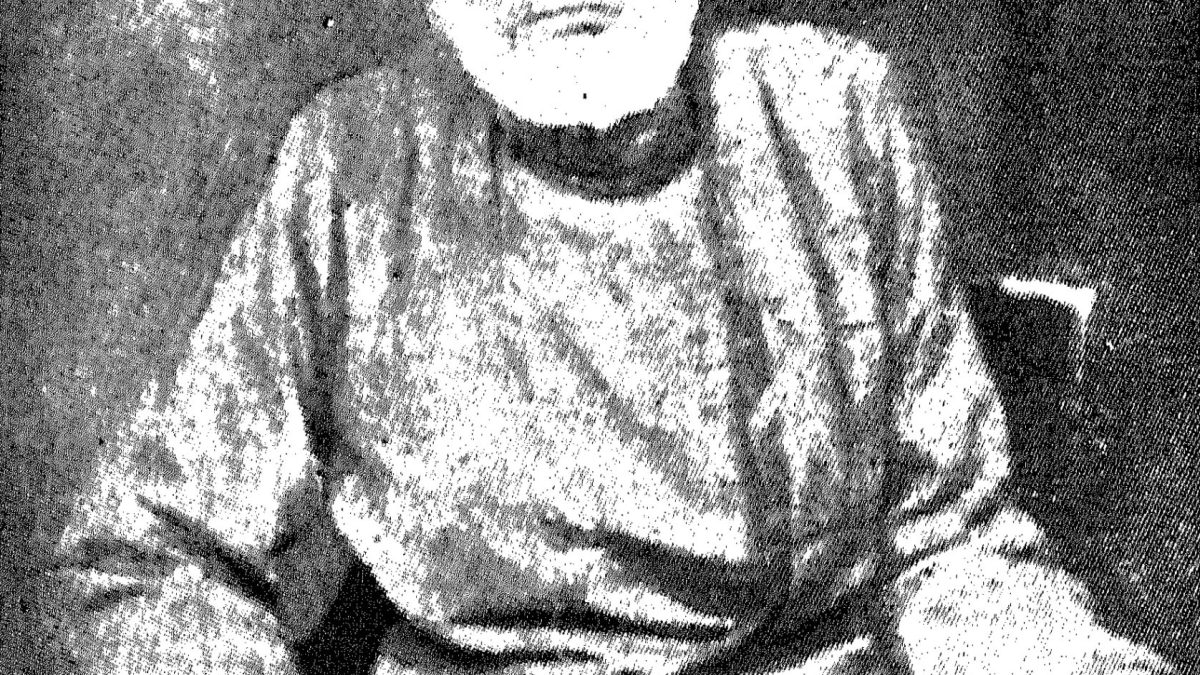
Featured image: Mirza Ghalib, photographed a few months before his death in 1869. Photo by an unknown photographer, in the public domain, via Wikimedia Commons.