Gopaldas Saxena (4 January 1925 – 19 July 2018), known by his pen name Neeraj, was an Indian poet and lyricist in Hindi. For more than sixty years he was the most popular performer at kavi sammelans, the public poetry gatherings of north India, where audiences knew his songs by heart. In a short period in the Hindi film industry he wrote lyrics that are still sung, among them “Karvan guzar gaya”, “Phoolon ke rang se” and “Ae bhai zara dekh ke chalo”. He was awarded the Padma Bhushan in 2007.
Quick Facts
| Birth name | Gopaldas Saxena |
| Pen name | Neeraj |
| Born | 4 January 1925, Puravali, Etawah district, Uttar Pradesh, India |
| Died | 19 July 2018 (aged 93), New Delhi |
| Occupation | Poet, lyricist, teacher |
| Language | Hindi |
| Known for | Kavi sammelan poetry; Hindi film songs |
| Awards | Padma Shri (1991); Padma Bhushan (2007); Filmfare Award for Best Lyricist (1971) |
Early Life
Neeraj was born in a village in Etawah district. His father died when he was six, and he grew up in hardship, living with relatives. After school he worked as a typist at the court in Etawah, in a cinema, and as a clerk in a government supply office in Delhi and at a college in Kanpur, studying privately all the while. He took his master’s degree in Hindi literature in 1953 and became a lecturer, first at Meerut and then at Dharma Samaj College in Aligarh, the town that was his home for the rest of his life.
Poetry
He began reciting in the early 1940s and soon drew the largest crowds on the circuit. His voice and his way of singing his verse were part of the effect, but so was the poetry: simple in language, musical, and concerned with love, the passing of time and the shortness of life. He described himself as a poet of the people who wrote philosophy in the idiom of song. His collections include Sangharsh, Dard Diya Hai, Pran Geet, Aasavari and Neeraj Ki Paati, a book of letter-poems.
His best-known poem, “Karvan guzar gaya, ghubar dekhte rahe”, describes a man who stood watching the dust as the caravan of life went past. It had made him famous on the stage long before it reached the cinema.
Film Songs
The film Nai Umar Ki Nai Fasal (1965) used several of his poems as songs, including “Karvan guzar gaya”, sung by Mohammed Rafi. He was invited to Bombay and for some years wrote for leading composers, especially S. D. Burman and Shankar–Jaikishan. For Dev Anand‘s films he wrote “Phoolon ke rang se” and “Shokhiyon mein ghola jaye” in Prem Pujari, “Dil aaj shayar hai” in Gambler and the songs of Tere Mere Sapne and Sharmeelee. For Raj Kapoor‘s Mera Naam Joker he wrote “Ae bhai zara dekh ke chalo”. “Likhe jo khat tujhe” from Kanyadaan was another great success. He won the Filmfare Award for Best Lyricist in 1971 for “Kaal ka pahiya” from Chanda Aur Bijli.
He did not care for the life of the film world, and after the deaths of the composers he was closest to he returned to Aligarh in the mid-1970s.
Later Years
He went on teaching, writing and reciting into his nineties. He was chancellor of Mangalayatan University in Aligarh, and the Uttar Pradesh government appointed him chairman of the state’s language institute with the rank of a minister. He died in hospital in New Delhi on 19 July 2018 and was cremated in Aligarh with state honours.
Legacy
Neeraj brought literary poetry and popular song closer together than any other Hindi poet of his time, and he remains one of the few whose lines are quoted by people who have never opened a book of verse.
Frequently Asked Questions
When and where was Gopaldas Neeraj born?
Gopaldas Neeraj was born on 4 January 1925 in Puravali, Etawah district, Uttar Pradesh, India.
When did Gopaldas Neeraj die?
Died: 19 July 2018 (aged 93), New Delhi.
What is Gopaldas Neeraj known for?
Known for: Kavi sammelan poetry; Hindi film songs.
What honours has Gopaldas Neeraj received?
Padma Shri (1991); Padma Bhushan (2007); Filmfare Award for Best Lyricist (1971).
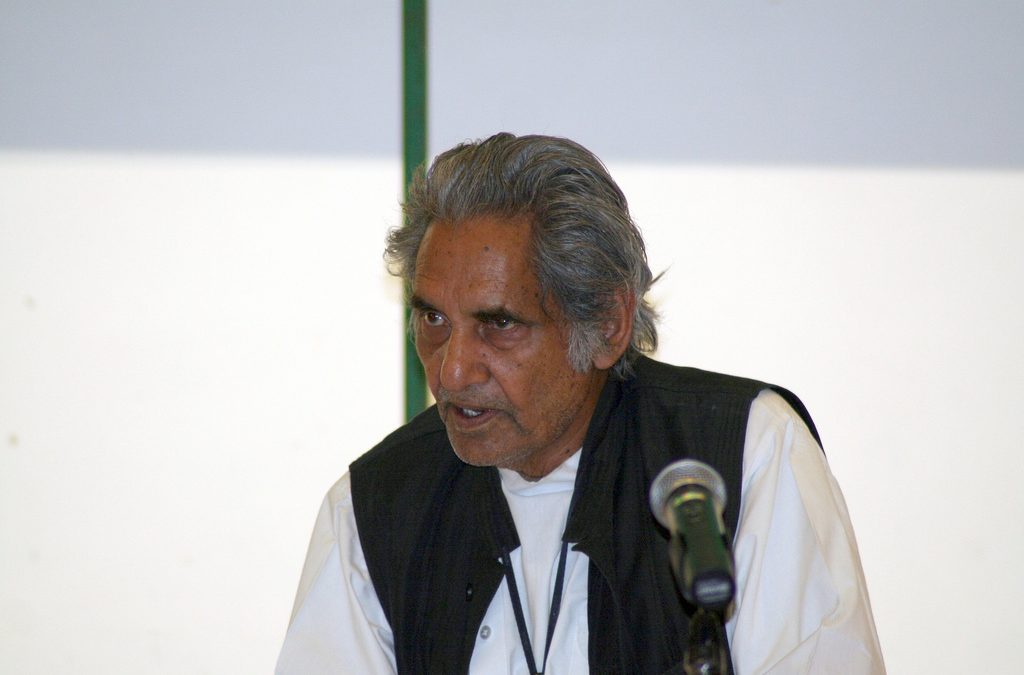
Featured image: Gopaldas Neeraj speaking at a function in his honour, August 2011. Photo by Ramesh Lalwani, licensed under CC BY-SA 3.0, via Wikimedia Commons.