
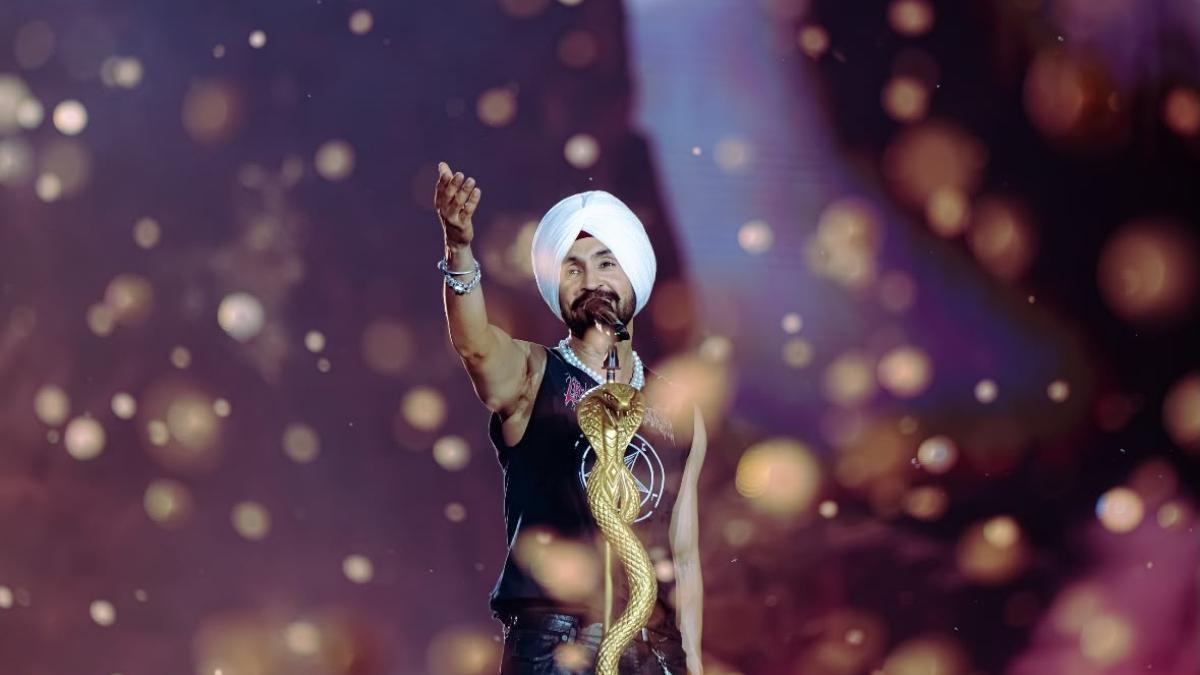
Getting to Diljit Dosanjh's Mumbai concert on Friday, 27 November 2026, was like entering a high-security fortress, The Hindu reported. A host of police personnel and private bouncers were deployed at all the entry gates, and the checking was thorough: backpacks were not allowed, and pens, banners and posters were barred too. One fan carrying a water bottle was asked to keep it outside and collect it later if he was lucky. The heavy deployment was a response to a threatening email warning of possible bomb and grenade attacks at the venue and in other parts of the city. Despite the concerns, fans came in droves, and by around 7.30 pm the Mahalaxmi Racecourse was packed.
The show was part of the singer's Aura World Tour, and The Hindu's account describes a performance that made the most of the moment. There was a loud cheer when the screens on stage flashed "Aura World Tour", the lights went off, and the venue lit up with the glow of the LED wristbands worn by everyone in attendance. Diljit made his entrance from a trolley above the stage and descended while the excitement grew, wearing a pink traditional Punjabi outfit with silver bullet holders across his chest. He opened energetically with 'Morni', a track from his 2026 EP 'The Call of Panjab', moving across the stage and waving at the crowd. When the song ended, he paused and said "Aamchi Mumbai", prompting a roar from the audience.
Then he addressed the threats directly. The Hindu quoted him speaking about the bomb threats and about the difficulties he faces before each concert in India. "In 2024, I felt I was being pestered a lot, constantly told what to sing and what not to. But all of that seems insignificant now. In 2026, to be able to do my show only is a big tension," he said. "They said they will destroy Diljit with a bomb. They want people to be afraid and not come to my show. If you (audience) are not afraid, then how can I be? Thank you everyone for coming today. Even if I put my heart out for you, it will still be nothing compared to the love you have shown." The reference to 2024 is his own comparison between his earlier India shows and this one.
The way he answered the threat was characteristic. Diljit turned to the poetry of Rahat Indori, narrating a few couplets from a ghazal of the late poet, something the singer has been seen doing in recent concerts in Indore and Ahmedabad. The first couplet he chose in Mumbai was an answer to the bomb threats: "Shehron me to baarudon ka mausam hai, gaaon chalo ye amrudon ka mausam hai", which the report translates as "Cities are steeped in the season of gunpowder; let's go to the villages, where guavas are reigning." He then added: "That's how it is. Even if you throw bombs, I have nothing but love to give." The line has become the headline of the coverage, and it captures the tone of the evening: defiance expressed as warmth rather than anger.
The security response shows how seriously the threat was taken. Police and private bouncers manned every gate, and the rules were strict: no backpacks, no pens, no banners or posters. The report describes the atmosphere at the gates as that of a high-security zone, and one fan was asked to empty his pockets before being let through. Such restrictions are not unusual for large concerts, but the combination of police and private security, together with the stated reason, a threatening email about bombs and grenades, made this a more intense check than most. The Hindu's account does not say whether the email has been traced, who sent it, or whether any arrests have been made, and those details are not established in the material reported so far.
For fans, the experience of entering the concert was clearly a trial, but it did not dim the mood inside. The LED wristbands, which turned the crowd into a single field of light, and the staging with the trolley entrance suggest a production designed around spectacle. The Mahalaxmi Racecourse was packed by 7.30 pm, a sign that the threat did not dissuade the audience, which is precisely the point Diljit made from the stage: that the aim of such threats is to make people afraid and keep them away.
The context of the tour matters. The Aura World Tour has been travelling through Indian cities, with recent concerts in Indore and Ahmedabad before Mumbai, and the singer's comparison of 2024 with 2026 indicates that every stop comes with its own challenges. In 2024, he said, he felt he was "being pestered a lot, constantly told what to sing and what not to", but in 2026 even being able to do the show is "a big tension". It is a striking admission from a performer at the height of his popularity.
There is also a lesson here about how artists and audiences respond to threats. Fans kept coming, the venue was full, and the artist chose to answer with music and poetry rather than anger. Rahat Indori's couplet, with its image of cities full of gunpowder and villages full of guavas, was well suited to the moment, and its use by Diljit across several cities shows that it has become a signature of this tour. Whether the authorities will identify the person behind the email is a separate question that the coverage so far leaves open.
The couplet he chose is worth a second look. Rahat Indori's lines set the cities, "steeped in the season of gunpowder", against the villages, where "guavas are reigning". It is a contrast between fear and sweetness, and between the noise of the city and the simplicity of the countryside, and in Diljit's hands it became a way of answering a threat without naming those who made it. The fact that he has used Indori's verses in several recent concerts suggests that the poet's words have become part of the tour's identity, with the Mumbai show adding a new meaning.
The Mumbai concert shows how live entertainment in India now operates under a layer of security that fans have come to accept. Between the police at the gates and the bouncers inside, the show went ahead as planned, with the singer, in The Hindu's account, ending on a note of affection. For an audience that went through a fortress-like entry to hear him, the message that he had "nothing but love to give" was exactly what they had come to hear.



Leave a Reply