
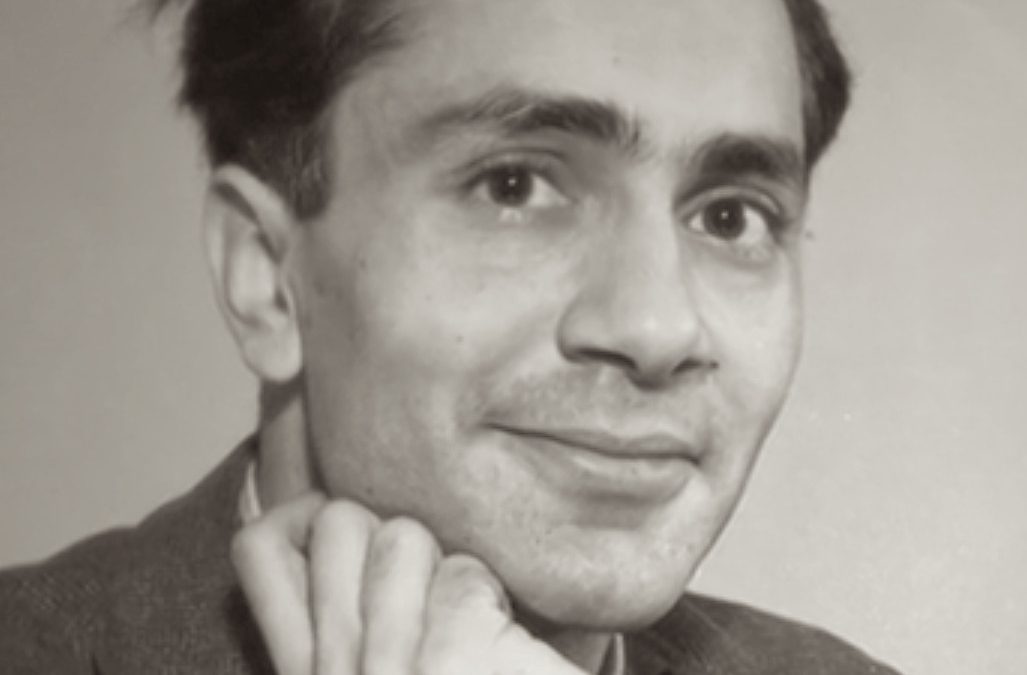
Balraj Sahni (1 May 1913 – 13 April 1973) was an Indian film and stage actor and a writer in Punjabi. A scholar of English literature who had taught at Tagore’s university and broadcast for the BBC, he came to films late and brought to them a natural style of acting that was new in Hindi cinema. He is remembered above all as the dispossessed peasant of Do Bigha Zamin and the Muslim shoe manufacturer of Garm Hava, his last film.
Quick Facts
| Birth name | Yudhishthir Sahni |
| Born | 1 May 1913, Rawalpindi, Punjab (now in Pakistan) |
| Died | 13 April 1973, Bombay (aged 59) |
| Education | Government College, Lahore (M.A. in English) |
| Occupation | Actor, writer |
| Years active | 1946–1973 |
| Notable films | Dharti Ke Lal, Do Bigha Zamin, Seema, Kabuliwala, Haqeeqat, Waqt, Garm Hava |
| Awards | Padma Shri (1969); Soviet Land Nehru Award |
| Spouse | Damayanti Sahni (d. 1947); Santosh Chandhok (m. 1949) |
| Children | Parikshit Sahni and two daughters |
Early Life
He was born in Rawalpindi into a prosperous Punjabi family of the Arya Samaj; his father was a cloth merchant. He took a master’s degree in English literature at Government College, Lahore, and for a time joined the family business, which bored him.
In 1936 he married Damayanti, and the next year the couple went to Bengal, where he taught English and Hindi at Rabindranath Tagore‘s university at Shantiniketan. When he told Tagore that he wrote in English and Hindi, the poet asked why he did not write in his mother tongue, Punjabi. He took the advice years later.
Gandhi and London
In 1938 he worked for some months with Mahatma Gandhi at Sevagram, on a journal of basic education. Gandhi approved when he was offered a post in London, and from 1940 to 1944 he was an announcer in the Hindi service of the BBC, through the Blitz. There he saw Soviet films and British theatre and became a Marxist.
People’s Theatre
He returned to Bombay in 1944 and joined the Indian People’s Theatre Association, acting in and directing plays performed for workers. He and Damayanti acted in its film Dharti Ke Lal (1946), about the Bengal famine. Damayanti, who had become a star before him, died suddenly in 1947.
He was a member of the Communist Party and was jailed for several months in 1949 after a demonstration. He was allowed out under escort to act in a film, and went back to his cell each evening.
Films
His first years in films were a struggle; he was thought too educated and too stiff. Hum Log (1951) was his first success.
Do Bigha Zamin
For Bimal Roy‘s film of 1953 he played Shambhu, a farmer who becomes a rickshaw puller in Calcutta. To prepare, he pulled a rickshaw in the streets of the city for days, and lived among the pullers. One of them, he recalled, heard the story of the film and said that it was his own. The performance set a standard for realism in Indian acting.
Other roles
- Seema (1955) and Garam Coat
- Kabuliwala (1961), as Tagore’s Afghan pedlar far from his daughter
- Haqeeqat (1964), about the war with China
- Waqt (1965), as the patriarch who sings “Ae meri zohra jabeen” to his wife
- Neel Kamal, Do Raaste, Ek Phool Do Mali and many others
In about a hundred and twenty-five films he was the father, the elder brother, the doctor, the honest man, parts he filled with a warmth and dignity that made him one of the best-loved actors of his time.
Garm Hava
In M. S. Sathyu’s film he played Salim Mirza, a Muslim businessman of Agra who refuses to leave for Pakistan after Partition, as his family, his trade and his home fall away. He finished dubbing the part the day before he died. Released in 1974, it is regarded as the finest film on Partition and as his greatest performance.
Writer
He wrote in Punjabi: stories, essays, and two travel books, on a visit to Pakistan and to his birthplace in 1960 and on the Soviet Union, the second of which won the Soviet Land Nehru Award. His autobiography of his film career is among the most honest accounts of the industry. A speech he gave at the convocation of Jawaharlal Nehru University in 1972, on the mental slavery of the educated Indian, is still widely read.
Personal Life
In 1949 he married Santosh Chandhok, a cousin, who later became a writer. His son, Parikshit Sahni, is an actor. His younger brother, Bhisham Sahni, was a distinguished Hindi novelist, the author of Tamas. The death of his young daughter Shabnam in 1972 broke his spirit.
Death
He died of a heart attack in Bombay on 13 April 1973, aged fifty-nine. He had asked that there be no religious rites and that a red flag be laid on his body.
Featured image: Balraj Sahni in London, about 1941. Photo by an unknown photographer, in the public domain, via Wikimedia Commons.



