
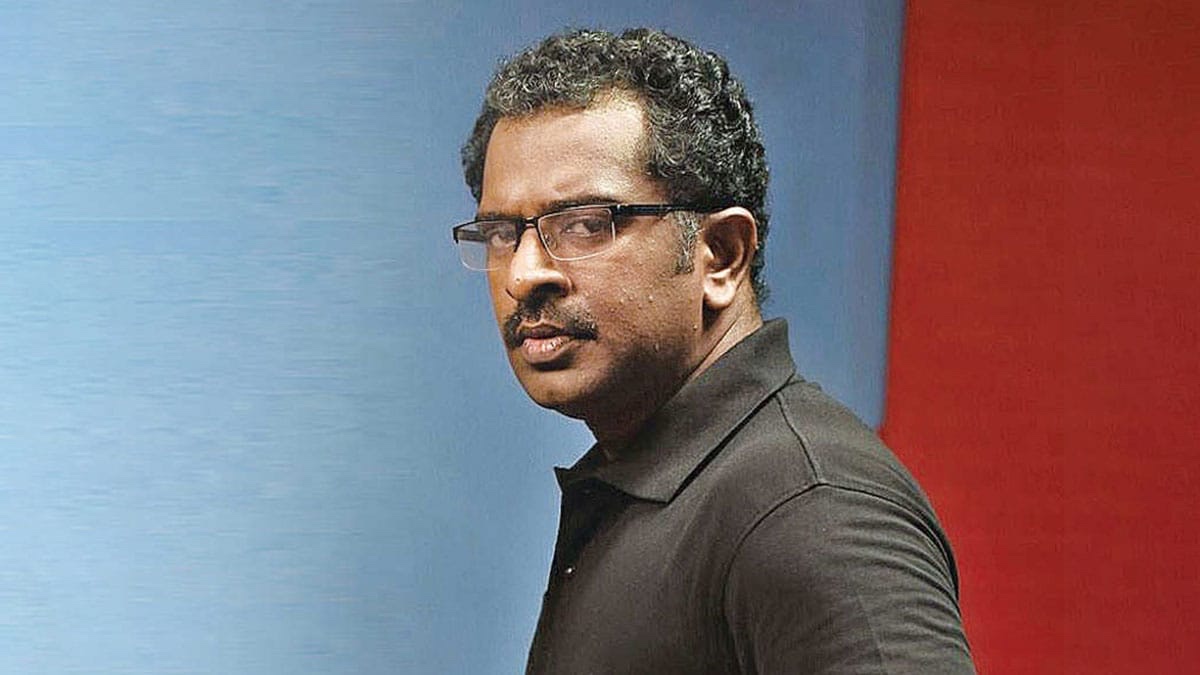
A court in Thrissur has sentenced Malayalam actor Sreejith Ravi to one year of imprisonment and imposed a fine of ₹50,000 in a case registered under the Protection of Children from Sexual Offences (POCSO) Act, in connection with an incident of indecent exposure before two minor girls. The Fast Track Special Court-II delivered the judgment on Monday, 23 November 2026, The Hindu reported. The sentence has been suspended for a month, and the actor has been granted bail so that he can challenge the verdict before a higher court.
The incident dates back more than four years. According to the report, it occurred near SN Park in Ayyanthole, Thrissur, on 4 July 2022. Mr. Ravi was accused of indecent exposure in front of two minor girls, aged 14 and 9. The court found him guilty under Section 509 of the Indian Penal Code, which criminalises words, sounds, gestures, objects or intrusions upon privacy intended to insult the modesty of a woman, and under Section 11(1) of the POCSO Act, which deals with sexual harassment of a child. The court also directed that the fine amount be shared between the two survivors.
The investigation hinged on technology and on the girls' own statements. CCTV footage from the vicinity of SN Park, Ayyanthole, proved crucial to the case. In their statements, the survivors said a man travelling in a black car was involved, and the probe that followed centred on the vehicle. That line of inquiry led investigators to the actor, according to the report. He was taken into custody and later released on bail. As many as 21 witnesses were examined during the trial, which is the standard process in a case of this kind, where the prosecution has to establish its case through oral and documentary evidence, even when video footage exists.
Contemporary reports from July 2022 said that Thrissur West police arrested Mr. Ravi on 7 July that year, three days after the incident, and that a court initially denied him bail and sent him to remand custody for 14 days. Those reports, from outlets including Onmanorama and The Week, described the complaint as having been made by the two girls and their families and said the actor was identified after police traced the vehicle on CCTV. The timeline therefore runs from the incident on 4 July 2022, through the arrest within days and a long trial, to a verdict in November 2026, a period of a little over four years and four months. Mr. Ravi is the son of veteran actor T.G. Ravi and has acted in Malayalam films since 2005, the earlier reports noted.
The Hindu's report did not carry a statement from Mr. Ravi's side in response to the sentence, beyond the fact that he has been given bail to appeal. The suspension of the sentence for a month is a standard device that allows a convicted person time to approach a higher court for a stay or for bail pending appeal. During that month, the prison term will not take effect, and what happens next depends on whether the High Court agrees to suspend the sentence further when it hears the appeal. That is a process which can take time.
The case belongs to a category that courts in Kerala and across India treat with particular seriousness. The POCSO Act, enacted to protect children from sexual offences, creates a framework of special courts and child-friendly procedures. Section 11 defines sexual harassment of a child, and its first sub-section covers acts including exposure of the body before a child with sexual intent. Fast Track Special Courts were set up to hear such cases without long delays, and the judgment in this case came a little over four years after the incident. The ability to examine 21 witnesses and conclude the trial in that period suggests how the system is meant to function.
The verdict also matters for the way in which public figures are treated by the law. Mr. Ravi is a known actor in the Malayalam film industry, and the case drew wide attention when he was arrested in July 2022. Media reports at the time said that the complaint was lodged by the families of the two girls, and that police traced the car through CCTV footage. The court's decision, delivered more than four years later, shows that the legal process runs its course regardless of a person's profession, and that the standard of proof required for conviction is the same for everyone. The conviction is not final until appeals are exhausted, since Mr. Ravi has the right to challenge the verdict in the High Court.
It is important to be careful about the language used in reporting such a case. The identities of the survivors are protected by law, and the report refers to them only by their ages. The details of the incident are limited to those that were part of the court's findings. The actor has been convicted by a trial court and has been given the opportunity to appeal, and that is the correct framing: this is a trial court judgment, not the end of the process.
For the survivors, the outcome represents the culmination of a long process. The court's direction that the fine be divided between the two girls is a recognition of the harm they suffered, though a fine of ₹50,000 is a modest sum. The use of CCTV evidence and the survivors' statements in this case illustrate how both technology and testimony can help to identify an accused.
For the film industry, the conviction is not final, since an appeal is open, and the courts will decide the legal question when the High Court hears it.
The next steps are procedural. Within a month, Mr. Ravi will have to move the High Court against the conviction and sentence if he wants to avoid serving the prison term. The matter will return to the courts, and the final answer will depend on a higher bench's assessment of the evidence, which includes the CCTV footage and the statements of the 21 witnesses.
For now, the judgment stands as one of the clearer examples of a POCSO trial in Kerala ending in a conviction for a public figure, and it comes with a message about the importance of reporting such incidents promptly. The speed with which the girls' accounts and the video footage helped the police identify the accused is part of the reason the case reached a verdict. The report from Thrissur is a reminder that behind each case is a child and a family, and that the process, however long, is meant to protect them.



Leave a Reply