
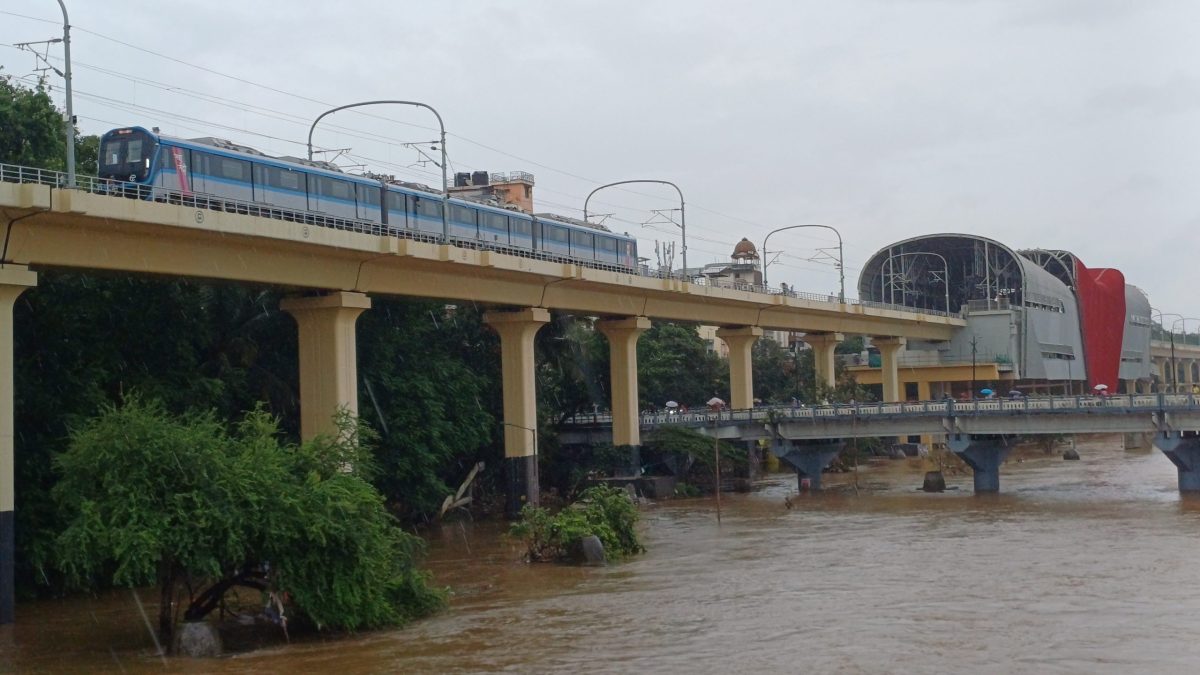
Prime Minister Narendra Modi inaugurated Pune Metro Line 3, also called the Pink Line, on 3 November 2026 by video link, with commercial service starting on 4 November. The 23.203 km elevated corridor connects Maan and the Hinjewadi IT Park to Shivajinagar and the District Court, and has been built at a cost of about Rs 8,313 crore. Alongside the inauguration, the Prime Minister laid the foundation stone of four Phase-II corridors, with the overall package reported at about Rs 21,800 crore. The line is described as the first metro in India built under the Design, Build, Finance, Operate and Transfer public-private partnership model.
The case for the project is that it targets one of the most congested commuter belts in the country. Hinjewadi is home to a large cluster of IT offices, and the line gives its workers a rail link to the city centre and to the other metro lines. Trains will run every six minutes at peak and every twelve minutes off-peak, the last trains leave at 10:30 pm from Maan and 11:40 pm from District Court, and fares are reported to range from Rs 12 to Rs 62. The line connects with Pune Metro Line 1, from Pimpri-Chinchwad to Swargate, and Line 2, from Vanaz to Ramwadi, and a common mobile app covers ticketing across the Maha Metro network. The Phase-II corridors, reported at about Rs 13,500 crore, signal that the city is committing to a wider network instead of a single line. For daily commuters the practical gain is predictability, because an elevated metro does not queue in the same traffic that slows buses and cars on the roads around the IT park.
The case against is that the line opens incomplete. Only 17 of the 23 stations are open at launch, and the Commissioner of Metro Railway Safety has cleared the first stretch in stages, with 12.60 km approved on 23 July and the remaining five first-phase stations on 23 September. Of the 17 stations, 10 have both staircases working and seven have only one accessible, which could slow boarding at peak hours. Stations 13 and 14 are expected by the end of November, and stations 15, 16, 20 and 22 are expected in phases by January 2027. A report from 23 October had also flagged that the launch was in limbo after a postponement of the Prime Minister's visit, which shows how uncertain the timeline was.
The line matters beyond Pune because it tests whether private operators can deliver urban rail in India. The special purpose vehicle, Pune IT City Metro Rail Limited, was formed with TRIL Urban Transport and Siemens Project Ventures under a concession with the Pune Metropolitan Region Development Authority. If the model works, other cities may copy it. If service quality or ridership disappoints, public authorities will be reluctant to hand over more corridors.
Pune Metro Line 3 is a real gain for commuters, but a partial one. Its success will be judged on how quickly the remaining stations open, how well it feeds into the other metro lines, and whether the people who work in Hinjewadi leave their cars at home. For a city that has spent years debating how to move its IT workforce, the opening is a clear step forward, and the next few months of service will show how much work is still left.
Featured image: A Pune Metro train on an elevated section (file photo; Line 3 is not pictured). Photo: DesiBoy101, CC BY 4.0, via Wikimedia Commons.

Leave a Reply