
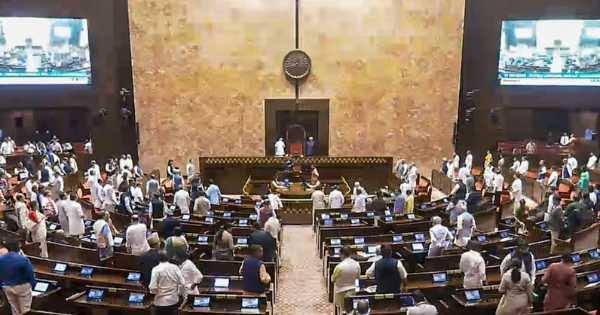
In April 2026 the government introduced a package of three bills to expand the Lok Sabha and speed up one-third reservation for women. The Delimitation Bill, 2026, introduced on 16 April, proposed raising the Lok Sabha from 543 seats to 850, with 815 elected from states and 35 from Union territories. The Constitution (131st Amendment) Bill was meant to lift the freeze on constituency boundaries and allow delimitation on the 2011 Census. It secured 298 votes in the Lok Sabha, short of the 352 needed for a constitutional amendment, and the related bills were then withdrawn. Months later, the argument over how women's reservation should be linked to delimitation is still unresolved.
The government's case was built on speed and fairness to the South. The women's reservation law, passed as the 106th Amendment in 2023, is tied to delimitation after the next Census, which would push its use to around 2034. The new package would have allowed delimitation on the 2011 Census and advanced the quota to 2029. Home Minister Amit Shah argued that the five southern states would go from 129 to 195 seats, and that their share of the House would actually rise slightly from 23.76 percent to 23.87 percent. On that reading, no region loses ground, women gain seats sooner, and a demand pending for decades finally gets a date.
The opposition countered that the numbers hide the real risk. Chief Ministers M. K. Stalin, Siddaramaiah, Pinarayi Vijayan and Revanth Reddy argued that states that controlled population growth could be penalised, since later delimitation is expected to favour faster-growing Hindi-heartland states. Congress leader Shashi Tharoor said that tying delimitation to the Women's Quota Act held the aspirations of Indian women hostage. The opposition wanted women's reservation separated from delimitation and a separate quota for OBC women, which the framework lacked. With the amendment 54 votes short of the required majority, those objections were enough to stop it.
The consequences reach across the country. For women, the defeat means the 33 percent quota that Parliament already approved remains on paper, and its use is unlikely before about 2034 unless a new route is agreed. For federalism, the episode shows that southern states will use their political weight to protect their share of the House. It also shows that any future change to representation will need broad consent, because a constitutional amendment cannot pass on the government's numbers alone.
The 131st Amendment failed because the government could not convince enough members that speed and fairness could go together. Both sides say they support women's reservation, which suggests a compromise is possible. Until one is found, the quota stays on paper and the delimitation dispute stays open. For voters watching the next round of negotiations, the key tests will be whether the government agrees to a separate OBC women's quota, whether southern chief ministers are consulted before any new bill is drafted, and whether a revised formula can guarantee that no state loses its relative share. The government has said it wants to operationalise the quota, and the opposition has said it supports the principle, so the disagreement is about sequence and trust more than about the goal itself.

Leave a Reply